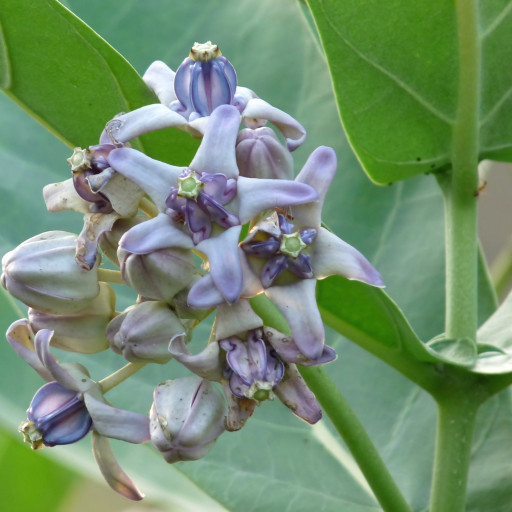
Plant Overview
Often called the Crown Flower or Giant Milkweed, this architectural shrub is a staple of tropical landscapes and royal history. Its most striking feature is its waxy, star-shaped flowers that resemble a tiny royal crown, a detail that made it a favorite of Hawaiian Queen Liliʻuokalani. While it looks like a tough, desert-hardy plant, it plays a delicate and vital role in the lifecycle of the Monarch butterfly.
🔍 How to Identify
- 👑 The "Crown" Blooms: Clusters of waxy, long-lasting flowers in shades of soft lavender or ivory white. Each bloom has a prominent five-pointed central "crown" that feels almost like plastic or porcelain to the touch.
- 🍃 Velvety Foliage: Large, oval-shaped leaves that grow in opposite pairs. They have a distinct silvery-green or "dusty" appearance due to a fine layer of downy hair on the surface.
- 🥛 Milky Sap: If a leaf or stem is broken, the plant immediately bleeds a thick, sticky white latex. This is a primary defensive mechanism and a key identifying marker.
🏡 In Your Garden
- 🦋 A Butterfly Sanctuary: This plant is a primary food source for Monarch and Queen butterfly caterpillars. If you see the leaves being munched on, don't reach for the pesticide—you are witnessing a beautiful transformation in progress!
- ☀️ Sun-Drenched Stability: It thrives in full sun and poor, sandy soil where other plants might wither. Because it develops a deep, stubborn taproot to find water, it is notoriously difficult to transplant once established; choose its "forever home" carefully.
- ✂️ Pruning Strategy: To keep it from becoming "leggy" or sparse, it benefits from a hard prune in the early spring. This encourages a bushier shape and more flower clusters.
⚠️ Safety & Toxicity
- 🚫 Cardiotoxic Warning: Every part of the plant contains cardiac glycosides. If ingested, it can cause serious heart rhythm issues, nausea, and vomiting in humans and pets.
- 👁️ Eye & Skin Irritant: The milky sap is highly caustic. If it gets on your skin, it can cause rashes, and if it touches your eyes, it can cause temporary blindness or severe corneal damage. Always wear gloves when pruning.
- 🐾 Pet Safety: Keep curious dogs and cats away, as the leaves are toxic if chewed.
✨ Fun Fact
In Hawaii, the Crown Flower is the traditional choice for making lei. Because the flowers are so durable and "waxy," a Crown Flower lei can last for days without wilting, symbolizing enduring affection and royalty.

Detailed Care Instructions
| Humidity | Normal |
| Difficulty | Medium |
| Hardiness Zones | 10 - 11 |
To grow Calotropis gigantea (also known as crown flower or giant milkweed), you can follow these steps:
- Select a suitable location: Choose a spot that receives full sun for at least 6-8 hours a day. The plant can tolerate different soil types but prefers well-draining soil.
- Prepare the soil: Loosen the soil and remove any weeds or rocks. Consider adding organic matter like compost or well-rotted manure to improve soil fertility and drainage.
- Planting: If you have access to seeds, sow them directly into the prepared soil at a depth of ¼ inch (6mm). Alternatively, you can purchase young plants from a nursery and transplant them into the ground. Maintain a spacing of at least 3 to 4 feet between plants.
- Watering: After planting, water the soil thoroughly to help the seeds/young plants establish themselves. Once established, water regularly, especially during dry periods, but be careful not to overwater as it can lead to root rot.
- Mulching: Apply a layer of organic mulch (such as wood chips or straw) around the base of the plant to help retain soil moisture and suppress weed growth.
- Fertilizing: Calotropis gigantea is relatively low-maintenance and doesn't require much fertilizer. However, you can apply a balanced, slow-release fertilizer once or twice during the growing season to promote healthier growth.
- Pruning: Prune the plant regularly to maintain its shape and remove any dead or diseased branches. It's important to note that all parts of the plant ooze a milky sap that can be irritating, so wear gloves when handling and pruning.
- Pest and disease control: In general, Calotropis gigantea is resistant to most pests and diseases. However, occasionally, aphids or caterpillars may attack the leaves. Use organic insecticides or neem oil to control such infestations if necessary.
- Propagation: Calotropis gigantea can be propagated from stem cuttings. Take cuttings from healthy, mature stems and place them in well-draining soil or a mixture of sand and perlite. Keep the cuttings warm and moist until they develop roots.
- Winter care (for colder regions): Calotropis gigantea is a tropical plant and may not be frost-tolerant. In colder regions, it's advisable to grow it in containers and bring them indoors during winter or provide protective coverings to prevent frost damage.
Remember to check if Calotropis gigantea is considered invasive in your region before planting, as it can spread easily under favorable conditions.

Place in a bright room that is sun drenched almost all day. Or directly in a south-facing window.

To water this particular plant, you will need to ensure that the soil is moist but not waterlogged. One effective way to do this is by checking the soil regularly and watering it only when it appears to be dry enough. It's vital to note that overwatering can result in root rot or other health issues for the plant. Additionally, it's best to avoid getting water on the leaves, as this can lead to various plant diseases. Instead, aim to water the plant's soil directly, aiming for the base of the stem or roots. You may also want to consider using room temperature or lukewarm water to avoid shocking the plant's roots. Overall, a careful and consistent watering routine can help your Calotropis Gigantea grow healthy and strong.
- Choose a well-draining soil for the plant.
- Use a balanced fertilizer with equal amounts of nitrogen, phosphorus, and potassium.
- Apply the fertilizer once every month during the growing season (spring and summer) to promote healthy growth.
- Water the plant before applying the fertilizer to prevent burning of the roots.
- Follow the instructions on the fertilizer package for proper application rates based on the size of the plant.
- Avoid over-fertilizing the plant, as it can cause damage to the roots and leaves.
- Monitor the plant for signs of nutrient deficiency, such as yellowing leaves or stunted growth, and adjust the fertilizer regimen accordingly.
Calotropis Gigantea plant is a popular ornamental plant that requires a specific type of soil for healthy growth. The ideal soil type for this plant should be well-draining and loamy in texture. It should also be rich in organic matter and have a slightly acidic to neutral pH level. The soil should have a good structure and be able to retain moisture without becoming waterlogged.
When selecting soil for Calotropis Gigantea plant, it is important to avoid heavy soils that have poor drainage, such as clay soils. These soils can cause the roots to become waterlogged, leading to root rot and other diseases. It is also important to avoid soils that are too sandy, as these soils have poor nutrient retention.
To create the ideal soil for Calotropis Gigantea plant, it is recommended to mix equal parts of high-quality potting soil, compost, and perlite. This soil mixture provides the right balance of nutrients, water retention, and drainage, which are essential for the plant's healthy growth. Additionally, it is important to fertilize the soil regularly with a balanced fertilizer to ensure that the plant receives all the necessary nutrients it needs to thrive.
Calotropis Gigantea is a plant commonly found in tropical regions. It can be propagated through several methods, including:
- Seeds: Collect a seed pod from a mature plant. The pod should be dry and brown. Remove the seeds from the pod and sow them in a well-draining potting mix. Keep the soil moist and in a warm, bright location. Germination typically occurs within two to four weeks.
- Stem Cuttings: Take a 6-inch cutting from a healthy Calotropis Gigantea plant during the active growth season. Remove the leaves from the bottom two-thirds of the stem. Dip the cut end in rooting hormone and plant it in well-draining potting mix. Keep the soil moist and in a bright, warm location. Roots should develop within two to four weeks.
- Layering: Locate a low-growing branch on the Calotropis Gigantea plant and bend it towards the ground. Make a small incision in the bark at the point where the branch contacts the soil. Cover the incision with soil and secure the branch in place with a small stake or wire. Roots should develop at the point of contact within several weeks. Once roots have formed, sever the branch from the parent plant and transplant it to a new location.
Whichever method you choose, it's important to provide the new plant with adequate light, water, and nutrients to ensure healthy growth.
Common pests of the giant milkweed include Mealybugs, spider mites, aphids. Make a habit of checking your giant milkweed frequently for pests so that any infestations can be caught and managed early.








