Plant Overview
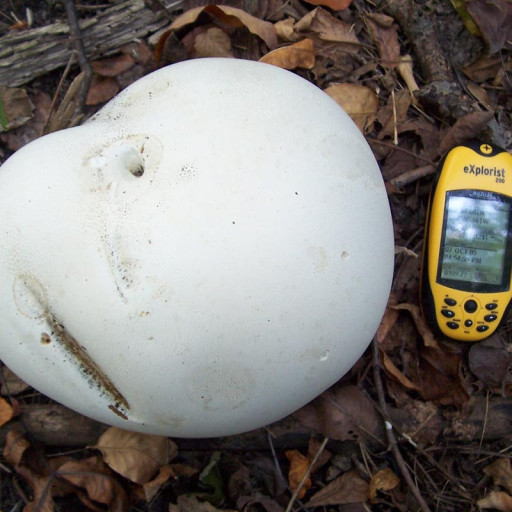
Often mistaken for a stray soccer ball or even a misplaced ostrich egg, the Giant Puffball is one of the most awe-inspiring sights in the fungal kingdom. Known scientifically as Calvatia gigantea, this mushroom is a favorite among foragers due to its unmistakable appearance and impressive size. In folklore, these white orbs were sometimes called "Puck’s Fists," appearing like magic in meadows overnight after heavy late-summer rains.
🔍 How to Identify
- ☁️ Shape & Size: These fungi are typically spherical or leaf-shaped, lacking a traditional stem and cap. They can grow anywhere from the size of a grapefruit to over 20 inches in diameter.
- ⚪ The Surface: The exterior is smooth, leathery, and creamy white when young. It feels somewhat like soft skin or a finely crafted marshmallow.
- 🍞 The Interior: When sliced open, the inside (the gleba) must be solid, pure white, and uniform in texture, much like a dense loaf of bread or a block of tofu.
🌲 Habitat & Ecology
- 🌾 Open Spaces: Unlike many forest-dwelling fungi, the Giant Puffball prefers nutrient-rich grassy areas, such as meadows, golf courses, underused pastures, and the edges of deciduous forests.
- 🍂 Nutrient Recycler: As a saprobic species, it lives by breaking down dead organic matter in the soil. It often appears in the same spot year after year, sometimes forming wide "fairy rings" in open fields.
⚠️ Safety & Toxicity
- 🚨 WARNING: While considered a choice edible, the Giant Puffball is only safe to eat when the interior is pure white. If the inside has turned yellow, olive, or brown, it has begun producing spores and can cause severe digestive distress.
- 🍄 The "Egg" Trap: Beginners must be careful not to mistake the "button stage" of deadly Amanita mushrooms for small puffballs. Always slice them vertically; a true puffball is solid inside, whereas a deadly Amanita "egg" will show the faint outline of a developing cap and gills inside.
- 🐾 Pet Safety: Generally non-toxic to pets, though mature specimens that have turned to "dust" can cause respiratory irritation if a dog breathes in the concentrated spore cloud.
✨ Fun Fact
- 💨 Spore Power: A single large Giant Puffball can contain upwards of 7 trillion spores. It has been calculated that if every spore from one mushroom survived to adulthood, the resulting puffballs would weigh 800 times more than the entire Earth!

Detailed Care Instructions
To grow Calvatia gigantea plant, also known as giant puffball mushroom, you will need to follow these steps:
- Find a suitable growing area: Calvatia gigantea typically grows in grassy areas, open fields, meadows, and woodlands. Look for an area with well-draining soil and plenty of organic matter.
- Obtain the spores: You can purchase Calvatia gigantea spores from specialty mushroom suppliers or collect them if you find wild specimens in your area. Make sure to properly identify them before collecting.
- Prepare the growing medium: Giant puffballs prefer soil that is rich in organic matter. Mix compost or well-rotted manure into the soil to provide the necessary nutrients.
- Plant the spores: Sprinkle the Calvatia gigantea spores evenly over the prepared soil surface. The spores are microscopic, so it's important to distribute them as evenly as possible.
- Maintain the right conditions: Keep the soil moist, but not waterlogged, as the giant puffballs require a damp environment. The ideal temperature range for growth is between 60-80°F (15-27°C).
- Protect the area: Protect the growing area from animals and foot traffic as the delicate mushrooms can easily be damaged.
- Wait for fruiting: Depending on the conditions, it may take several weeks for the Calvatia gigantea mushrooms to start fruiting. Be patient and continue to provide the necessary conditions.
- Harvest the mushrooms: Once the giant puffballs reach their full size, which can be up to 2 feet (60 cm) in diameter, they are ready to be harvested. Cut them off at the base to ensure the spores are left behind to continue the growing cycle.
- Store and consume: Calvatia gigantea mushrooms are best consumed when they are young and white inside. Cut them open to check for any signs of discoloration or decomposition before using them for culinary purposes. Use fresh or store them in a cool, dry place for a short period.
Note: It's vital to exercise caution when foraging wild mushrooms as some species can be toxic. If you are not confident in your identification skills, it may be safer to purchase spores from a reputable source.

Place in a bright room that is sun drenched almost all day. Or directly in a south-facing window.
To properly hydrate this type of plant, it is recommended to pour a sufficient amount of water at the base of the stem. It is important to avoid pouring water directly on the plant's leaves or stem as this can cause damage. The plant should be watered regularly, but not excessively, as over-watering can also harm the plant. One way to determine if the plant needs watering is to touch the soil around the base of the stem; if it feels dry to the touch, the plant likely needs to be watered. Additionally, it is recommended to use room temperature or lukewarm water when watering the plant, as cold water can shock the plant's root system.
To fertilize a Calvatia Gigantea plant, follow these instructions:
- Choose a balanced, slow-release fertilizer to provide essential nutrients without risking overfertilization.
- Dilute the recommended amount of fertilizer in water according to the instructions on the package.
- Before applying the fertilizer, ensure the soil is moist, but not waterlogged.
- Pour the diluted fertilizer solution evenly around the base of the plant, taking care not to sprinkle it directly on the foliage.
- Gently work the fertilizer into the top layer of the soil using a hand tool or your hands, being careful not to damage the plant's root system.
- Water the plant thoroughly after fertilizing to help the nutrients dissolve and reach the roots.
- Repeat the fertilization process as directed on the fertilizer packaging, usually every few months or as recommended for the specific product.
- Monitor the plant's growth and adjust the fertilization schedule or amount if necessary, keeping in mind that more is not always better—overfertilization can harm the plant.
Remember to always read and follow the specific instructions provided by the fertilizer manufacturer for your Calvatia Gigantea plant's best care.
The ideal soil for this plant is a well-draining, slightly acidic blend that is rich in nutrients. It should not be too compacted or heavy, as this can lead to waterlogging and root rot. A mix of peat moss, perlite, and vermiculite is often recommended, along with a small amount of organic compost or fertilizer.
It is important to avoid using soil that has been treated with pesticides or other chemicals, as these can be harmful to the plant and its growth. Additionally, the soil should be kept moist but not saturated or overly damp, as this can also lead to issues with fungal growth and other problems.
Overall, it is important to ensure that the soil is well-suited to the specific needs of this plant in order to promote healthy growth and development.
- Select a mature Calvatia Gigantea fruit body:
Choose a fully developed Calvatia Gigantea mushroom, ensuring that it has reached maturity. The mushroom should be firm and intact, with no signs of decay or damage.
- Prepare a sterile environment:
It is crucial to work in a clean and sterile environment to prevent contamination. Wash your hands thoroughly and sanitize the tools you will be using, such as a sterile knife or scalpel.
- Separate the mushroom cap from the stem:
Carefully detach the mushroom cap from the stem using a sterile knife or scalpel. Ensure that the cut is clean and free from any debris. The mushroom cap will be used for propagation.
- Slice the mushroom cap into sections:
Take the mushroom cap and slice it into several sections. Each section should be approximately 1-2 centimeters thick. Ensure that each piece contains both the outer skin (peridium) and inner flesh (gleba).
- Prepare a suitable growth medium:
For successful propagation, Calvatia Gigantea requires a nutrient-rich growth medium. You can use a mixture of sterile soil, peat moss, and perlite or a commercially available mushroom growing substrate. Moisten the medium to the proper consistency to ensure adequate moisture content for the mycelium to grow.
- Lay the mushroom sections on the growth medium:
Place the sliced mushroom sections on the surface of the growth medium, spacing them out to allow for the development of individual mycelium networks. Ensure that a portion of each section is in contact with the growth medium.
- Cover the setup:
To maintain a humid environment that promotes mycelium growth, cover the propagated mushroom sections and growth medium with a sterile plastic dome or a clear plastic bag. This will prevent moisture loss and maintain a consistent temperature and humidity level.
- Maintain optimal conditions:
Place the covered setup in a warm and well-lit area. Calvatia Gigantea thrives in temperatures between 65-75°F (18-24°C). Ensure that it receives indirect light, and avoid direct exposure to sunlight. Maintain proper humidity by misting the inside of the cover periodically to prevent drying out.
- Monitor and wait for mycelium growth:
Regularly check the propagated mushroom sections for signs of mycelium growth. After several days to weeks, you should start to see white, thread-like structures spreading across the growth medium. This indicates successful mycelium colonization.
- Transplanting to individual containers:
Once the mycelium has fully colonized the growth medium, it is time to transplant each section into individual containers. Use sterile containers filled with a suitable mushroom substrate, which can be a combination of compost, straw, and other organic materials. Ensure proper moisture levels.
- Provide suitable growing conditions:
Transfer the containers to an environment with appropriate temperature and humidity. Maintain proper ventilation and provide indirect light. Calvatia Gigantea mushrooms prefer high humidity levels around 80-90% and temperatures between 60-70°F (15-21°C) for optimal growth.
- Harvesting and propagation:
After a few weeks to months, depending on environmental conditions, the Calvatia Gigantea mushrooms will reach maturity and produce spores. Harvest the mature fruit bodies and collect the spores for future propagation. Properly store the spores in a cool, dry place until you are ready to repeat the process.
By following these steps, you can successfully propagate Calvatia Gigantea plants from mature mushrooms, opening up the possibility to cultivate this fascinating species.







