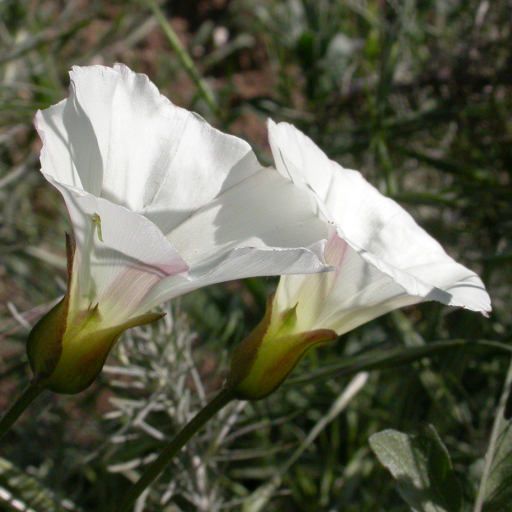
Plant Overview
Known as the Island Morning Glory, this native Californian beauty is the elegant, refined cousin of the common garden morning glory. Often found clinging to the rugged cliffs of the Channel Islands, it brings a romantic, coastal aesthetic to any landscape with its massive, pale blossoms and lush, emerald foliage. Unlike its invasive relatives, this species is a vital part of the West Coast ecosystem.
🔍 How to Identify
- 🌸 Trumpet Blossoms: Features large, funnel-shaped flowers that range from pure white to a delicate "apple-blossom" pink, often reaching up to 4 inches across.
- 🍃 Arrowhead Foliage: The leaves are distinctively triangular or heart-shaped (sagittate) with pointed tips, giving the vine a dense, architectural look.
- 🪵 Woody Base: As a perennial, it develops a thick, woody base over time, which allows it to survive seasonal droughts and regrow vigorously each spring.
🏡 In Your Garden
- 🌊 Coastal Specialist: This plant is "salt-tough." It thrives on salt spray and ocean winds, making it the premier choice for seaside gardens where more delicate vines would wither.
- 🦋 Pollinator Highway: The deep, nectar-rich tubes are a primary food source for native bees and butterflies. It is also a frequent stop for hummingbirds looking for a quick sugar fix.
- 🏗️ Natural Privacy: Because it is a vigorous climber, it is perfect for "living fences." However, it needs a sturdy trellis; it is strong enough to eventually weigh down flimsy plastic netting or light wire.
⚠️ Safety & Toxicity
- 🐾 Mildly Toxic: Like many members of the Convolvulaceae family, the seeds contain alkaloids that can cause digestive distress, lethargy, or disorientation if ingested by pets.
- 👶 Child Safety: The flowers and leaves are generally safe to touch, but it is best to discourage children from picking or eating the seed pods that appear after the blooming season.
✨ Fun Fact
- 📜 The "Large Roof": The name macrostegia comes from the Greek words for "large roof." This refers to the oversized, leaf-like bracts that sit right beneath the flower bud, acting like a tiny umbrella to protect the developing blossom from the elements.

Detailed Care Instructions
To grow Calystegia Macrostegia, also known as California morning glory, you can follow these steps:
- Choose a location: Select a spot that receives full sunlight or partial shade, as Calystegia Macrostegia prefers bright light. Ensure the area has well-draining soil.
- Soil preparation: Loosen the soil and remove any weeds or debris. Amend the soil with compost or organic matter to improve its fertility and drainage.
- Planting: Dig a hole that is twice the size of the root ball of the plant. Place the plant in the hole, making sure that the top of the root ball is level with the soil surface. Fill the hole with soil and gently press down to eliminate air pockets.
- Watering: Water the newly planted Calystegia Macrostegia thoroughly after planting to settle the soil. Afterward, provide consistent moisture, ensuring the soil remains moist but not waterlogged. Avoid overwatering as it can lead to root rot.
- Mulching: Apply a layer of organic mulch, such as wood chips or straw, around the plant to help conserve moisture, suppress weed growth, and maintain an even soil temperature.
- Training or support: If you desire the plant to climb a trellis, fence, or any other support structure, provide it with a suitable support system early on to promote upward growth and prevent sprawling.
- Pruning: Trim the plant as needed to control its size and maintain a tidy appearance. You can also cut back the plant after flowering to encourage bushier growth.
- Fertilization: Calystegia Macrostegia generally does not require heavy fertilization. However, you can apply a balanced slow-release fertilizer in the spring or periodically throughout the growing season, following the manufacturer's instructions.
- Pests and diseases: Monitor the plant for common garden pests such as aphids, spider mites, or whiteflies. Regularly inspect the leaves for any signs of disease, such as powdery mildew or leaf spot, and promptly treat them if necessary.
- Propagation: Calystegia Macrostegia can be propagated through seeds or cuttings. Collect seeds from the dried seed capsules and sow them in the spring. To propagate from cuttings, take stem cuttings from healthy plants in late spring or early summer and root them in moist soil or a rooting medium.
With proper care, Calystegia Macrostegia can thrive and provide beautiful blooms in your garden.

Place in a bright room that is sun drenched almost all day. Or directly in a south-facing window.

Calystegia Macrostegia plant requires regular watering throughout the growing season. The type of soil and environmental conditions will largely determine the frequency and amount of water needed by the plant. Generally, it's best to water this plant deeply and infrequently rather than a little bit often. Shallow watering can lead to shallow root growth.
You can water the plant either manually or use an automatic irrigation system. When watering manually, use a hose or watering can that is fitted with a rose to avoid inadvertently damaging the plant. Water the soil around the base of the plant and avoid getting water on the leaves of the plant, which can cause fungal diseases.
To determine whether the plant needs watering, use a moisture meter or stick your finger into the soil about an inch deep. If the soil feels dry, it's time to water. In hot weather or during periods of drought, the plant may require more frequent watering.
It's also important to water the plant in the morning or early evening to avoid evaporation and ensure that the plant has enough time to absorb the water before the heat of the day. Overwatering can lead to root rot and other problems, so be careful not to water the plant excessively.
To fertilize this plant, you should first choose a balanced, all-purpose fertilizer with equal parts nitrogen, phosphorus, and potassium. Apply the fertilizer at a rate of one tablespoon per square foot of soil surrounding the plant, making sure to distribute it evenly. Water the plant immediately after fertilizing to help the nutrients penetrate the soil. Repeat this process every four to six weeks during the growing season, but avoid fertilizing in winter or when the plant is dormant.
Calystegia Macrostegia is a plant species that requires soil with specific properties to grow well. The ideal soil for this plant should be well-draining and rich in nutrients. A good mix of sandy and loamy soil would be suitable for this plant to thrive. The soil pH should be mildly acidic to neutral (between pH 5.5 and 7). It is also essential to ensure that the soil is not waterlogged as this can lead to root rot, which can be fatal to the plant. Therefore, it is crucial to provide adequate drainage in the soil. Furthermore, a layer of organic matter, such as compost or aged manure, can be added to the soil to enrich it and improve its water-holding capacity. Additionally, the plant prefers a location with full sun exposure and protection from strong winds. With the right soil conditions, Calystegia Macrostegia can become a beautiful and healthy plant.
To propagate this plant, remove a stem cutting from an established plant. The cutting should be around 4-6 inches in length and should include at least one node. Remove the leaves from the bottom half of the stem and dip the cut end in rooting hormone. Plant the cutting in moist soil and keep it in a warm, bright location. Water the cutting regularly, but be careful not to overwater as this can cause it to rot. After several weeks, the cutting should begin to develop roots and can be transplanted into a larger pot or garden bed.








