Plant Overview
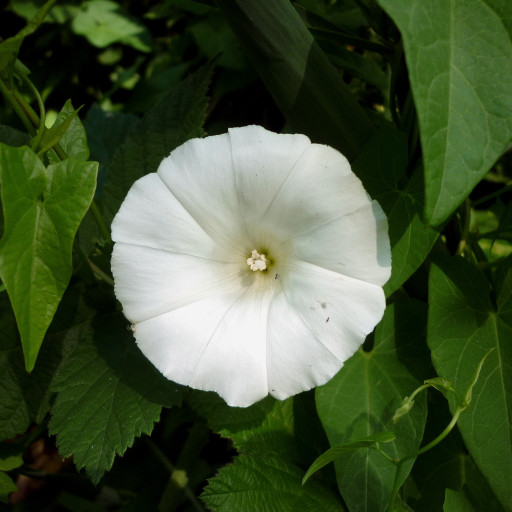
Often called "Hedge Bindweed" or the whimsical "Old Man’s Nightcap," this vigorous climber is a master of transformation. While its large, snowy-white trumpets look like something out of a romantic cottage garden, it is famous among gardeners for its relentless ability to "bind" and scramble over anything in its path. Native to much of the Northern Hemisphere, it is a resilient survivor that thrives where other plants struggle.
🔍 How to Identify
- 🌿 The Leaves: Distinctive heart-shaped or arrowhead-shaped foliage with a smooth texture and pointed tips, appearing alternately along the vine.
- 🎺 The Flowers: Large, pristine white (occasionally pale pink) funnel-shaped blooms that can reach up to 3 inches across. Unlike its cousin, the Field Bindweed, these flowers are backed by two large, leafy green bracts that partially hide the base.
- 🌀 The Growth Habit: A twining perennial vine that climbs by wrapping its stems counter-clockwise around fences, shrubs, and even other flowers.
🏡 In Your Garden
- 🌱 The Invisible Network: This plant is notoriously difficult to "evict" because of its brittle, white underground rhizomes. Even a tiny fragment of root left in the soil can regenerate into a full-sized plant, making it a persistent guest once it moves in.
- ☀️ Light Competitor: While it provides beautiful ground cover, it is a "smotherer." It uses other plants as scaffolding to reach the sunlight, which can eventually weigh down branches or block light from the host plant’s leaves.
⚠️ Safety & Toxicity
- 🐾 Mildly Toxic: While not usually fatal, the plant contains alkaloids that can act as a strong purgative.
- 🤢 The Risk: If ingested by curious pets or livestock, it can cause significant digestive upset, including colic or diarrhea. Gardeners with sensitive skin may also experience mild irritation from the sap when pulling the vines manually.
✨ Fun Fact
The nickname "Old Man's Nightcap" comes from the way the flowers behave; they are strictly "daytime" beauties, opening wide in the morning sun and folding themselves into a tight, twisted cone as soon as evening falls or rain begins.

Detailed Care Instructions
| Humidity | Normal |
| Lighting | Full Sun |
| Toxicity | Poisonous |
| Difficulty | Medium |
| Hardiness Zones | 4 - 8 |
To grow Calystegia Sepium, also known as bindweed or hedge bindweed, follow these steps:
- Select a suitable location: Choose a spot in your garden that receives full sunlight or partial shade. Bindweed can tolerate various soil types but prefers well-draining soil.
- Prepare the soil: Before planting, loosen the soil using a garden fork or tiller. Remove any weeds or grass from the area. Amend the soil with compost or well-rotted manure to improve fertility and drainage if necessary.
- Plant the seeds or plants: Bindweed can be grown from seeds or purchased as seedlings/transplants from a local nursery. If using seeds, sow them directly in the garden bed during spring or early summer. Scatter them lightly over the desired area, then cover them with a thin layer of soil. Water gently after planting. If using transplants, dig a hole slightly larger than the plant's root ball, place it in the hole, and backfill with soil. Gently firm the soil around the plant and water thoroughly.
- Watering: Keep the soil slightly moist until the plant becomes established, then water regularly, especially during dry spells. Avoid overwatering, as bindweed adapts well to dry conditions.
- Mulch the area: Apply a layer of organic mulch, such as straw or wood chips, around the plants. Mulch helps to suppress weed growth, retain soil moisture, and moderate soil temperature.
- Provide support: Calystegia Sepium is a climbing perennial vine that requires support to grow upward. Install a trellis, fence, or similar structure to give the plant something to climb upon. Alternatively, plant bindweed near existing structures, such as walls or fences, for it to naturally grow upward.
- Pruning and maintenance: Bindweed can become invasive, so regular pruning is necessary to keep it under control. Cut back the plant after flowering to prevent it from spreading excessively. Be diligent in removing any new growth that appears in unwanted areas.
- Pests and diseases: Bindweed is generally not prone to severe pest or disease problems. Monitor the plant for common issues like aphids or powdery mildew. If necessary, treat affected plants with appropriate insecticides or fungicides.
Remember, Calystegia Sepium is considered an invasive species in some regions. Check with your local agricultural extension office or gardening experts to ensure its cultivation is recommended and legal in your area.

Place in a bright room that is sun drenched almost all day. Or directly in a south-facing window.

To water this specific plant, it's important to make sure its soil stays consistently moist but not waterlogged. It's recommended to water deeply and infrequently, allowing the soil to dry out slightly between watering sessions. In the summer and during periods of high heat, the plant may require more frequent watering. It's best to water in the morning or early evening to prevent excessive evaporation and to avoid wetting the foliage, which can increase the risk of fungal diseases. When watering, aim for the base of the plant rather than the leaves or flowers. Additionally, it's important to use a well-draining soil mix to prevent water from accumulating in the roots.
To properly fertilize this plant, you should use a balanced fertilizer that contains equal parts nitrogen, phosphorus, and potassium. Apply the fertilizer in the early spring before new growth appears and once more in the early summer. Make sure to follow the instructions on the fertilizer packaging, as over-fertilizing can be harmful to the plant. Additionally, it is important to provide the plant with a steady supply of nutrients by regularly adding organic matter to the soil. This can be achieved by adding compost or well-rotted manure to the soil around the base of the plant.
The recommended soil type for Calystegia Sepium is one that is well-draining, fertile, and loamy. A soil pH level of 6.0 to 7.5 is also ideal for this plant. The soil should also be rich in organic matter and nutrients, as Calystegia Sepium requires a lot of nutrients to thrive. It is best to avoid using heavy clay soils as they can trap water and suffocate the plant's roots. Additionally, the soil should be kept moist but not overwatered as this plant does not tolerate waterlogged conditions. The use of a good quality, balanced fertilizer will also help to promote healthy growth.
To propagate this plant, you will need to identify the stems that have nodes, which are small bumps on the stem where leaves and roots can grow. Use clean and sharp pruning shears to cut these stems into pieces that have at least one node each.
Prepare a pot with well-draining soil and perlite mixture or use a seed tray with moist seed-starting mix. Plant the stem cuttings about 1 to 2 inches deep, with the node buried in the soil. Make sure that the soil is kept moist, but not too wet.
Place the pot or tray in a warm and bright location with indirect sunlight. After a few weeks, you should start to see new growth and roots forming from the nodes. Once the plants have developed strong roots and leaves, they can be transplanted into their permanent location in your garden or in separate pots.
To encourage healthy growth, fertilize the plants with a balanced fertilizer every few months or use organic compost. The Calystegia Sepium plant is a vigorous grower, so make sure to provide enough space for them to spread out and grow. With proper care and maintenance, these plants will thrive and add beauty to your garden.
Common pests of the hedge bindweed include Aphids, larvae. Make a habit of checking your hedge bindweed frequently for pests so that any infestations can be caught and managed early.








