Plant Overview
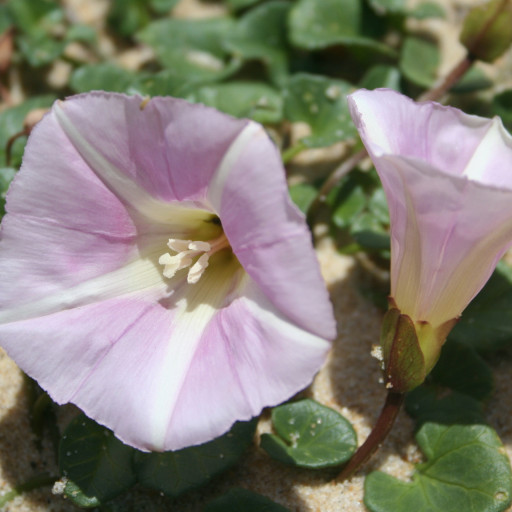
Often called the "Sea Bell" or "Sea Bindweed," this resilient beauty is the undisputed queen of the dunes. Unlike its garden-invading cousins, Calystegia soldanella thrives where most plants perish—in shifting sands and harsh, salty sea sprays. It serves as a vital pioneer species, acting as a natural anchor that helps stabilize coastal ecosystems while painting the shoreline with delicate pink trumpets.
🔍 How to Identify
- 🍃 The Leaves: Look for glossy, dark green, and distinctively kidney-shaped (reniform) leaves. They are somewhat thick and fleshy, a clever adaptation that helps the plant store water in its arid, salty environment.
- 🌸 The Blooms: Large, funnel-shaped flowers that are typically pale pink to soft violet. Each bloom features five prominent white stripes radiating from the center, creating a "star" pattern.
- 🌱 Growth Habit: Unlike other bindweeds that climb aggressively, this species is a prostrate, trailing vine. It forms low-growing carpets that hug the sand closely to avoid the worst of the coastal winds.
🏡 In Your Garden
- 🏖️ Coastal Specialist: This plant is the ultimate choice for "maritime" gardening. It is highly salt-tolerant and thrives in poor, sandy soils where other perennials might wither. It is often used in restoration projects to prevent dune erosion.
- 🚫 Deep Root Logic: It is notoriously difficult to transplant once established. This is because it develops a surprisingly deep and fragile taproot system designed to find moisture deep beneath the sand. If you wish to grow it, it is best to sow seeds directly into their permanent location.
⚠️ Safety & Toxicity
- 🐾 Mildly Toxic: Like many members of the Morning Glory family (Convolvulaceae), this plant contains alkaloids that can be harmful if ingested.
- 🤢 The Risk: Ingestion by pets or curious children can lead to digestive upset, including nausea or a strong laxative effect. While it isn't considered "deadly," it is best treated as an ornamental plant rather than an edible one.
✨ Fun Fact
- 🌊 Ocean Travelers: The seeds of the Sea Bindweed are encased in a tough, waterproof coat, allowing them to float on ocean currents for months. They can travel hundreds of miles across the sea and still remain viable, germinating only when they finally wash up on a suitable sandy beach!

Detailed Care Instructions
To grow Calystegia Soldanella, also known as shore bindweed or beach morning glory, follow these steps:
- Choose the right location: This plant is native to coastal areas, so it grows best in sandy, well-draining soil. It prefers full sun but can tolerate partial shade.
- Prepare the soil: Amend the soil with organic matter, such as compost or well-rotted manure, to improve its fertility and drainage. Remove any weeds or debris from the planting area.
- Sow seeds or transplant: You can start Calystegia Soldanella from seeds or buy established plants from a nursery. If sowing seeds, scatter them on the soil surface and lightly press them into the soil. If transplanting, dig a hole slightly larger than the container's size and gently place the plant into the hole.
- Water properly: Keep the soil moist but not waterlogged during the growing season, as the plant does not tolerate drought. Water deeply but infrequently, allowing the soil to dry slightly between waterings.
- Mulch: Apply a layer of organic mulch, such as straw or wood chips, around the plants to help retain soil moisture and suppress weed growth. Avoid covering the plant's stems or leaves with the mulch.
- Support the plant: Calystegia Soldanella is a trailing vine that can spread about 3-6 feet (1-2 meters). Provide support, such as a trellis or stakes, for the plant to climb on if desired.
- Fertilize sparingly: These plants do not require heavy fertilization. Use a balanced organic fertilizer once or twice during the growing season, following the manufacturer's instructions.
- Prune if necessary: Trim back any dead or damaged foliage to maintain the plant's appearance and health.
- Protect from frost: Calystegia Soldanella is not frost-tolerant. If you live in a region with cold winters, provide protection by covering the plant with a frost blanket or bring potted plants indoors during the colder months.
- Monitor for pests and diseases: Keep an eye out for common garden pests, such as aphids or slugs, and take appropriate measures to control them. Preventive measures like proper spacing and good air circulation can help prevent diseases.
By following these guidelines, you can successfully grow Calystegia Soldanella and enjoy its beautiful flowers and trailing vines.

Place in a bright room that is sun drenched almost all day. Or directly in a south-facing window.

1. Look closely at the plant's leaves to determine when it needs watering. If the leaves start to wilt or droop, it is time to give it water.
2. Before watering the plant, make sure the soil is dry to the touch. If the soil is still moist, then wait a few more days before watering.
3. Use a watering can with a narrow spout to water the soil directly around the plant's roots. Be careful not to pour water directly onto the leaves, as this can cause damage or disease.
4. Water the plant slowly and evenly to ensure that the water reaches the deep roots. Allow the soil to absorb the water fully before moving on to the next plant.
5. Avoid overwatering the plant as this can cause the roots to rot and damage the plant. Check the soil regularly to ensure it is damp but not waterlogged.
6. During the summer months, give the plant more water than usual as it may require more hydration during the hot weather.
7. Always water the plant early in the morning or late in the evening to avoid evaporation and ensure the plant has enough time to absorb the water before the heat of the day.
To properly fertilize this plant, start by prepping the soil with a balanced fertilizer before planting. Once established, apply a slow-release fertilizer once a year in early spring, or use a liquid fertilizer every 2-4 weeks during the growing season. Avoid using too much nitrogen, as it can encourage leafy growth at the expense of flowers. Always follow the instructions on the fertilizer packaging and water the plant thoroughly after fertilizing.
The ideal soil for the Calystegia Soldanella plant is a well-draining mixture that is high in organic matter. It should ideally be slightly acidic in nature and should be kept moist at all times. The soil should be rich in nutrients, especially nitrogen, and should be fertilized regularly to ensure healthy growth. It is important to avoid heavy soils that are prone to waterlogging, as this can lead to root rot and other fungal diseases. In general, the Calystegia Soldanella plant prefers a sandy or loamy soil that is slightly acidic, with a pH range of 5.5 to 6.5. It is important to keep the plant well-watered and to avoid letting the soil dry out completely, as this can cause stress and damage to the roots. Overall, the key to successful cultivation of Calystegia Soldanella is to provide it with a well-draining, nutrient-rich soil that is kept consistently moist.
Calystegia Soldanella plant can be propagated through various means such as division, cuttings, and seeds.
To propagate through division, carefully separate the plant into smaller sections, ensuring that each section has enough roots and leaves. Plant the sections in separate pots or in a new location in the garden, and water regularly until established.
To propagate through cuttings, take a stem cutting about 6 inches long, remove any lower leaves, and dip the cut end in rooting hormone. Plant the cutting in a well-draining potting mix and keep it in a bright, shaded area. Water regularly and wait for roots to develop before transplanting.
To propagate through seeds, collect the ripe seed pods and allow them to dry for a few days. Gently crush the pods to release the seeds and scatter them evenly in a well-prepared garden bed. Water regularly and keep in a shaded area until seedlings emerge, then gradually move them to a sunnier location.
It is important to note that Calystegia Soldanella plant can be invasive in some regions, so it is important to research local regulations and consider potential impacts on the ecosystem before propagating.








