Plant Overview
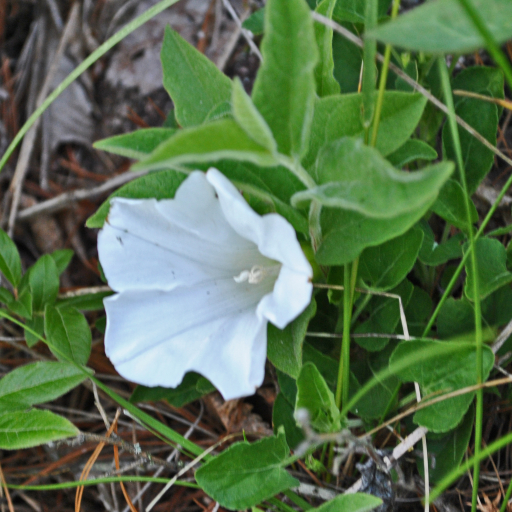
Commonly known as Low Bindweed or Dwarf Bindweed, this plant is the polite cousin of the notorious climbing morning glories. While its relatives are famous for aggressively strangling fences and neighboring plants, the Low Bindweed is much more reserved, choosing to grow in charming, upright tufts. Often found in sandy barrens and dry meadows, it acts as a delicate, white-flowered ground cover for rugged landscapes.
🔍 How to Identify
- 🌸 The Bloom: Features large, pure white, funnel-shaped flowers (up to 3 inches long) that resemble miniature gramophones tucked into the foliage.
- 📏 Growth Habit: Unlike climbing vines, this species stays low to the ground, usually standing only 6 to 12 inches tall with an erect or slightly leaning stem.
- 🍃 Velvety Foliage: The spade-shaped leaves are often covered in fine, soft hairs, giving the plant a muted, grayish-green appearance compared to the glossy leaves of its climbing relatives.
🏡 In Your Garden
- ☀️ Sun-Seeker: This plant thrives in "tough-love" environments. It prefers full sun and well-drained, sandy, or gravelly soil where more delicate garden plants might wilt.
- 🌱 Deep Roots: It is a perennial that spreads via underground rhizomes. Because it develops a deep root system to survive droughts, it can be difficult to relocate once established, so choose its "forever home" carefully.
⚠️ Safety & Toxicity
- 🐾 Mildly Toxic: Like most members of the Convolvulaceae (Morning Glory) family, the seeds and leaves contain alkaloids that can cause digestive distress if eaten.
- 👶 Keep Away: It is best to keep this plant out of reach of curious pets and toddlers, as ingestion may lead to vomiting or lethargy.
✨ Fun Fact
- 📏 Hand-Spanned: The species name spithamaea comes from the ancient Greek word "spithame," a unit of measurement representing the span of a human hand—a direct reference to the plant’s petite and manageable height!

Detailed Care Instructions
To grow Calystegia Spithamaea, also known as the Small-bindweed or Lesser Bindweed, you can follow these steps:
- Choose a suitable location: Calystegia Spithamaea prefers full sun to partial shade. Select a spot in your garden where it will receive at least 4-6 hours of direct sunlight each day.
- Prepare the soil: The plant thrives in well-drained soil. Before planting, amend the soil with organic matter like compost or aged manure to enrich its fertility. Also, ensure the soil pH is around neutral to slightly acidic (pH 6-7).
- Planting: Calystegia Spithamaea can be propagated through seeds or division. If you have seeds, sow them directly into the prepared soil in early spring or fall. Cover the seeds lightly with soil, as they require some degree of light for germination. If you divide an existing plant, carefully dig up the clump and separate the sections, making sure each section has some roots attached.
- Watering: Keep the soil evenly moist but not waterlogged. Water the plant regularly, especially during dry spells or in hot weather. Avoid overwatering, as it can lead to root rot.
- Mulching: Apply a layer of organic mulch around the base of the plant to help retain moisture, suppress weed growth, and insulate the roots during temperature fluctuations.
- Pruning: Calystegia Spithamaea tends to spread aggressively. To control its growth, prune it regularly by trimming back any unwanted or overgrown vines. This will also help maintain a neat appearance.
- Support: As the plant grows, it may need support to climb. Provide a trellis, fence, or other support structure for the vines to cling onto.
- Fertilizing: Calystegia Spithamaea generally does not require heavy feeding. However, you can apply a balanced slow-release fertilizer or organic compost in the early spring to promote healthy growth.
- Pests and diseases: The plant is relatively resistant to pests and diseases. However, keep an eye out for common garden pests like aphids, spider mites, or snails, and take appropriate measures if you notice any infestations.
- Propagation: If you wish to propagate more plants, you can collect and sow seeds from mature flowers in late summer or early fall.
By following these steps, you should be able to successfully grow Calystegia Spithamaea in your garden.

Place in a bright room that is sun drenched almost all day. Or directly in a south-facing window.

To water this plant, it is important to regularly check the moisture level of the soil by inserting a finger into the soil up to the second knuckle. If the soil is dry at this depth, it is time to water the plant. Use a watering can or hose to water the plant at the base, being careful not to get water on the leaves or flowers. Water the plant thoroughly until water drains out of the bottom of the pot or the surrounding soil is saturated. Do not let the plant sit in standing water, as this can lead to root rot. Water the plant more frequently during hot and dry weather conditions.
To fertilize this plant, use a balanced fertilizer with equal parts nitrogen, phosphorus, and potassium. Apply the fertilizer every three to four weeks during the growing season, making sure to follow the instructions on the label for the appropriate dosage. Avoid over-fertilizing, as this can lead to excessive growth and reduced flowering. Water the plant thoroughly after fertilizing to help distribute the nutrients evenly throughout the soil.
It is recommended to use well-draining soil mix with a slightly acidic pH level around 6.5-7 for this plant. The soil should have good texture and be rich in organic matter. Adding perlite or sand can improve drainage. It is important to avoid waterlogged or heavy clay soil. Soil should be moist but not soggy. Fertilizer can be added during the growing season.
There are various methods for propagating this plant, including stem cuttings, layering, and division.
For stem cuttings, select healthy stems from the parent plant that are approximately 4-6 inches long. Remove the leaves from the bottom half of the stem and dip the cut end in rooting hormone. Plant the cutting in well-draining soil and keep it moist until it establishes roots.
Layering involves bending a low-growing stem down to the ground and burying it slightly with soil. Make a small cut on the underside of the buried stem to encourage root growth. Once roots have developed, the new plant can be separated from the parent.
Division can be done in the spring or fall. Dig up the parent plant and gently separate the roots into smaller clumps, making sure each clump has at least one healthy stem. Replant the divided clumps in a well-draining soil.
All propagation methods require consistent moisture and protection from extreme temperature fluctuations until the new plant has become established.








