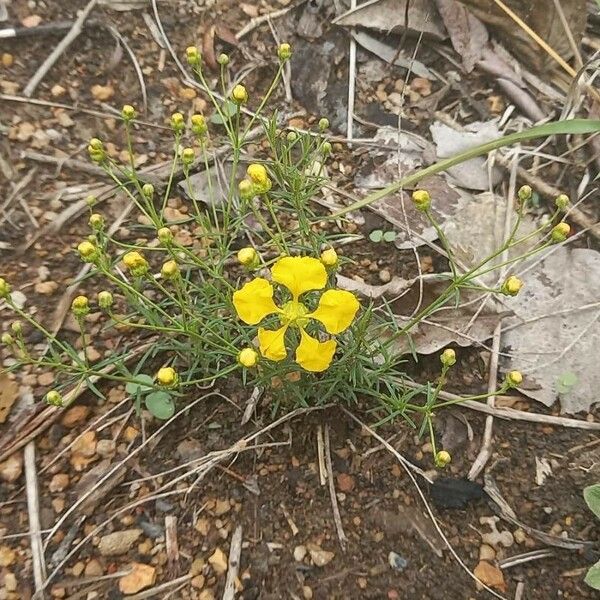
Plant Overview
Hailing from the vast, sun-drenched savannas of the Brazilian Cerrado, Camarea ericoides is a resilient little gem often nicknamed the "Savanna Heath." Despite its delicate appearance, this plant is a survival specialist, evolved to thrive in rocky soils and endure the rhythmic cycles of fire and drought. Its name "ericoides" is a nod to its striking resemblance to the Heather family (Ericaceae), giving it a unique, northern-shrub look in a tropical setting.
🔍 How to Identify
- 🌿 Foliage: The leaves are tiny, narrow, and needle-like, crowded along the stems to minimize water loss. They have a distinct "heath-like" texture that feels stiff to the touch.
- 🌼 Flowers: It produces cheerful, bright yellow flowers with five distinct petals. If you look closely, you’ll see the petals have a "clawed" base, a classic signature of the Malpighiaceae family.
- 🪵 Growth Habit: This is a low-growing subshrub, often featuring a "xylopodium"—a thick, woody underground structure that stores nutrients and allows the plant to resprout quickly after a wildfire.
🏡 In Your Garden
- ☀️ Sun & Soil: This plant is a sun-worshiper that demands high light levels. In a garden setting, it requires extremely well-draining, sandy, or gravelly soil; it will suffer quickly if its "feet" stay wet or if the soil is too rich in organic matter.
- 🔥 Resilience Context: Because it evolved in fire-prone ecosystems, it is incredibly hardy against heat. It doesn’t like being moved once established because of its specialized root system, so pick a permanent, sunny spot from the start.
⚠️ Safety & Toxicity
- 🐾 Status: Generally considered non-toxic to humans, but caution is advised with pets.
- 🐕 Details: While there are no documented cases of severe poisoning, many members of the Malpighiaceae family contain various alkaloids that can cause mild digestive upset in curious cats or dogs if ingested in large quantities.
✨ Fun Fact
The Camarea ericoides is part of a fascinating group of plants that utilize "oil-collecting" bees for pollination. Instead of offering just nectar, the flowers have specialized glands that produce fatty oils, which specific bee species collect to feed their larvae!

Detailed Care Instructions

Some plants require more regular watering than others, which should be done every few days. It's critical to maintain the soil moist all of the time. The water requirements of the same plant placed in pots with varying sizes will differ. Because the water in the smaller pot evaporates faster than the water in the larger pot, it will require more watering. Regardless of pot size, the surface should constantly be maintained moist.







