Plant Overview
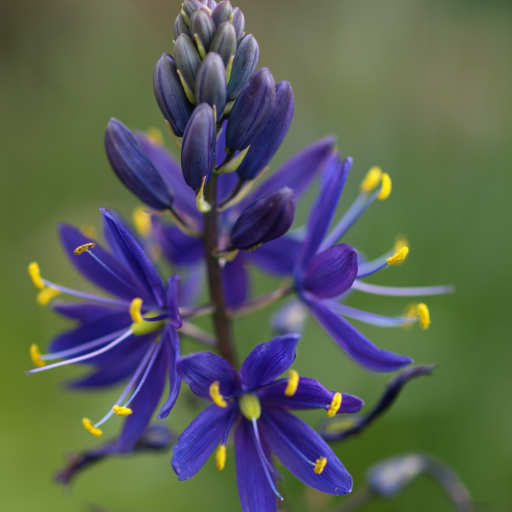
Often called the Great Camas or Leichtlin's Camas, this majestic perennial is a true icon of the Western North American prairies. In late spring, it transforms meadows into seas of deep violet-blue, standing tall with an elegance that few other wildflowers can match. Historically, it was a vital resource for Indigenous peoples, though it is now a beloved "architectural" plant for modern garden borders.
🔍 How to Identify
- 🌸 Star-Shaped Blooms: The plant features tall, sturdy racemes (spikes) crowded with six-petaled, star-shaped flowers that open from the bottom up.
- 🍃 Grass-like Foliage: Long, narrow, strap-shaped leaves emerge from the base, resembling thick clumps of grass or oversized chives.
- 📏 Stately Height: It is much taller than its cousin, Camassia quamash, often reaching up to 3 or 4 feet, making it a dramatic vertical element in any landscape.
- 🎨 Withered Petals: One unique way to spot this species is that as the flowers fade, the petals twist together around the ovary, unlike some other species where they fall away individually.
🏡 In Your Garden
- 💧 Seasonal Moisture: Unlike many bulbs that demand dry soil year-round, the Great Camas loves "wet feet" during the spring growing season. It thrives in heavy clay soils that stay moist until the flowers fade.
- ☀️ Summer Dormancy: Once it finishes blooming, the plant goes dormant and prefers to stay relatively dry. It is incredibly long-lived and hates being moved, so choose its "forever home" carefully to avoid disturbing its deep-set bulbs.
- 🦋 Pollinator Magnet: Its nectar-rich stars are a favorite for bumblebees and butterflies, making it a staple for wild-style or meadow-themed gardens.
⚠️ Safety & Toxicity
- ✅ Generally Safe: Camassia leichtlinii is considered non-toxic to humans and is generally ignored by deer and rabbits.
- 🛑 The Deadly Double: The biggest danger is mistaken identity. It often grows alongside the "Death Camas" (Toxicoscordion venenosum), which has similar leaves and white flowers but is highly toxic. Never forage for wild Camas bulbs unless you are an expert, as the bulbs look nearly identical when the plants aren't in bloom.
✨ Fun Fact
When Lewis and Clark first encountered vast fields of blooming Camas in the early 1800s, they famously wrote in their journals that the solid carpet of blue flowers was so dense it looked like a shimmering lake of water from a distance.

Detailed Care Instructions
| Humidity | Normal |
| Difficulty | Medium |
| Hibernation | Cold Period |
| Hardiness Zones | 3 - 8 |
To grow Camassia Leichtlinii, follow these steps:
- Choose a suitable location: Camassia Leichtlinii prefers full sun to partial shade. Ensure that the soil is well-draining and does not tend to become waterlogged.
- Soil preparation: Before planting, amend the soil with organic matter, such as compost or well-rotted manure, to improve drainage and provide nutrients. Camassia Leichtlinii prefers slightly acidic to neutral soil pH.
- Planting time: Plant Camassia Leichtlinii bulbs in the fall, around September to October. This allows the bulbs to establish roots before winter and ensures spring bloom.
- Planting bulbs: Dig a hole around 4-6 inches deep and place the bulbs with the pointed end facing up. Space each bulb around 8-10 inches apart. Cover the bulbs with soil and gently firm it down.
- Watering: After planting, water the bulbs thoroughly to settle the soil and provide moisture. Water regularly during the growing season, keeping the soil evenly moist but not waterlogged. Reduce watering after the foliage dies down in summer.
- Fertilizer: Camassia Leichtlinii generally does not require fertilizer if the soil has been properly amended with organic matter. However, if necessary, you can apply a balanced slow-release fertilizer in early spring.
- Mulching: Mulch around the plants with a layer of organic material, such as straw or wood chips, to retain moisture, suppress weeds, and regulate soil temperature.
- Maintenance: Camassia Leichtlinii does not require much maintenance. Remove any faded or yellowing foliage after blooming. Do not cut or remove the foliage until it has fully yellowed and withered, as it helps provide nutrients to the bulbs.
- Division: Every 4-5 years, Camassia Leichtlinii bulbs can be lifted and divided in the fall. This helps prevent overcrowding and stimulates better flowering. Replant the divided bulbs immediately.
- Pest and disease control: Camassia Leichtlinii is generally not prone to serious pest or disease problems. However, watch out for slugs, snails, and squirrels, which may occasionally damage the plants. Apply appropriate pest control measures if needed.
Following these steps should help you successfully grow Camassia Leichtlinii plants in your garden. Enjoy their beautiful spring blooms!

Place in a bright room that is sun drenched almost all day. Or directly in a south-facing window.

To water this particular plant, it is recommended to check the moisture level of the soil first by sticking your finger into the soil. If the top inch of soil is dry, then it is time to water the plant. Use a watering can or hose to gently water the soil around the plant, being careful not to splash water on the leaves. Water the plant deeply, making sure the soil is moistened all the way to the roots. Be careful not to overwater the plant, as this can lead to root rot. It is recommended to water this plant every 7-10 days, depending on the climate and soil conditions.
To fertilize this plant, use a balanced, slow-release fertilizer with an N-P-K ratio of 10-10-10. Apply the fertilizer in the early spring as the plant begins to emerge from the soil. Avoid over-fertilizing, which can lead to leaf burn and stunted growth. Water the plant well after fertilizing to help the nutrients penetrate the soil.
When planting Camassia Leichtlinii, it is recommended to use a well-draining soil that is rich in organic matter. This type of soil should also be slightly acidic to neutral in pH, with a range of 6.0-7.0 being ideal. The soil texture should be loamy, with a good balance of sand, clay, and silt to promote healthy root growth and water retention. It is important to avoid heavy, compacted soils that may impede root development and cause waterlogging. Additionally, the soil should be kept evenly moist but not waterlogged, as Camassia Leichtlinii plants prefer a consistently moist environment but are susceptible to root rot if waterlogged. Fertilization is not usually necessary for these plants, but a light application of balanced fertilizer in the spring can help promote healthy growth.
- Select a healthy Camassia Leichtlinii plant with strong stems and leaves.
- In the early spring, when the plant begins to emerge from the soil, carefully dig up the entire root system.
- Gently separate the individual corms, making sure to keep some roots attached.
- Plant the separated corms in a well-draining soil mixture, with the top of the corms just below the surface of the soil.
- Water the newly planted corms well, and keep the soil consistently moist.
- When new growth appears, fertilize the corms with a balanced fertilizer.
- Continue to water and fertilize the corms throughout the growing season, and protect them from pests and diseases.
- In the fall, after the foliage has died back, carefully dig up the corms again and separate any new corms that have formed.
- Store the corms in a cool, dark, and dry place until the following spring, when you can repeat the process.
- Over time, your Camassia Leichtlinii plant will multiply and produce more corms, resulting in larger and more impressive displays of blooms.








