Plant Overview
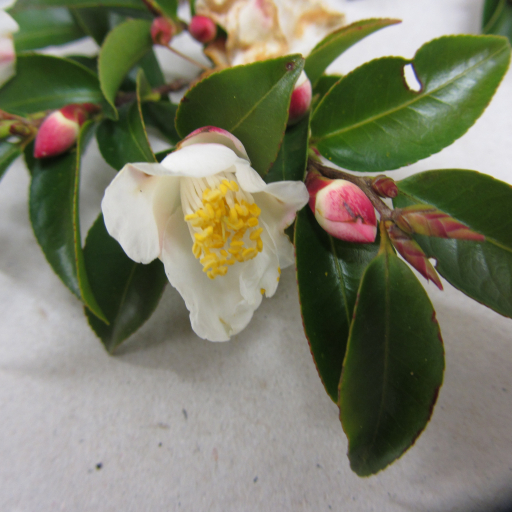
Known as the Lutchu Camellia, this delicate shrub is the secret ingredient behind the world’s most fragrant camellia hybrids. Native to the subtropical Ryukyu Islands of Japan, it breaks the stereotype that camellias are "look-but-don't-smell" plants. Its dainty white blossoms might be small, but they pack a powerful, sweet punch that can perfume an entire corner of your garden.
🔍 How to Identify
- 🌸 Tiny Blossoms: Unlike the massive "dinner plate" blooms of other species, these are miniature, single white flowers with a central burst of golden-yellow stamens.
- 🍃 Elegant Foliage: The leaves are noticeably smaller and narrower than the common Camellia japonica, featuring a shiny, deep green finish and finely toothed edges.
- 👃 The Signature Scent: Its most defining feature is an intense, honey-sweet fragrance that resembles jasmine or lilies—a trait that is exceptionally rare for the Camellia genus.
🏡 In Your Garden
- 🪴 Soil Sensitivity: This plant is an "acid-lover." If your garden soil is alkaline, the leaves will turn yellow as the plant struggles to breathe. It thrives best in ericaceous (acidic) soil with excellent drainage.
- 🌤️ Filtered Sunlight: In its natural habitat, it grows under the canopy of larger trees. To mimic this, place it in a spot with dappled shade. It craves light to produce flowers but will scorch if left in the direct, harsh afternoon sun.
- ✂️ Graceful Habit: It has a naturally airy and slightly weeping growth habit. If you prefer a tidier look, perform light pruning immediately after the flowers fade to encourage a bushier shape for the next season.
⚠️ Safety & Toxicity
- ✅ Safe Status: Camellia lutchuensis is generally considered non-toxic and safe for home environments.
- 🐾 Pet Friendly: It is not known to be poisonous to cats, dogs, or horses, making it a "worry-free" addition to a family landscape.
- 👶 Child Safe: While not edible, it does not possess thorns or skin-irritating saps, making it safe for curious little hands.
✨ Fun Fact
Most of the famous "scented" camellias you find in nurseries today, such as 'High Fragrance' or 'Sweet Emily Kate,' owe their smell to this single wild species. It is the primary "mother" plant used by breeders to inject perfume into the Camellia family!

Detailed Care Instructions
Camellia lutchuensis, also known as Lutchu camellia, is a beautiful flowering plant that can be grown in gardens or containers. Here are some tips to help you successfully grow Camellia lutchuensis:
- Location: Choose a location that receives partial shade to full sun, with protection from harsh afternoon sun. Camellias prefer well-draining, slightly acidic soil.
- Planting: Plant Camellia lutchuensis in the spring or fall. Dig a hole that is two times wider and as deep as the root ball. Gently loosen the roots before planting and backfill the hole with soil, making sure the plant is at the same level as it was in the container.
- Watering: Keep the soil consistently moist but not waterlogged. Water deeply when the top inch of soil feels dry. Mulch around the base of the plant to retain moisture and suppress weeds.
- Fertilizing: Feed Camellia lutchuensis with an acid-loving fertilizer in the spring before new growth begins. Repeat every 4-6 weeks during the growing season.
- Pruning: Prune Camellia lutchuensis after flowering to maintain its shape and promote new growth. Remove dead or diseased branches, as well as any crossing or crowded branches.
- Pests and diseases: Keep an eye out for common Camellia pests such as scale, aphids, and spider mites. Treat infestations promptly with insecticidal soap or neem oil. Monitor for diseases such as leaf spot and root rot, which can be treated with fungicides.
- Winter protection: Provide winter protection for Camellia lutchuensis if you live in a colder climate. Mulch around the base of the plant and protect from harsh winds.
By following these tips, you can successfully grow and enjoy the beauty of Camellia lutchuensis in your garden.

Place in a bright room that is sun drenched almost all day. Or directly in a south-facing window.

To water Camellia Lutchuensis, it is important to ensure that the soil is kept consistently moist but not waterlogged. This can be achieved by watering regularly, especially during hot and dry periods. Water deeply, allowing the water to penetrate the root system, rather than just moistening the surface of the soil. It is also important to water at the base of the plant, avoiding wetting the foliage, as this can lead to fungal diseases.
Monitor the soil moisture levels regularly by checking the top few inches of soil. If the soil feels dry to the touch, it is time to water. Additionally, consider using a layer of mulch around the base of the plant to help retain moisture and regulate soil temperature.
During the winter months or periods of dormancy, reduce the frequency of watering, as the plant will require less moisture during these times. Additionally, be aware of any signs of overwatering, such as yellowing or wilting leaves, as this may indicate that the plant is receiving too much water. Adjust your watering schedule accordingly to ensure the health and vitality of your Camellia Lutchuensis plant.
To successfully fertilize this plant, you should first choose a fertilizer specifically designed for acid-loving plants. Apply the fertilizer in early spring before new growth begins, following the instructions on the package for the proper dosage. Make sure to water the plant thoroughly after applying the fertilizer to help it absorb the nutrients. It is also important to avoid over-fertilizing, as this can harm the plant. Additionally, you may consider mulching around the base of the plant with organic material to help retain moisture and provide additional nutrients as it decomposes.
For Camellia lutchuensis, it is recommended to use a well-draining acidic soil with a pH level between 5.0 and 6.5. The soil should be rich in organic matter to provide nutrients for the plant's growth. Adding compost or peat moss can help improve the soil structure and fertility. Additionally, incorporating a slow-release fertilizer specifically formulated for acid-loving plants can further support the Camellia lutchuensis's health and vigor. Overall, selecting a soil that mimics the plant's natural habitat conditions will help promote optimal growth and flowering.
To propagate Camellia Lutchuensis plant, follow these steps:
- Choose a healthy and mature plant from which to take cuttings. Use clean, sharp scissors or pruning shears to cut 4-6 inch stem cuttings from the plant.
- Remove the lower leaves from the cutting, leaving just a few leaves at the top. This will help the cutting focus its energy on root development.
- Dip the cut end of the stem cutting in rooting hormone to promote root growth. Place the cutting in a small container filled with moist, well-draining potting soil.
- Keep the cutting in a warm, humid environment with bright, indirect light. You can cover the container with a plastic bag or dome to help retain moisture.
- Keep the soil consistently moist, but not waterlogged, as the cutting establishes roots. Check the soil regularly and water as needed.
- After a few weeks, gently tug on the cutting to check for resistance, which indicates that roots have formed. Once roots have developed, you can transplant the cutting into a larger pot or directly into the garden.
By following these steps, you can successfully propagate Camellia Lutchuensis plant and grow new plants from cuttings.








