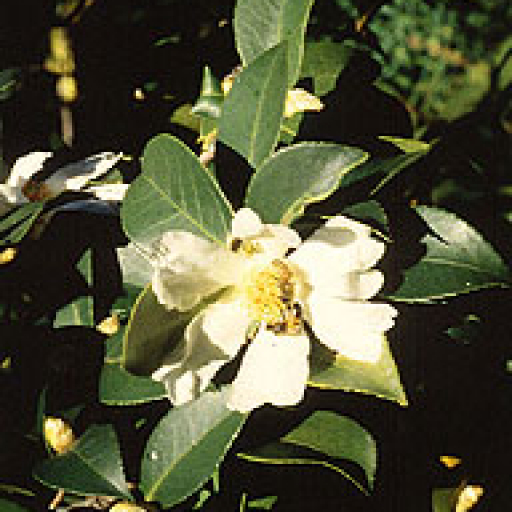
Plant Overview
Often called the "Oil-seed Camellia," this evergreen shrub is a staple of Eastern tradition and beauty. While its famous cousin Camellia sinensis provides the world with tea leaves, this plant is grown for its precious seeds, which produce the "Olive Oil of the East." It is a multi-purpose marvel, offering elegant winter blooms and a high-quality culinary oil that has been used for centuries.
🔍 How to Identify
- 🌿 Leathery Foliage: The leaves are dark green, glossy, and oval-shaped with finely serrated (saw-toothed) edges that remain vibrant throughout the winter.
- 🌸 Winter Blossoms: It produces fragrant, snow-white flowers with five to seven petals surrounding a dense, pincushion-like center of bright yellow stamens.
- 🌰 Woody Seed Pods: After flowering, it develops thick, woody capsules that eventually split into three sections to reveal large, brownish-black seeds rich in oil.
🏡 In Your Garden
- 🌱 Soil Soulmates: This plant is a strict "acid-lover." It requires acidic, well-draining soil to thrive; if the soil is too alkaline, the plant will suffer from chlorosis, where the leaves turn a sickly yellow because the roots cannot "digest" nutrients.
- 🛡️ Shelter and Shade: While it enjoys the sun, it prefers "dappled" light or protection from the harsh afternoon heat. Its roots are shallow and sensitive, so a thick layer of mulch is essential to keep them cool and moist during the summer months.
⚠️ Safety & Toxicity
- ✅ Safe Status: Camellia oleifera is considered non-toxic to humans, cats, and dogs.
- 🧴 Skin & Hair Friend: The oil extracted from this plant is a "dry oil," meaning it absorbs rapidly into the skin without leaving a greasy residue, making it a favorite in hypoallergenic cosmetics and hair treatments.
✨ Fun Fact
The oil from Camellia oleifera seeds has a remarkably high smoke point of 485°F (252°C). This is even higher than extra virgin olive oil, making it one of the healthiest and most stable oils in the world for high-heat stir-frying!

Detailed Care Instructions
| Humidity | Normal |
| Lighting | Part Sun |
| Difficulty | Easy |
| Hibernation | Cold Period |
| Hardiness Zones | 6 - 9 |
To grow a Camellia Oleifera plant, follow these steps:
- Choose a suitable location: Camellia Oleifera plants thrive in partial shade, so find a location that receives morning sunlight but is protected from intense afternoon sun.
- Prepare the soil: Camellias prefer well-draining acidic soil. Amend the soil with organic matter such as compost or peat moss to improve drainage and acidity. Avoid soil that is too sandy or compacted.
- Planting: Dig a hole that is slightly wider and deeper than the root ball of the plant. Place the plant in the hole and backfill with soil, ensuring that the crown is at ground level. Gently firm the soil around the plant and water thoroughly.
- Mulching: Apply a layer of organic mulch around the base of the plant, keeping it a few inches away from the stem. Mulch helps retain moisture, suppress weeds, and maintain soil temperature.
- Watering: Camellias prefer moist but not waterlogged soil. Regularly water the plant, especially during dry periods, ensuring that the soil remains evenly moist. Avoid overwatering as it can lead to root rot.
- Fertilizing: Feed the plant with a balanced fertilizer specifically formulated for camellias. Follow the manufacturer's instructions for application rates and frequencies. Apply the fertilizer in spring and early summer.
- Pruning: Camellia Oleifera plants generally do not require extensive pruning. However, you can shape the plant and remove dead or diseased branches in early spring after blooming is complete.
- Pest and disease control: Camellias can be susceptible to pests such as aphids, scale insects, and tea mites. Regularly inspect the plant for signs of infestation and apply appropriate pesticides if necessary. Also, be mindful of common diseases like root rot and leaf spot, and promptly treat any issues.
- Winter protection: In colder climates, provide winter protection by mulching around the base of the plant and covering it with burlap or a frost blanket to shield it from freezing temperatures and drying winds.
- Patience: Camellia Oleifera plants are slow-growing, so be patient. It may take a few years for the plant to reach its full potential.
By following these steps, you can successfully grow a Camellia Oleifera plant and enjoy its beautiful blooms.

Place in a window with dappled sun or a spot in the middle of a room. Or directly in a window facing west or east.

To water a plant with leaves that are dark green and glossy, and produces small white or pink flowers in the fall or winter, you should be sure to provide enough water to keep the soil moist but never waterlogged. This plant prefers well-draining soil that is slightly acidic, so take care not to use water that is too hard or alkaline.
When watering, use a watering can or hose nozzle to allow for a gentle, even flow of water to reach the plant roots without splashing onto the leaves. Water deeply, being careful not to wet the foliage, and allow the soil to dry out slightly between waterings.
If you live in an area with high temperatures or low humidity, you may need to water your plant more frequently. In addition, you can provide additional moisture by misting the foliage with a spray bottle or placing a tray of water near the plant.
Be sure not to overwater your plant, as this can lead to root rot and other problems. It is also important to keep an eye out for signs of underwatering, such as wilting or yellowing leaves, and adjust your watering schedule accordingly.
To fertilize this plant, use a balanced, slow-release fertilizer with equal parts nitrogen, phosphorus, and potassium. Apply the fertilizer to the soil around the base of the plant, being careful not to let any touch the leaves or stems. Water the plant thoroughly after fertilizing. Do this once every month during the growing season, which is usually from spring to early fall. Avoid fertilizing during the winter or when the plant is dormant.
When selecting soil for the Camellia Oleifera, you should opt for a well-draining and slightly acidic soil with a pH level ranging from 5.0-6.5. It is best to avoid alkaline soils as they can reduce nutrient uptake and cause leaf yellowing. Additionally, the soil should be rich in organic matter and nutrients to support the plant's growth and development. This can be achieved by adding compost or other organic matter to the soil before planting. It is also recommended to avoid heavy clay soils as they can retain too much water and lead to root rot. Instead, opt for a loamy soil that allows for proper drainage while still retaining some moisture. Overall, a well-draining, slightly acidic, and nutrient-rich soil is essential for the healthy growth of the Camellia Oleifera plant.
Camellia Oleifera plants can be propagated using several methods. One method is through seed propagation, where the seeds are collected from the mature fruits and sown in a well-draining potting mix. The seeds should be kept moist and warm until germination, which usually takes around 2-3 weeks. Once the seedlings have grown true leaves, they can be transplanted into individual containers.
Another method is through cutting propagation, where stem cuttings with two to three nodes are taken from healthy Camellia Oleifera plants. The bottom leaves should be removed, and the cuttings should be dipped in rooting hormone before being planted in a well-draining potting mix. The cuttings should be kept warm and moist while rooting, and once they have established roots, they can be transplanted into larger containers.
Camellia Oleifera plants can also be propagated through air layering, where a section of a stem is wounded and wrapped with moist sphagnum moss and plastic wrap. Roots will form at the wounded area, and once the roots have grown enough, the stem can be cut below the rooting area and potted in a well-draining potting mix.
Regardless of the propagation method used, Camellia Oleifera plants prefer well-draining soil, partial shade, and regular watering until established. These plants are hardy and can tolerate cold temperatures, making them suitable for outdoor growing in many regions.








