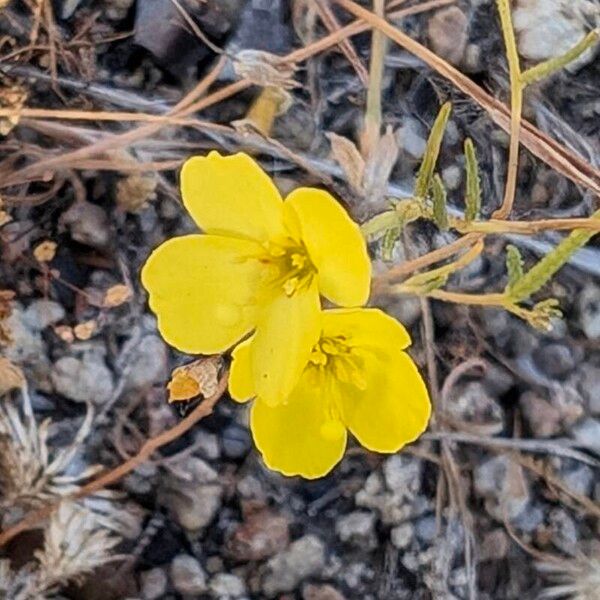
Plant Overview
Often called the Mojave Sun Cup, this golden beauty is a desert specialist that can transform barren, sandy landscapes into a shimmering sea of yellow after a rainy winter. Found primarily in California’s dry basins and the Mojave Desert, it is a resilient annual that "lives fast and dies young," blooming intensely for a short window to ensure its seeds are scattered before the summer heat arrives.
🔍 How to Identify
- 🌼 Petal Patterns: Each flower features four bright yellow, heart-shaped petals. Look closely at the center; you will often see two tiny, reddish-brown dots at the base of each petal which act as "nectar guides" for insects.
- 🌿 Narrow Foliage: The leaves are narrow, linear, and slightly serrated. They often grow in a basal rosette (a circle at the ground level) before the flowering stems shoot upward.
- 📏 Wiry Stems: The stems are thin but tough, often taking on a reddish tint. They are covered in fine, downy hairs that help the plant retain moisture in arid winds.
🏡 In Your Garden
- 🏜️ Drainage is King: Because this is a desert native, it will quickly rot if its "feet" stay wet. If you are growing this at home, it requires sandy or gravelly soil that mimics the Mojave floor. It is an excellent choice for rock gardens or xeriscaping.
- ☀️ Sun Worshiper: It requires absolute full sun to thrive. The flowers are "phototropic," meaning they track the sun’s movement, and they may remain closed on very cloudy days or if tucked away in the shade.
⚠️ Safety & Toxicity
- ✅ Non-Toxic Status: Camissonia campestris is generally considered non-toxic to humans and common household pets. It does not possess the irritating saps or thorns found in some other desert species.
- 🐾 Pet Tip: While safe, it is always best to discourage pets from grazing on garden plants, as desert annuals can sometimes cause mild digestive upset if consumed in large quantities by curious dogs or cats.
✨ Fun Fact
🐝 Specialized Friendships: The Mojave Sun Cup has a "best friend" relationship with certain species of Andrena bees. These specialized bees have evolved to be "oligolectic," meaning they forage almost exclusively on the pollen of this specific plant family!

Detailed Care Instructions

Place in a bright room that is sun drenched almost all day. Or directly in a south-facing window.

Some plants require more regular watering than others, which should be done every few days. It's critical to maintain the soil moist all of the time. The water requirements of the same plant placed in pots with varying sizes will differ. Because the water in the smaller pot evaporates faster than the water in the larger pot, it will require more watering. Regardless of pot size, the surface should constantly be maintained moist.







