Plant Overview
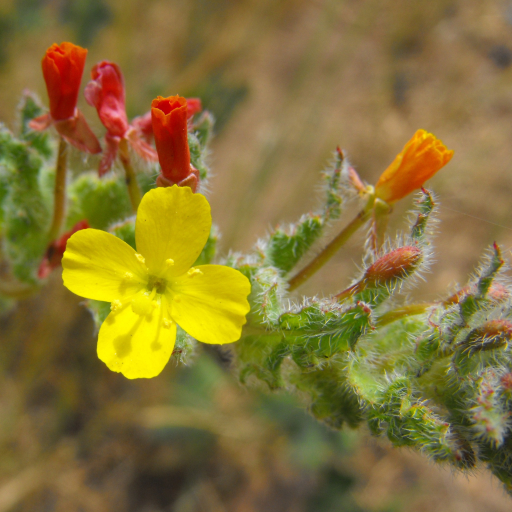
Known as the Field Suncup or Hairy Suncup, this golden-faced wildflower is a resilient survivor of the Mediterranean climates of California and Baja. Its name comes from the soft, downy fuzz that covers its stems and leaves, a clever adaptation that protects the plant from the drying effects of the sun and wind. In the wild, it is often one of the first "pioneers" to colonize areas after a brush fire, painting scorched hillsides with bright yellow dots.
🔍 How to Identify
- 🌼 The Flowers: Tiny, brilliant yellow blossoms with four petals that usually appear in late spring. As the flowers age or become pollinated, they often take on a reddish or orange hue.
- ☁️ Hairy Texture: The stems and small, toothed leaves are densely covered in short, white hairs (hirtella literally means "hairy" in Latin).
- 🌀 The Seed Pods: After the bloom, it produces long, slender, and often wiry seed capsules that can look like little green or brown corkscrews.
🏡 In Your Garden
- 🌱 Disturbance Lover: In a garden setting, this plant thrives in "neglected" spots. It prefers rocky, sandy, or disturbed soil where other plants might struggle to take root.
- 🦋 Pollinator Magnet: While small, its bright yellow color is a beacon for native bees and small butterflies, making it a great addition to a wild-style pollinator garden.
- ☀️ Drought Strategy: Because it is an annual, it completes its life cycle quickly before the heat of summer arrives. It doesn't need much water once established, as it is built for the dry West Coast climate.
⚠️ Safety & Toxicity
- ✅ Status: Non-toxic and generally safe.
- 🐾 Details: There are no known reports of toxicity to dogs, cats, or humans. However, the fine hairs on the stems can occasionally cause very mild skin irritation for people with sensitive skin if handled roughly.
✨ Fun Fact
The Field Suncup is a "fire-follower." Its seeds can remain dormant in the soil for years, only germinating en masse after the heat of a wildfire clears the surrounding brush and provides the nutrients and light it needs to thrive!

Detailed Care Instructions

Place in a bright room that is sun drenched almost all day. Or directly in a south-facing window.

Water-loving plants flourish in wet or sloppy soil and near ponds. The extensive root system enables these plants to absorb plenty of water. The surface of the soil should be kept moist at all times. Place your pot in a container filled with water to guarantee that plants get enough water. If the ground becomes dry, it is recommended that you water it well. Plants in smaller pots will need to be watered more frequently. Water the soil in which the plant is standing thoroughly using a watering can.








