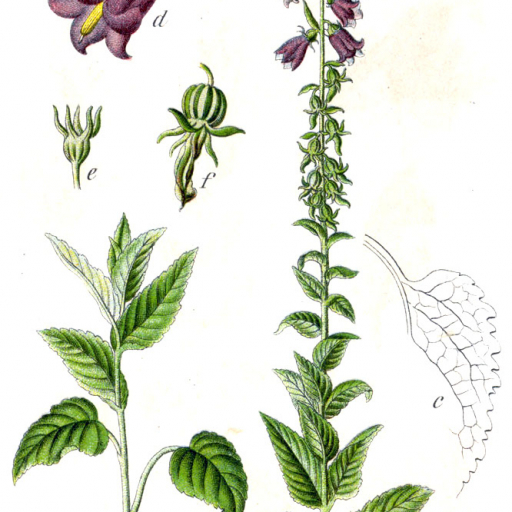
Plant Overview
Known as the Bologna Bellflower, this elegant wildflower is a tall, stately member of the Campanula family. Native to Central and Southern Europe, it is often found dancing in the breeze on limestone slopes and forest edges. Its upright, architectural form makes it a favorite for those looking to add a touch of "wild meadow" charm to their perennial borders.
🔍 How to Identify
- 🔔 The Flowers: Small, funnel-shaped bells that are typically a soft lilac or pale violet. They tend to cluster toward the top of the stem, often nodding slightly downward.
- 🌿 The Foliage: The leaves are distinctively heart-shaped at the base but become narrower and more lance-like as they climb the stem. Both the leaves and the stem are covered in fine, velvety hairs.
- 📏 The Stature: Unlike low-growing "creeping" bellflowers, this species stands tall and proud, often reaching heights of 2 to 3 feet (60–90 cm).
🏡 In Your Garden
- 🌱 Soil & Sun: This plant is a specialist for alkaline or "sweet" soils. If you have chalky or limestone-heavy ground where other plants struggle, the Bologna Bellflower will thrive. It prefers a sunny spot but appreciates a little afternoon shade in very hot climates.
- 🦋 Wildlife Magnet: It is an absolute magnet for specialized bees and butterflies. Because the bells provide shelter and nectar, you’ll often find small pollinators taking a nap inside the blooms during cooler evenings.
⚠️ Safety & Toxicity
- ✅ Safe for All: Campanula bononiensis is generally considered non-toxic to humans, cats, and dogs. It is a very safe "family-friendly" plant for backyard gardens.
- 🧤 Skin Sensitivity: While not poisonous, the rough, hairy texture of the stems and leaves can be slightly abrasive. If you have very sensitive skin, you might want to wear gloves when pruning a large patch.
✨ Fun Fact
The name Campanula translates to "little bell" in Latin. In ancient folklore, bellflowers were often called "Fairies' Thimbles," and it was said that if you heard a bellflower ring, it was a signal that a woodland spirit was nearby!

Detailed Care Instructions
To grow Campanula bononiensis (Bononiella), follow these steps:
- Select a suitable location: Choose a spot in your garden that receives full sun to partial shade. Ensure the soil is well-draining and loamy.
- Timing: Plant Campanula bononiensis in late spring or early summer, after the last frost date. This will allow the plant to establish healthy roots before winter.
- Soil preparation: Prepare the soil by removing rocks, weeds, and adding organic matter like compost or well-rotted manure. This will improve the soil's fertility and drainage.
- Planting depth and spacing: Dig a hole slightly larger than the root ball of the plant. Place the plant in the hole, ensuring the crown (where the stem meets the roots) is level with or slightly above the soil surface. Space multiple plants about 12-18 inches apart.
- Watering: After planting, water the Campanula bononiensis thoroughly. Then, water the plant regularly to keep the soil evenly moist, but not waterlogged. Apply water at the base of the plant to avoid wetting the leaves, which can lead to disease.
- Mulching: Mulch around the base of the plant to help retain soil moisture and suppress weed growth. Use organic mulch, such as wood chips or straw, and avoid placing it directly against the stem.
- Fertilizing: Campanula bononiensis is not a heavy feeder, but you can incorporate a balanced, slow-release fertilizer into the soil at planting time. Follow the package instructions for application rates.
- Pruning: Deadhead the flowers as they fade to encourage more blooms and prevent the plant from diverting energy into seed production. In late fall or early spring, cut back the plant to near ground level to promote fresh growth.
- Pests and diseases: Campanula bononiensis is relatively resistant to pests and diseases, but watch out for slug and snail damage. You can use organic pest control methods or physical barriers to protect the plant.
- Winter care: This plant is hardy in most areas, but if you live in a region with severe winters, apply a layer of mulch around the base of the plant to provide insulation.
Remember to consult local gardening guidelines and adapt the instructions according to your specific climate and conditions.

Place in a bright room that is sun drenched almost all day. Or directly in a south-facing window.

To water this particular plant, it should be observed carefully to determine the moisture level of the soil. When watering, it is best to apply water slowly and directly onto the soil, avoiding wetting the foliage. Overwatering should be avoided as it can lead to rot and other diseases. The frequency of watering depends on various factors such as the temperature, humidity, and soil type, but it is generally recommended to water only when the soil feels dry to the touch. Additionally, it is important to use good quality water and allow excess water to drain away from the plant to prevent waterlogging.
To fertilize this particular plant, use a balanced fertilizer with equal portions of nitrogen, phosphorus, and potassium. It is recommended to apply the fertilizer once every two weeks during the growing season, which generally starts in spring and lasts until fall. Be sure to follow the instructions on the fertilizer package and apply it evenly around the plant's base. Avoid over-fertilizing, as this can cause plant damage.
Campanula Bononiensis is a perennial plant that is often grown in gardens for its showy blooms in shades of purple and blue. When planting Campanula Bononiensis, it is important to select the right type of soil to ensure optimal growth and health of the plant.
The ideal soil for Campanula Bononiensis should be well-draining and rich in nutrients. It should be slightly acidic with a pH range of 6.0 to 7.0. The soil should also be moist but not waterlogged as this can cause root rot and other problems for the plant.
To prepare the soil for planting, start by removing any debris or weeds from the area where the plant will be located. Then, add organic matter such as compost or well-rotted manure to the soil to improve its fertility and texture.
Once the soil has been prepared, dig a hole that is slightly larger than the container the plant is in. Place the plant in the hole and backfill with soil, gently pressing the soil around the roots to eliminate any air pockets.
After planting, water the plant thoroughly to ensure the soil is evenly moist. Campanula Bononiensis prefers to be watered regularly but not too frequently, as overwatering can lead to root rot and other issues. Adding a layer of mulch around the base of the plant can help to retain moisture and regulate soil temperature.
By selecting the right type of soil and taking proper care of Campanula Bononiensis, you can enjoy the stunning blooms of this perennial plant for years to come.
To propagate this plant, you will need to collect seeds from mature plants and sow them in well-draining soil or in trays of seed-raising mix. Ensure that the soil is kept moist but not waterlogged, and place the seeds in a bright, sheltered spot.
Alternatively, you can take stem cuttings from the plant in spring or summer. Choose healthy, non-flowering stems and cut them to a length of around 10cm. Remove the lower leaves from the stem and dip the cut end in rooting hormone powder.
Plant the cuttings in well-draining soil or in a mixture of sand and peat moss, and keep them moist. Place the cuttings in a shaded spot or cover them with a plastic bag to maintain high humidity levels.
After a few weeks, the cuttings should start rooting and you can transplant them into their own pots or into the garden. Water them regularly and provide them with plenty of bright but indirect light to help them establish.








