Plant Overview
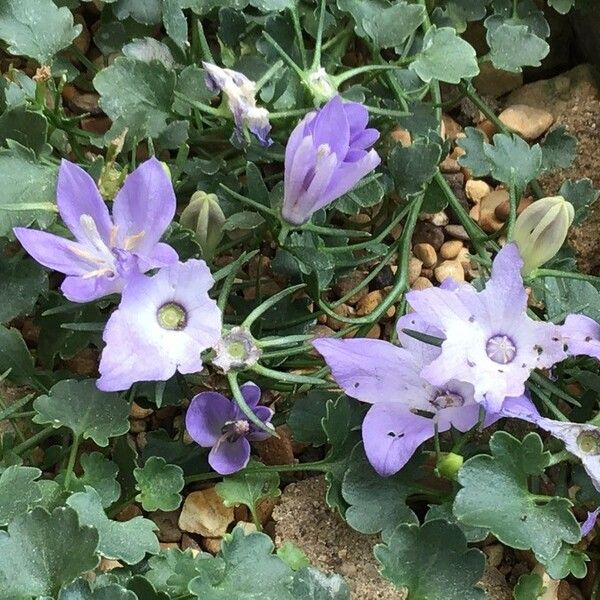
Often called the "Italian Bellflower" or "Brittle Bellflower," this charming perennial is a true cliff-dweller from the sun-drenched coasts of Southern Italy and Sicily. It is famous for its cascading carpet of star-shaped blooms that look like fallen pieces of a summer sky. While its name suggests a delicate nature, it is a resilient survivor that has spent centuries clinging to limestone crevices.
🔍 How to Identify
- 🌸 The Bloom: Large, star-like flowers (up to 1.5 inches wide) ranging from pale azure to deep lilac, often featuring a distinctive pale white "eye" at the center.
- 🍃 The Foliage: Small, glossy, heart-shaped or kidney-shaped leaves with slightly wavy edges that form a dense, lush green mat.
- 🌿 Growth Habit: A trailing or prostrate plant; its stems gracefully spill over the edges of pots or stone walls, typically reaching about 10–12 inches in length.
🏡 In Your Garden
- 🪨 The "Fragile" Nature: Its name fragilis refers to its extremely brittle stems. Unlike many vines that are flexible, these will snap cleanly if bent too far. It is best placed in a "permanent" home like a hanging basket or a high rock wall where it won't be brushed against by passersby.
- ☀️ Mediterranean Roots: Because it naturally grows in limestone cracks, it demands exceptional drainage. It hates "wet feet" and prefers a gritty, alkaline soil mix. It thrives in the cool morning sun but appreciates a bit of shade during the scorching heat of the afternoon.
⚠️ Safety & Toxicity
- 🐾 Pet Friendly: This plant is considered non-toxic to cats, dogs, and horses, making it a worry-free choice for household decorating.
- 👶 Kid Safe: There are no known toxins or irritants, though the plant itself is much more "at risk" from curious hands than the children are from the plant!
✨ Fun Fact
In its native Italy, Campanula fragilis is a classic "lithophyte," meaning it can grow directly on stone. You can still find it today growing out of the mortar of ancient Roman ruins and medieval stone walls, thriving where almost no soil exists.

Detailed Care Instructions
To grow Campanula fragilis plants, follow these steps:
- Obtain seeds or young plants from a reputable nursery or online supplier.
- Choose an appropriate location for planting. Campanula fragilis prefers full sun to partial shade and well-drained soil. Make sure the soil is fertile and has good organic content.
- Prepare the soil by removing any weeds or debris and loosening it with a garden fork or tiller.
- Sow the seeds or transplant the young plants in the prepared soil. If sowing seeds, lightly press them into the soil surface and cover them with a thin layer of fine soil. Space the plants 8-12 inches apart.
- Water the plants thoroughly after planting to help settle the soil and provide initial moisture.
- Water regularly to keep the soil evenly moist, but avoid overwatering or waterlogging the plants.
- Apply a balanced slow-release fertilizer according to the manufacturer's instructions, usually once or twice during the growing season.
- Mulch around the plants to help retain soil moisture, suppress weed growth, and regulate soil temperature.
- Campanula fragilis plants may require staking or support, especially if they grow tall and leggy. Insert plant stakes or a trellis near the plants and delicately tie the stems to provide support.
- Prune or deadhead faded flowers to promote continuous blooming and maintain a tidy appearance.
- Monitor the plants for any signs of pests or diseases, such as aphids or powdery mildew. Treat accordingly with appropriate organic or chemical measures.
- In colder regions, provide winter protection by mulching around the plants or covering them with a layer of straw or leaves.
- Enjoy the beautiful blooms of Campanula fragilis throughout the growing season.
Remember to research specific care instructions for your particular variety of Campanula fragilis, as slight variations may exist depending on the specific cultivar.
To properly water this plant, ensure that the soil is consistently moist but not waterlogged. It is recommended to give it a light watering every few days to maintain this moisture level. Avoid letting the soil completely dry out between waterings as this can damage the plant. Additionally, ensure that the plant is in a well-draining pot or soil to prevent water accumulation and root rot. Finally, avoid getting the leaves or flowers wet during watering to prevent disease.
To fertilize this plant, use a balanced fertilizer with equal amounts of nitrogen, phosphorus, and potassium. Apply the fertilizer at half the recommended strength every two weeks during the growing season. Be sure to water the plant thoroughly before and after fertilization to prevent burning. Avoid fertilizing during the winter dormant period.
Campanula Fragilis plants prefer a well-draining soil that is not too heavy or compacted. A soil mixture with a higher sand content is ideal, as it allows for excellent drainage and prevents water from pooling and causing root rot. The soil should also contain a good amount of organic matter, such as compost or peat moss, to provide the plant with necessary nutrients and improve soil structure. It is important to avoid using heavy clay soils or soils that are too alkaline, as they can limit the plant's growth and cause nutrient deficiencies.
- Select healthy stems: Choose healthy, vigorous stems for propagation. Look for stems that have multiple leaves and are free of any disease or pest damage.
- Cut the stem: Use a sharp, clean pair of scissors or pruning shears to make a clean cut at a slight angle just below a node or where a leaf meets the stem. This will encourage new growth from the node.
- Remove lower leaves: Remove the lower leaves from the cutting, leaving only a few at the top. This will help to reduce moisture loss and prevent the cutting from drying out.
- Dip in rooting hormone (optional): Dip the cut end of the stem in rooting hormone powder or gel. This is optional, but may help to increase the success rate of the cutting.
- Plant in a pot or tray: Fill a pot or tray with a well-draining potting mix and make a small hole in the center. Insert the cutting into the hole and gently press the soil around it, making sure it is firm and secure.
- Water: Thoroughly water the cutting and place it in a warm, bright location with indirect sunlight. Keep the soil moist, but not waterlogged.
- Monitor growth: Check the cutting regularly for signs of new growth, such as leaves or roots. Once it has established roots and new growth, it can be transplanted into a larger container or outdoors in the garden.








