Plant Overview
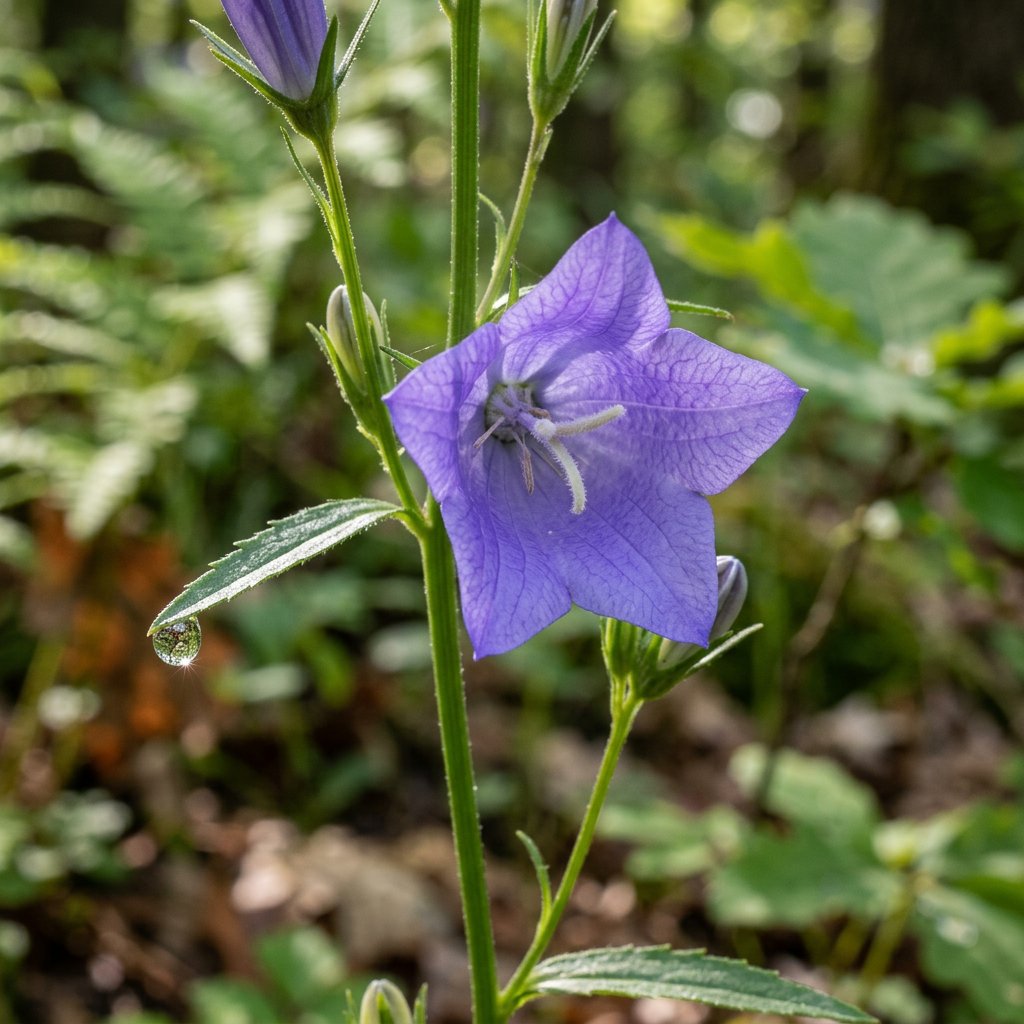
Elegant and airy, the Peach-leaved Bellflower is a timeless staple of the classic English cottage garden. Known for its tall, slender spires and delicate "bells" that seem to float in the breeze, this perennial has been a favorite of gardeners since the 16th century. It earns its name from its narrow, leathery leaves that bear a striking resemblance to those of a peach tree.
🔍 How to Identify
- 🔔 The Flowers: Large, wide, cup-shaped flowers (up to 2 inches across) that typically bloom in shades of lavender-blue or snowy white. Unlike other bellflowers, these face outward rather than drooping downward.
- 🍃 The Foliage: Long, narrow, dark-green leaves that form a low-growing rosette at the base of the plant. The leaves remain attractive even when the plant isn't in bloom.
- 📏 The Stature: Strong, unbranched stems that can reach up to 3 feet in height, giving the plant a "see-through" quality that makes it perfect for the middle of a flower bed.
🏡 In Your Garden
- 🌱 The "Wandering" Nature: This plant is a prolific self-seeder. While it isn't considered invasive, you might find "baby" bellflowers popping up in unexpected corners of your garden. They are very easy to dig up and relocate if they wander too far.
- 🌬️ Support Systems: Because the flowering stalks are so tall and thin, they can sometimes topple over during heavy rain or high winds. Planting them in tight groups or providing discreet stakes will keep them standing tall.
- ✂️ Deadheading Nuance: To keep the display going all summer, pinch off the individual faded flowers. Once the entire stalk has finished blooming, cut it all the way back to the leafy base to encourage a potential second flush of flowers in the fall.
⚠️ Safety & Toxicity
- ✅ Safe Status: Campanula persicifolia is generally considered non-toxic and safe for residential gardens.
- 🐾 Pets & Kids: There are no known toxic effects for cats, dogs, or horses. It is a "worry-free" choice for families with curious pets or small children.
✨ Fun Fact
The name Campanula is Latin for "little bell." In the Victorian "Language of Flowers," giving someone a Peach-leaved Bellflower was a way of expressing gratitude and everlasting love.

Detailed Care Instructions
To grow Campanula persicifolia, also known as peach-leaved bellflower, follow these steps:
- Choose a suitable location: Campanula persicifolia prefers a spot with partial shade to full sun. Ensure the soil is well-draining as the plant doesn't thrive in wet and boggy conditions.
- Prepare the soil: It prefers fertile, loamy soil, so amend the soil with organic matter like compost or well-rotted manure before planting. This will improve drainage and provide necessary nutrients.
- Sow seeds or plant seedlings: You can start Campanula persicifolia from seeds or purchase young plants from a nursery. Sow the seeds indoors in late winter or directly sow them in the ground in early spring. If using seedlings, dig a hole slightly larger than the size of the root ball and place the plant, ensuring the crown is level with the soil's surface.
- Watering: Keep the soil consistently moist but not waterlogged, especially during hot and dry periods. Water deeply rather than frequently, allowing the soil to dry slightly between waterings. Once established, Campanula persicifolia is moderately drought-tolerant.
- Fertilizer: Apply a slow-release fertilizer or a balanced organic fertilizer in early spring to promote healthy growth. Follow the instructions on the fertilizer package and avoid over-fertilization, as this can result in leafy growth at the expense of flowering.
- Mulching: Apply a layer of organic mulch around the base of the plant to help retain moisture, suppress weeds, and regulate soil temperature.
- Pruning: Remove spent flowers to encourage continuous blooming and prevent self-seeding. Prune back any dead or damaged stems in early spring to keep the plant looking neat.
- Dividing: Campanula persicifolia can become crowded over time. Divide the clumps every 2-3 years in early spring or fall. Dig up the plant, separate the clumps, and replant them in prepared soil, spacing them appropriately.
By following these steps, you can successfully grow Campanula persicifolia and enjoy its beautiful bell-shaped flowers.

Place in a window with dappled sun or a spot in the middle of a room. Or directly in a window facing west or east.

1. Determine the watering needs of the plant: Before watering, research the specific watering needs of Campanula Persicifolia. This will depend on factors such as the climate and soil type, as well as the age and size of the plant.
2. Consider the soil type: Campanula Persicifolia prefers moist, well-draining soil. If the soil is heavy or clay-based, it may retain too much moisture and require less water.
3. Check the weather forecast: Avoid watering during rainy periods, as this can over-saturate the soil. If rain is not expected for several days and the soil is dry, watering may be necessary.
4. Water at the base of the plant: When watering, avoid getting the leaves or flowers wet. This can promote disease and damage the delicate foliage. Instead, use a watering can or drip irrigation system to water the base of the plant.
5. Water deeply and infrequently: Campanula Persicifolia prefers to be watered deeply and infrequently, rather than receiving frequent, shallow watering. This encourages deeper root growth and promotes overall plant health.
6. Allow the soil to dry slightly between watering: Before watering again, allow the soil to dry slightly. This helps prevent overwatering and root rot.
7. Monitor the plant for signs of stress: Monitor the plant closely for signs of stress, such as wilting or yellowing leaves. These can indicate either overwatering or underwatering, so adjust the watering schedule accordingly.
To effectively fertilize this plant, first ensure that the soil is moist. Apply a balanced fertilizer, such as a 10-10-10 or 20-20-20, at a rate of approximately 1 tablespoon per square foot of soil. Apply the fertilizer evenly around the plant, taking care not to let it come into contact with the foliage or stem. Water the area well to distribute the fertilizer. Repeat the application every 4-6 weeks during the growing season.
Campanula Persicifolia prefers a well-draining soil that is rich in organic matter. The soil should not be too heavy and should be slightly acidic with a pH range of 5.5 to 7.5. The plant does well in soil that is moderately moist, but not waterlogged. It is important to avoid using clay soil or soil that is too sandy as both types can be problematic for Campanula Persicifolia. Additionally, the soil should be aerated so that it allows for good root growth and healthy development of the plant. Supplementing the soil with compost or organic matter can help to improve the soil's fertility and moisture retention capabilities, promoting optimal growth and blooming of the plant.
Campanula Persicifolia is a beautiful flowering plant that can be propagated by various methods. One of the simplest methods is through division. To do so, carefully dig up the parent plant and separate the clump into several smaller sections. Each section should have a healthy root system and a good amount of foliage. Plant these new sections in a well-prepared soil mixture, water well, and keep them shaded for a few days until they have acclimated to their new environment.
Another propagation method is through stem cuttings. Take cuttings in the early summer months when the plant is actively growing. Cut a stem that is several inches long and has several nodes. Remove the lower leaves and dip the cut end into rooting hormone. Plant the cutting in a pot filled with well-draining soil and cover it with a plastic bag to create a humid environment. Place it in a bright, indirect light and keep the soil moist until roots have developed, then transplant it into a larger container or into the garden.
Lastly, Campanula Persicifolia can also be propagated by seed. Collect the seeds in the fall when the seed pods have turned brown and open. Sow the seeds in a well-draining soil mix in the early spring. Cover the seeds with a light layer of soil and keep them moist. Place them in a bright, indirect light, and keep them at a consistent temperature of around 70 degrees Fahrenheit. After they have grown into seedlings, they can be transplanted into the garden or into individual containers.
Common pests of the paper bellflower include Spider mites, larvae. Make a habit of checking your paper bellflower frequently for pests so that any infestations can be caught and managed early.








