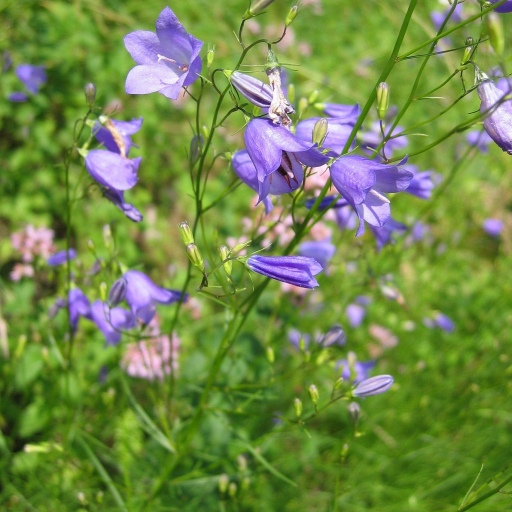
Plant Overview
Often called the Harebell or the "Bluebell of Scotland," this delicate perennial is a master of resilience. While it looks fragile enough to break in a light breeze, it thrives in some of the world's harshest environments, from windswept cliffs to high alpine meadows. In ancient folklore, these bells were said to be used by witches to summon spirits or as hiding spots for forest fairies.
🔍 How to Identify
- 🔔 Bell-shaped Blooms: The flowers are papery, nodding, and usually a vibrant violet-blue, though rare white variants occasionally appear in the wild.
- 🍃 The Leaf Paradox: Its name rotundifolia refers to the "round leaves" at the base. However, these often wither away by the time the plant blooms, leaving only long, needle-thin leaves visible on the stem.
- 🧵 Wiry Stems: The stems are incredibly thin yet tough as wire, allowing the flowers to dance and sway in heavy winds without snapping.
🏡 In Your Garden
- 🪨 Rocky Resilience: This plant naturally loves "lean" soil and often tucks itself into rocky crevices or gravelly slopes. In a home garden, it is the perfect candidate for a rock garden or the edges of a stone path.
- 🚫 The "No-Move" Rule: It develops a deep, sturdy taproot very quickly. Because of this, it hates being transplanted once established; it is best to plant it in its "forever home" or sow seeds directly into the soil.
⚠️ Safety & Toxicity
- 🐾 Non-Toxic: The Harebell is generally considered safe and non-toxic to cats, dogs, and horses, making it a "worry-free" addition to a pet-friendly yard.
- 👶 Child Safe: There are no known irritants or poisons associated with this plant, though its delicate stems mean it shouldn't be planted in high-traffic play areas where it might be stepped on.
✨ Fun Fact
In the Victorian "Language of Flowers," the Harebell represents humility and constancy. This is because the flower "bows" its head toward the ground and is one of the few wildflowers that can survive and bloom consistently through the first frosts of autumn.

Detailed Care Instructions
| Color | Blue |
| Soil Ph | Neutral |
| Lighting | Full Sun |
| Soil Type | Well-Draining, Sandy, Poor |
| Bloom Time | Summer To Fall |
| Plant Type | Perennial |
| Mature Size | 3 Ft. Tall, 1 Ft. Wide |
| Native Area | Eurasia And North America |
| Sun Exposure | Full Sun To Partial Shade |
| Hardiness Zones | 3-6 |
To grow Campanula Rotundifolia (also known as Harebell or Bluebell Bellflower), follow these steps:
- Choosing a location: Select a suitable location that receives partial shade to full sunlight. Make sure the soil is well-draining and fertile.
- Sowing seeds: You can sow seeds directly outdoors in the spring or fall when the soil is workable. Alternatively, you can start seeds indoors 8-10 weeks before the last expected frost. Sow the seeds thinly on the soil surface and cover lightly with a thin layer of soil. Mist the soil with water to ensure moisture.
- Germination: The seeds usually germinate in 10-15 days. Maintain a constant temperature of around 60-70°F (15-21°C) during germination. Keep the soil consistently moist but not waterlogged.
- Transplanting: When the seedlings have developed two to three true leaves, thin them to a spacing of about 8-12 inches (20-30 cm) apart. Alternatively, you can transplant them into individual pots to grow them for a longer period before planting outdoors.
- Planting outdoors: If growing from seeds indoors, harden off the seedlings by gradually exposing them to outdoor conditions over a week. Choose a location with well-draining soil and dig a hole slightly larger than the root ball. Place the plant in the hole and backfill with soil, gently pressing it to remove any air pockets. Water thoroughly after planting.
- Watering and care: Water the plants regularly, keeping the soil consistently moist but not waterlogged. Mulching around the plants can help retain soil moisture and suppress weeds. Water the plants deeply during dry periods. Remove any weeds that compete for resources with the Campanula Rotundifolia.
- Pruning and deadheading: Deadhead any faded flowers regularly to encourage continuous blooming. Prune the plant back after flowering to encourage fresh growth.
- Protection from pests: Monitor for pests like slugs and snails, as they can damage the foliage or flowers. Apply appropriate measures such as handpicking, using organic slug pellets, or creating barriers to protect the plants.
- Overwintering: Campanula Rotundifolia is a hardy perennial that can survive winter temperatures. Provide some protection with a layer of mulch or leaves around the base of the plant to help insulate the roots during colder months.
By following these guidelines, you should be able to grow beautiful Campanula Rotundifolia plants in your garden or outdoor space.

Place in a window with dappled sun or a spot in the middle of a room. Or directly in a window facing west or east.

To water this particular plant species, you should first check the soil moisture level by sticking your finger into the soil up to your first knuckle. If the soil feels dry, it is time to water the plant. Use room temperature water and water the soil, rather than the leaves, to avoid damaging the plant. Water until the soil is moist, but not waterlogged. Avoid letting the plant sit in standing water, as this can cause root rot. Finally, it is important to note that this plant prefers well-draining soil and can be sensitive to overwatering.
To fertilize this plant, mix an all-purpose, balanced, water-soluble fertilizer according to package instructions. Apply the fertilizer to the soil around the base of the plant, taking care not to apply it directly on the leaves or stem. Water the plant thoroughly after fertilizing to help the nutrients reach the roots. It is recommended to fertilize the plant once every four to six weeks during the growing season, which typically begins in spring and continues through summer and into fall.
The Campanula Rotundifolia plant prefers well-draining soil that is rich in organic matter. The soil should have a pH level between 6.0 and 7.5. It thrives in soil that is moist but not waterlogged. It is best grown in soil that is sandy loam or loamy. This type of soil allows for good drainage while also retaining enough moisture to keep the plant healthy. The plant should be fertilized once a month during the growing season with a balanced fertilizer. It is important to avoid over-fertilizing as this can negatively affect the plant's growth.
To propagate this plant, you can take stem cuttings in early spring or late summer. Choose a healthy stem with several sets of leaves and cut it just below a node. Remove the lower sets of leaves, leaving only two or three sets at the top. Dip the cut end in rooting hormone and plant it in a small pot filled with moist potting soil. Cover the pot with a plastic bag to increase humidity and place it in a bright, warm spot out of direct sunlight. Keep the soil consistently moist until roots appear, then gradually introduce the plant to more light and less humidity. Once it has established itself, you can transplant it into the garden or a larger container.
Common pests of the bluebell bellflower include Aphids, larvae, snails. Make a habit of checking your bluebell bellflower frequently for pests so that any infestations can be caught and managed early.








