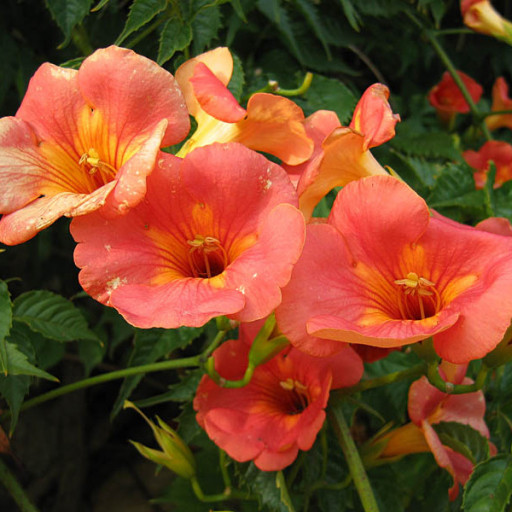
Plant Overview
Known as the "Chinese Trumpet Vine," this deciduous climber is a showstopper in any vertical garden. Unlike its more aggressive American cousin, the Campsis grandiflora offers larger, more dramatic blooms that look like glowing embers against its lush green foliage. It is a symbol of grace and persistence in East Asian landscapes, often seen cascading over stone walls in ancient garden designs.
🔍 How to Identify
- 🎺 The "Trumpets": Spectacular, flared bell-shaped blossoms that can reach up to 3 inches wide, typically appearing in brilliant shades of apricot, orange, or deep vermilion.
- 🍃 Feathery Foliage: Features "pinnate" leaves, meaning they look like delicate green feathers, usually composed of 7 to 9 serrated, emerald-green leaflets.
- 🧗 Growth Habit: A vigorous woody vine that uses its twining stems to climb. While it is a fast grower, it lacks the aggressive "sticky feet" (aerial roots) of other species, making it slightly easier to manage on structures.
🏡 In Your Garden
- 🏗️ Structural Support: Because this vine becomes heavy and woody as it matures, it requires a sturdy permanent structure like a pergola, arbor, or a heavy-duty fence. Avoid flimsy plastic supports, as the vine's weight will eventually collapse them.
- ✂️ Pruning Nuance: This plant blooms on "new wood" (growth produced in the current season). To ensure a massive explosion of flowers, prune it back hard in late winter or early spring to stimulate fresh, flowering stems.
- ☀️ Sun & Soil: To get the best floral display, it needs a "full sun" position. While it can grow in partial shade, it will likely prioritize green leaves over its iconic orange trumpets if it doesn't get enough light.
⚠️ Safety & Toxicity
- 🧤 Contact Dermatitis: The sap of the Trumpet Vine contains mild irritants that can cause "Trumpet Creeper Rash" in some people. It is always best to wear gloves and long sleeves when pruning or handling the plant.
- 🐾 Pet Safety: It is generally considered mildly toxic to cats and dogs. If ingested, it may cause digestive upset, including drooling or vomiting, so keep it out of reach of curious chewers.
✨ Fun Fact
In traditional Chinese culture, the Campsis grandiflora is often associated with "maternal love" and "the spirit of striving upward." It is a frequent subject in classical ink wash paintings, where its vibrant blossoms represent the beauty of a life lived with passion.

Detailed Care Instructions
To grow a Campsis Grandiflora plant, also known as Chinese trumpet vine or trumpet creeper, follow these steps:
- Selecting a suitable location: Choose a sunny spot in your garden or yard where the plant can receive at least 6-8 hours of direct sunlight. The plant can also tolerate partial shade, but it may affect its blooming.
- Preparing the soil: Ensure the soil is well-draining and fertile. Campsis Grandiflora prefers slightly acidic to neutral soil. You can amend the soil with organic matter like compost to improve its moisture-retaining capacity.
- Planting the vine: Dig a hole in the soil that is roughly as deep and wide as the plant's root ball. Place the plant in the hole, making sure it is at the same depth as it was in its nursery container. Backfill the hole with soil and gently firm it around the base of the plant. Water thoroughly to settle the soil.
- Watering: Water the plant deeply and regularly, especially during the initial weeks after planting. Let the soil dry out slightly between watering, but do not let it become bone dry. Watering deeply helps the roots establish and encourages healthy growth.
- Mulching: Apply a layer of mulch around the base of the plant to retain moisture, suppress weed growth, and regulate soil temperature. Mulch with organic materials like wood chips or straw, keeping the mulch at least a few inches away from the stem of the plant to prevent rotting.
- Fertilizing: Fertilize the Campsis Grandiflora vine during the growing season. Use a balanced, slow-release fertilizer or a water-soluble fertilizer that is specifically formulated for flowering vines. Follow the manufacturer's instructions regarding the dosage and frequency of application.
- Pruning: Prune the vine in late winter or early spring to remove any dead, damaged, or unwanted growth. You can also prune to shape the plant and promote more vigorous blooming. However, avoid excessive pruning as the plant blooms on year-old growth.
- Providing support: Campsis Grandiflora is a vigorous climber that requires support as it grows. Install a trellis, fence, or any vertical structure that can bear the weight of the plant. Help the vine attach itself to the support by gently tying or training the young stems.
- Pest and disease management: Monitor the plant for any signs of pests like aphids, spider mites, or caterpillars. Treat any infestations promptly using environmentally friendly insecticides or by physically removing the pests. Ensure good air circulation around the plant to reduce the risk of fungal diseases.
By following these guidelines, you can successfully grow Campsis Grandiflora in your garden and enjoy its stunning trumpet-shaped flowers.

Place in a bright room that is sun drenched almost all day. Or directly in a south-facing window.

To water this plant, you should ensure that the soil is moist but not waterlogged. It is best to water deeply, allowing the water to soak into the soil and reach the roots. Avoid watering the leaves as this can cause fungal diseases. It is important to also allow the soil to slightly dry out between waterings to prevent root rot. Additionally, using a well-draining soil mix and adding mulch around the base of the plant can help retain moisture and keep the roots cool.
- Choose a high-quality, slow-release fertilizer with a balanced blend of nutrients.
- Apply the fertilizer in early spring or late fall, when the plant is dormant.
- Spread the fertilizer evenly around the base of the plant, avoiding contact with the trunk or foliage.
- Water the plant thoroughly after fertilizing to help the nutrients penetrate the soil.
- Repeat the fertilization process once or twice a year, depending on the growth rate and health of the plant.
The best type of soil to use for this specific plant is a well-draining soil that is rich in organic matter. It should have a pH level between 6.0 and 7.5. Avoid using heavy clay or sandy soil. The soil should be moist, but not waterlogged as this can lead to root rot. Adding compost or leaf mould to the soil will help improve its condition.
Campsis Grandiflora is a deciduous plant that belongs to a flowering plant family. It is a woody climber that can grow up to 10 meters in height. The plant is propagated from hardwood cuttings or semi-hardwood cuttings, which are taken from the plant during the dormant season.
To propagate Campsis Grandiflora from hardwood cuttings, select a healthy stem that is at least 1 cm in diameter. Cut the stem into sections and remove all the leaves and side shoots. Dip the bottom end of each cutting in a rooting hormone and plant them in a well-drained potting mix. Keep the cuttings moist and in a warm, bright location. In about 6 months, roots will start to develop and the cutting can be transplanted to a larger pot or outdoors when the weather is warm.
To propagate Campsis Grandiflora from semi-hardwood cuttings, wait until the plant has finished flowering and select a stem that is at least 20 cm long. Cut the stem into 10 cm sections and remove all but the top 2 leaves. Dip the bottom end of each cutting in a rooting hormone and plant them in a well-drained potting mix. Keep the cuttings in a warm, bright location and mist them regularly. In about 3-4 weeks, roots will start to develop and the cutting can be transplanted to a larger pot or outdoors when the weather is warm.
Propagation of Campsis Grandiflora from either hardwood or semi-hardwood cuttings takes patience, but it is a cost-effective way to grow new plants.








