Plant Overview
Known as the "Perfume Tree," the Cananga odorata is the legendary source of one of the world's most luxurious and relaxing scents. It serves as the fragrant soul of iconic perfumes like Chanel No. 5. Native to the tropical rainforests of Southeast Asia, this fast-growing beauty transforms any garden into a sensory paradise, especially at night when its aroma is most potent.
🔍 How to Identify
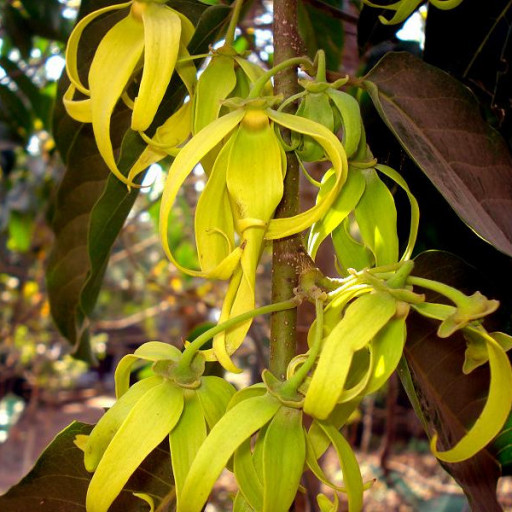
- 🌼 The Flowers: Look for long, drooping, star-shaped petals that hang in clusters. They start as a pale, inconspicuous green and mature into a vibrant, buttery yellow as they reach their peak fragrance.
- 🍃 The Foliage: The leaves are large, glossy, and dark green with distinct wavy margins. They grow alternately along the branches, creating a lush, tropical canopy.
- 🌳 Growth Habit: In its natural habitat, it can reach staggering heights, but in a garden setting, it maintains a graceful, weeping silhouette with branches that bow under the weight of the blooms.
🏡 In Your Garden
- ☁️ Humidity Lovers: This plant is a true child of the tropics. It thrives in high humidity and "heavy" air. If you are growing it indoors or in a dry climate, frequent misting or a pebble tray is essential to prevent leaf-drop.
- ✂️ Pruning for Fragrance: Because it is a vigorous grower, regular pruning is recommended. This not only keeps the tree at a manageable size but also encourages the growth of new wood, which is where the most fragrant flowers bloom.
- 🌞 Sun Seekers: To produce that famous essential oil, the plant needs plenty of bright, indirect light. A lack of sun will result in "leggy" growth and very few flowers.
⚠️ Safety & Toxicity
- 🐾 Pet Sensitivity: While not considered deadly, the Cananga odorata contains potent essential oils that can cause digestive upset or drooling in cats and dogs if the leaves or flowers are chewed.
- 🧴 Scent Sensitivity: The fragrance is incredibly strong. In small, unventilated indoor spaces, the intense aroma can occasionally trigger "perfume headaches" or nausea in sensitive individuals.
✨ Fun Fact
The name "Ylang-Ylang" is derived from the Tagalog word ilang-ilang, which poetically translates to "flower of flowers." In Indonesia, the blossoms are traditionally strewn upon the beds of newlyweds for their supposed aphrodisiac qualities.

Detailed Care Instructions
| Humidity | Normal |
| Lighting | Full Sun |
| Difficulty | Medium |
| Hibernation | Cold Period |
| Temperature | 20°C - 34°C |
| Hardiness Zones | 10 - 12 |
To grow Cananga Odorata, also known as the Ylang-Ylang tree or flower, you can follow the steps below:
- Climate: Before planting, consider the climate in your area. Cananga Odorata thrives in tropical and subtropical climates with temperatures between 70-85°F (21-29°C).
- Location: Find a suitable location with full sun or partial shade. The tree requires at least six hours of direct sunlight each day. It is also important to choose a well-drained area with good soil quality.
- Soil preparation: Prepare the soil by loosening it and removing any weeds or grass. The tree prefers slightly acidic to neutral soil with a pH range of 6-7.5. Adding organic matter such as compost or well-rotted manure can improve soil fertility and drainage.
- Planting: Dig a hole that is slightly larger and deeper than the container or root ball of the plant. Place the plant in the hole, ensuring that the soil line aligns with the top of the container or root ball. Backfill the hole gently, firming the soil around the plant to eliminate air pockets.
- Watering: Cananga Odorata requires regular watering, especially during the first year after planting. Water deeply and thoroughly, allowing the soil to dry slightly between waterings. However, avoid overwatering, as it can lead to root rot.
- Fertilization: Fertilize the plant during the growing season with a balanced slow-release fertilizer. Follow the instructions on the fertilizer package for application rates and frequency.
- Pruning: Prune the plant in late winter or early spring to maintain its shape and promote healthy growth. Remove any dead or damaged branches, and trim back excessively long or leggy growth.
- Mulching: Apply a layer of organic mulch around the base of the tree, but ensure it is kept away from the trunk to prevent moisture-related diseases. Mulch helps retain soil moisture and suppresses weed growth.
- Pest and disease control: Cananga Odorata is generally not prone to significant pest or disease problems. However, keep an eye out for common garden pests such as aphids, scale insects, or spider mites. Apply organic insecticides or use natural pest control methods if necessary.
- Propagation: Cananga Odorata can be propagated through seeds or stem cuttings. Collect ripe fruits and extract the seeds for planting. Stem cuttings can be taken from healthy, mature branches and placed in well-draining soil or a rooting medium.
Remember to research any specific needs or requirements for Cananga Odorata in your particular region or climate, as conditions may vary.

Place in a window with dappled sun or a spot in the middle of a room. Or directly in a window facing west or east.

To water this plant, you should first make sure that the soil is slightly dry before watering. Overwatering can cause the roots to rot and ultimately kill the plant. When watering, use room temperature or lukewarm water and water the soil around the base of the plant, avoiding the leaves and flowers. Allow the soil to soak up the water until it drains out of the bottom of the pot. Empty any excess water from the saucer to prevent the roots from sitting in water. Watering frequency can vary depending on the conditions the plant is in, but generally, once a week should suffice. However, if the plant is in a warm, dry environment, it may need to be watered more frequently.
To fertilize the plant, choose a balanced fertilizer that contains equal amounts of nitrogen, phosphorus, and potassium. Apply the fertilizer during the plant's active growing season, typically in the spring and summer months. Dilute the fertilizer according to the instructions on the packaging, and apply it directly to the soil around the plant. Be careful not to over-fertilize, as this can lead to excessive growth and potentially harm the plant. Repeat this process every 4-6 weeks as needed.
The ideal soil for Cananga Odorata plants should be well-draining and rich in organic matter. It should have a pH level between 5.5 and 7.0. The soil should also be moist, but not waterlogged, as Cananga Odorata plants do not tolerate standing water. A mixture of loamy soil, sand, and compost is recommended for this plant. It is important to avoid using heavy clay soil or soil that is too sandy, as this can lead to poor drainage and water retention issues. Regular fertilization with a balanced fertilizer during the growing season can also encourage healthy plant growth and flowering.
One method to propagate this plant is through stem cuttings. Select a healthy, mature branch and make a clean cut with a sharp, sterile knife. Remove the lower leaves from the stem and dip the cut end in rooting hormone. Plant the cutting in a well-draining potting mix and keep it moist, but not waterlogged. Place the pot in a warm, bright location, but not in direct sunlight. The cutting should root in several weeks. Once established, it can be repotted into a larger container or planted in the ground. Another method is through seed propagation. Collect ripe seeds from the plant and sow them in a pot filled with moist potting mix. Keep the pot in a warm, bright location and mist regularly. Germination should occur within a few weeks. When the seedlings have developed a few sets of true leaves, they can be transplanted into individual pots or into the ground.
Common pests of the ylang-ylang include Scale insect, mealybugs, spider mites, thrips. Make a habit of checking your ylang-ylang frequently for pests so that any infestations can be caught and managed early.








