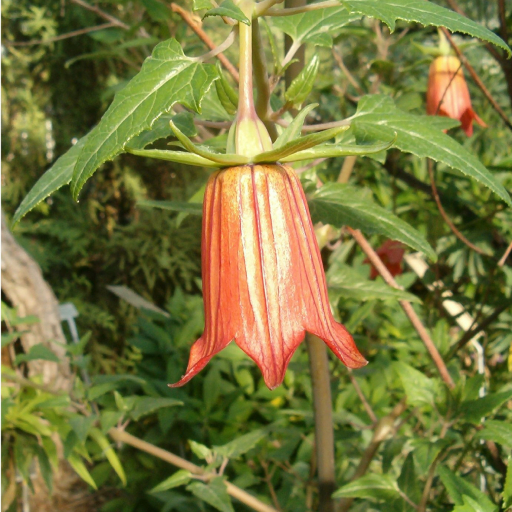
Plant Overview
Known as the Canary Island Bellflower or Bicacarera, this exotic scrambling beauty is a jewel of the Macaronesian islands. Unlike many garden plants that crave the summer sun, this "winter climber" wakes up just as other plants are going to sleep, producing magnificent, waxy lanterns in the heart of the cold season. In its native laurel forests, it is a symbol of the unique and ancient flora that survived the last ice age.
🔍 How to Identify
- 🔔 The Flowers: Large, drooping, bell-shaped blooms that are a rich burnt-orange or brick-red, often decorated with delicate darker veins on the inside.
- 🍃 The Foliage: Triangular or arrow-shaped leaves with coarsely toothed edges and a distinctive glaucous (blue-green) tint.
- 🌿 Growth Habit: A scrambling, herbaceous perennial that uses its stems to lean on neighboring shrubs, reaching lengths of up to 10 feet in the right conditions.
🏡 In Your Garden
- 💤 The Summer Sleep: This plant follows a Mediterranean growth cycle. It completely disappears underground during the hot summer months; do not throw the pot away! It is merely resting in its fleshy tuber until the autumn rains arrive.
- 🌤️ Dappled Light: Mimicking the "Cloud Forests" of its home, it prefers bright but filtered light. Direct, scorching afternoon sun will wilt its delicate bells, while deep shade will prevent flowering.
- 💧 Drainage is Key: Because it grows from a tuber, it is highly susceptible to rot. Use a gritty, well-draining mix and reduce watering significantly once the foliage begins to yellow in late spring.
⚠️ Safety & Toxicity
- ✅ Status: Generally considered non-toxic.
- 🐾 Details: There are no recorded cases of serious toxicity to cats, dogs, or humans. In fact, the fruit is technically edible, though it is rarely consumed today. However, as with any ornamental plant, it is best to discourage pets from chewing on the foliage to avoid mild stomach upset.
✨ Fun Fact
The Bicacarera was a vital food source for the Guanches, the indigenous people of the Canary Islands. They harvested the fleshy, black, plum-like fruits, which are said to have a sweet flavor reminiscent of figs or dates.

Detailed Care Instructions
To grow Canarina Canariensis, also known as Canary Island Bellflower, you can follow these basic steps:
- Start with the right conditions: Canarina Canariensis thrives in a Mediterranean climate, so it requires bright sunlight and warm temperatures. Ensure that the plant receives at least six hours of direct sunlight each day.
- Planting: Select a well-draining soil mixture that is rich in organic matter. Place the Canarina Canariensis plant in a hole slightly larger than its root ball and water it thoroughly after planting. Space multiple plants about 12 inches apart to give them adequate room to grow.
- Watering: These plants prefer regular moisture but do not like to sit in overly wet soil. Allow the top inch of soil to dry out between watering sessions. Avoid overwatering, as it can lead to root rot.
- Fertilization: Use a balanced, slow-release fertilizer once a month during the growing season (spring to fall). Be sure to follow the suggested dosage on the fertilizer package. Alternatively, you can apply a liquid fertilizer every two weeks.
- Pruning: Prune Canarina Canariensis annually in early spring to remove dead or damaged parts. This can help promote new growth and maintain a healthy plant shape.
- Support: Provide support for the plant as it grows. Canarina Canariensis produces long vines that will need a structure or trellis to climb. You can gently tie the vines to the support with soft plant ties or twine.
- Propagation: You can propagate Canarina Canariensis either by seeds or by division. Seed propagation can be done by collecting mature seed pods and sowing them in a seed starting mix. Division can be done by carefully separating the plant into smaller sections with roots.
- Winter care: In cooler climates, Canarina Canariensis may need protection during the winter months. Consider bringing the plant indoors or covering it with a frost cloth or mulch to protect it from freezing temperatures.
Remember to regularly monitor the plant for any signs of pests or diseases, and take appropriate measures to address them if necessary.

Place in a window with dappled sun or a spot in the middle of a room. Or directly in a window facing west or east.

The Canarina Canariensis plant should be watered regularly but moderately, keeping in mind that it prefers moist but well-drained soil. Overwatering can lead to root rot, so it's important not to let the soil become waterlogged. Watering should be done at the base of the plant, avoiding getting water on the leaves or flowers. The frequency of watering will depend on the size of the plant, the humidity of the environment, and the time of year. During periods of active growth or hot weather, the plant may require more frequent watering, while in cooler months or during dormancy, it may need less. It's a good idea to check the soil moisture level before watering to make sure it's not too dry or too wet. If the soil is moist to the touch, water should be withheld until it begins to dry out.
When fertilizing this plant, it is important to use a balanced fertilizer with equal amounts of nitrogen, phosphorus, and potassium. Begin fertilizing in early spring, as the plant starts to grow new foliage. Fertilize every two weeks with a diluted solution of the balanced fertilizer, following the package instructions. During the winter months, reduce fertilization to once a month. Avoid fertilizing during the plant's dormant period in order to prevent fertilizer burn or harm to the roots.
Canarina canariensis is a plant species that belongs to a certain genus. This type of plant thrives in loamy or sandy soil that is well-draining and rich in organic matter. The soil should have a pH level of slightly acidic to neutral. A good soil mixture for this plant should have equal parts of sand, perlite, and peat moss. It is important to ensure that the soil is moist but not waterlogged. Overwatering can cause root rot, which can lead to the death of the plant. Adding organic compost to the soil mixture can help improve the soil fertility and provide the necessary nutrients for this plant to grow and thrive.
Canarina Canariensis is a plant species native to the Canary Islands. It belongs to the family Campanulaceae and is a climbing vine that can grow up to 3 meters long. Propagating this plant can be done through a few methods:
- Seed propagation: Collect the ripe seeds of the plant and sow them in a well-draining potting mix. Keep the soil moist and place the pot in a warm, bright location. The seeds take about 2-6 weeks to germinate.
- Stem cuttings propagation: Take stem cuttings of about 10- 15 cm long with a few leaves and place them in a moist potting mix. Cover the pot with a plastic bag or dome to create a humid environment. Place the pot in a bright, warm location, and mist the cuttings daily. Roots should develop in about 2-6 weeks.
- Layering propagation: This method involves bending a stem of the plant into the soil and covering it with a layer of soil or compost. The stem will develop roots, and once roots are seen, it can be separated from the mother plant and potted.
Regardless of the method, it's essential to keep the new plants in a warm, semi-shaded location with regular watering until they are established.








