Plant Overview
Known as the Silky Jackbean, this resilient vine is a master of the Pacific coastline. With leaves that shimmer like moonlight, it creates a lush, silver-green carpet over sandy dunes, protecting the beach from erosion while looking effortlessly elegant. It is the ultimate tropical survivalist, thriving in harsh environments where salt spray and intense sun would wither most other plants.
🔍 How to Identify
- 🌿 Silky Foliage: Its most striking feature is the "sericeous" (silky) texture. The three-part leaflets are covered in fine, velvety white hairs that give the plant a distinct silvery or greyish sheen.
- 🌸 Pea-Like Blooms: It produces vibrant pink to purplish-red flowers that cluster together, displaying the classic "banner and wing" shape typical of the legume family.
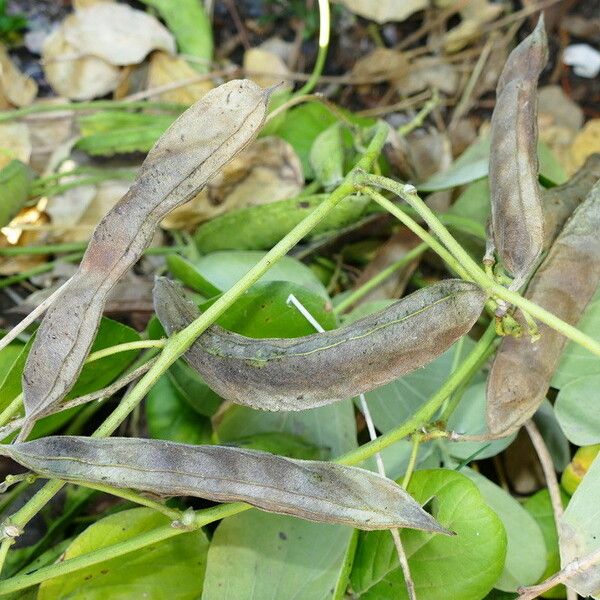
- 📦 Sturdy Pods: The plant develops thick, woody seed pods that can grow quite large. These pods turn from a fleshy green to a weathered tan-brown as they mature.
🏡 In Your Garden
- 🏖️ Coastal Warrior: This plant is essentially "salt-proof." It is an elite choice for seaside gardens or beachfront properties where salt spray and wind make traditional gardening difficult.
- 🌱 Soil Stabilizer: Because of its vigorous crawling habit, it is often used to prevent soil erosion. It creates a dense mat that holds sandy soil together against the elements.
- ☀️ Sun Seeker: It requires full sun to maintain its silver luster. In the shade, the "silky" hairs may become less dense, and the plant can become leggy as it searches for light.
⚠️ Safety & Toxicity
- 🚫 Non-Edible Status: While related to some edible beans, the seeds of the Silky Jackbean are generally considered toxic if consumed raw.
- 🐾 Keep Away from Pets: Ingestion of the beans can cause gastrointestinal distress, including vomiting and abdominal pain in dogs, cats, or curious children. It is best enjoyed as a visual landscape feature rather than a food source.
✨ Fun Fact
🌊 The Ocean Traveler: The seeds of the Silky Jackbean are true "sea beans." They are buoyant and encased in a tough, water-resistant shell, allowing them to float across the Pacific Ocean for months until they wash up on a distant shore to sprout.

Detailed Care Instructions
To grow Canavalia sericea, also known as Jack Bean or Macuna deeringiana, you can follow these steps:
- Climate: Canavalia sericea plants thrive in warm climates. Ensure that your region has a suitable climate with temperatures ranging between 70-85°F (21-29°C).
- Soil: The plant prefers well-draining soil with a pH level between 6.0-7.5. Prepare the soil by removing any weeds or rocks before planting.
- Planting: Soak the seeds in warm water for 24 hours before planting to help with germination. Choose a sunny location for planting as Canavalia sericea requires full sun exposure. Plant the seeds about 1 inch deep and space them about 2-3 feet apart to allow enough room for growth.
- Watering: Water the plants regularly and deeply, keeping the soil consistently moist. However, be cautious not to overwater, as excessive moisture can lead to root rot.
- Trellis or support: Canavalia sericea is a climbing plant, so it benefits from having a trellis or support structure. As the plant grows, gently guide its tendrils onto the support to promote upward growth.
- Fertilizer: Use a balanced fertilizer once every month during the growing season. This will provide essential nutrients to the plant and promote healthy growth.
- Pruning: Regularly prune the plant to remove any dead or damaged growth. This will help maintain its overall health and appearance.
- Pest and disease control: Keep an eye out for pests and disease. You may encounter aphids, spider mites, or powdery mildew. If necessary, use suitable organic pest control methods or consult with a local garden center for assistance.
- Harvesting: Depending on your purpose, you can harvest the seeds or the pods. If you want to use the seeds, wait until the pods turn brown and dry on the plant. You can then collect and store the seeds for future use.
By following these steps, you should be able to successfully grow Canavalia sericea plants in your garden or outdoor space.

Place in a bright room that is sun drenched almost all day. Or directly in a south-facing window.

The Canavalia Sericea plant requires regular watering to thrive, especially during the hot summer months. When watering the plant, ensure that the water reaches the roots and penetrates the soil deeply. However, it's important to avoid overwatering, as this can lead to root rot and other fungal diseases.
To water the Canavalia Sericea plant, you can use a watering can or a hose with a gentle spray nozzle. Make sure to water the plant deeply once or twice a week, depending on the moisture levels in the soil. In addition, you should also check the soil regularly to see if it has dried out completely, as this will indicate that the plant needs watering.
When watering the Canavalia Sericea plant, it's best to avoid wetting the leaves and flowers, as this can lead to fungal infections. Instead, direct the water at the base of the plant and let it soak into the soil. It's also a good idea to water the plant early in the morning or late in the evening, as this will prevent evaporation and help the plant retain moisture.
To fertilize the plant with the scientific name Canavalia Sericea, you will need to provide it with a balanced fertilizer that contains equal amounts of nitrogen, phosphorus, and potassium. The best time to fertilize is during the plant's growing season, starting in spring and continuing into the fall.
To apply the fertilizer, you can either sprinkle it around the base of the plant or mix it into the soil. Be sure to follow the recommended dosage on the fertilizer packaging and water the plant thoroughly after fertilizing.
Avoid over-fertilizing or using too much fertilizer, as this can harm the plant and lead to root burn or other issues. It is also essential to monitor the plant's response to the fertilizer and adjust the application rate accordingly.
The ideal soil for the Canavalia Sericea plant is a well-draining soil with a slightly acidic to neutral pH level between 5.5 and 7.0. The soil should be rich in organic matter and have good moisture retention capabilities but should not be waterlogged. A sandy loam or loamy soil with good structure and texture is preferred. It should also have sufficient levels of nutrients such as nitrogen, phosphorus, and potassium, which can be supplemented with organic fertilizers. It is important to avoid soils that are heavy and compacted or contain high levels of salts or alkalinity, which can be detrimental to the growth and development of the plant.
Canavalia sericea can be propagated through various methods including seed propagation, stem cuttings, and division.
Seed propagation involves collecting mature seeds from the plants and soaking them in warm water for 24 hours before planting. The seeds should be planted in well-drained soil and kept moist until they germinate.
Stem cutting propagation involves taking a stem cutting from a healthy mother plant. The cuttings should have at least one node and be 4-6 inches in length. The cuttings are then planted in well-drained soil and kept moist until they develop roots and start to establish themselves.
Division propagation is done by dividing the root ball of a mature parent plant. This method is usually done in the fall or early spring when the plant is dormant. The divided sections should be planted in well-drained soil and kept moist until they become established.
Overall, Canavalia sericea can be propagated using several different methods depending on the grower’s preference and available resources.








