Plant Overview
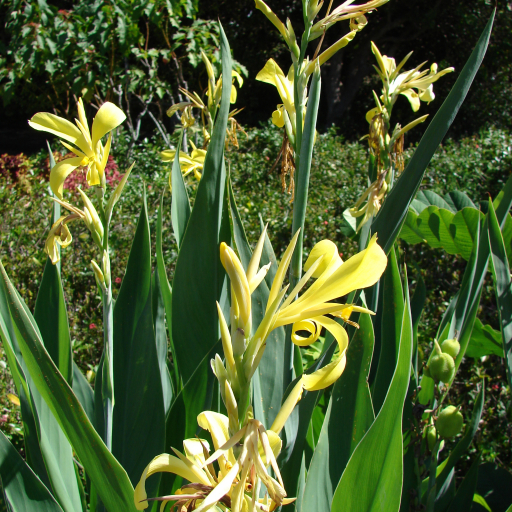
Known as the "Water Canna" or "Golden Canna," Canna glauca is the elegant, aquatic cousin of the common garden Canna. While most of its relatives prefer well-drained soil, this beauty thrives with its "toes" submerged in water, making it a favorite for pond edges and water features. Its striking blue-green foliage provides a cool, architectural backdrop to its bright, lemon-yellow blossoms.
🔍 How to Identify
- 🥣 Waxy Foliage: The leaves are "glaucous," meaning they are covered in a thin, waxy coating that gives them a distinct silvery or blue-green tint.
- 🍋 Orchid-like Flowers: Unlike the massive, floppy petals of hybrid Cannas, these flowers are narrow, refined, and a vibrant sulfur-yellow.
- 📏 Slender Silhouette: It grows in a more upright, streamlined fashion than other Cannas, often reaching heights of 4 to 6 feet without becoming "floppy."
🏡 In Your Garden
- 🌊 The Aquatic Edge: This plant is a true "bog plant." It is happiest when planted in heavy clay soil within a submerged pot, sitting under 2 to 6 inches of standing water.
- ☀️ Sun and Heat: It requires full sun to maintain its metallic leaf color. In shaded spots, the blue tint fades to a dull green, and the plant may fail to produce its signature yellow spikes.
- ❄️ Winter Dormancy: Because it is a tropical native, the rhizomes must be lifted and stored in a frost-free area if you live in a climate where the water in your pond freezes solid.
⚠️ Safety & Toxicity
- ✅ Safe for Pets: Canna glauca is generally considered non-toxic to cats, dogs, and horses, making it a worry-free choice for household gardens.
- 👶 Human Safety: It is non-poisonous to humans. However, the rhizomes (roots) are very fibrous and can cause mild digestive discomfort if accidentally ingested by children.
✨ Fun Fact
In its native South American habitats, the starch-rich rhizomes of Canna glauca were historically used as a food source similar to arrowroot. Today, they are often used in "constructed wetlands" because they are incredibly efficient at filtering excess nutrients and cleaning pond water!

Detailed Care Instructions
| Humidity | Normal |
| Lighting | Full Sun |
| Difficulty | Medium |
| Hibernation | Cold Period |
| Temperature | Min 15°C |
| Hardiness Zones | 9 - 11 |
To grow Canna Glauca plants, you can follow these steps:
- Obtain Canna Glauca rhizomes: Purchase Canna Glauca rhizomes from a reputable nursery or online store. Make sure the rhizomes are healthy and free from any signs of disease or damage.
- Select a suitable location: Canna Glauca plants prefer full sun to partial shade. Choose a location in your garden that receives at least 6-8 hours of direct sunlight daily. Ensure the soil is well-drained and rich in organic matter.
- Prepare the planting area: Clear the planting area from weeds, rocks, and debris. Loosen the soil and amend it with compost or well-rotted manure to improve drainage and fertility.
- Plant the rhizomes: Dig a hole that is deep enough to accommodate the rhizome, usually around 4-6 inches deep. Place the rhizome horizontally in the hole with the "eyes" or growing points facing upwards. Cover the rhizome with soil and pat it down gently.
- Water regularly: Water the planted rhizomes thoroughly after planting. Keep the soil lightly moist but not overly saturated. Canna Glauca plants require consistently moist soil, especially during the growing season.
- Fertilize regularly: Use a balanced, slow-release fertilizer or a liquid fertilizer formulated for flowering plants. Follow the instructions on the fertilizer packaging for the correct dosage and frequency of application. Fertilize every 4-6 weeks during the growing season.
- Provide support if necessary: As the plants grow, they may require support to prevent them from bending or falling over. Insert stakes or install a trellis near the plants and secure them with soft plant ties.
- Mulch the plants: Add a layer of organic mulch, such as wood chips or straw, around the base of the plants to suppress weeds, retain moisture, and regulate soil temperature.
- Maintain proper care: Regularly remove any dead or decaying leaves from the plants to maintain overall health and appearance. Monitor the soil moisture levels and adjust watering accordingly.
- Propagate if desired: Canna Glauca plants can be propagated by dividing the rhizomes every 2-3 years to promote healthy growth. Lift the rhizomes from the ground, carefully separate them, and replant the divisions in new locations or share them with other gardeners.
With proper care and maintenance, your Canna Glauca plants should grow vigorously and produce their charming yellow flowers.

Place in a bright room that is sun drenched almost all day. Or directly in a south-facing window.

To water the plant, check the soil every few days to ensure it is not completely dry. A good rule of thumb is to water when the top inch of soil feels dry to the touch. When watering, slowly pour water onto the soil around the base of the plant, being careful not to get water on the leaves. Avoid overwatering, as this can lead to root rot. It is also important to ensure the plant is in a container with proper drainage to prevent waterlogged soil.
To fertilize this plant, use a balanced water-soluble fertilizer every two weeks during the growing season. Dilute the fertilizer according to the instructions on the package and apply it to the soil around the base of the plant. Avoid getting fertilizer on the leaves as this can cause burning. During the winter months, reduce fertilization to once a month or stop fertilizing altogether if the plant becomes dormant.
The best type of soil to use with this plant is a well-draining soil that is rich in organic matter and has a slightly acidic pH level. The soil should be loose and moist, allowing for proper aeration and water retention. The plant also prefers soil that is rich in nutrients, such as nitrogen, phosphorus, and potassium. It is important to avoid using heavy soils that tend to retain excess water, as this can lead to root rot and other fungal infections. Additionally, adding compost or other organic matter to the soil can help improve its texture and nutrient content, providing the plant with the ideal growing conditions to thrive.
There are a few methods to propagate this plant. One way is to divide the rhizomes. Carefully dig up the plant and gently separate the rhizomes by pulling them apart. Each division should have several healthy shoots and roots. Replant the divisions in a well-draining soil mixture and water thoroughly.
Another method is to take stem cuttings. Select a healthy stem and use a sharp knife to cut a 4-6 inch section. Remove the leaves from the bottom of the cutting and dip the end in a rooting hormone. Plant the cutting in a pot filled with a well-draining soil mixture and keep it in a warm, bright location. Water regularly and mist to keep the cutting moist.
Lastly, this plant can also be propagated by seed. Harvest the seeds from mature seed pods and plant them in a seed-starting mix. Keep the soil moist and warm, and the seeds should germinate in a few weeks. Transplant the seedlings into individual pots once they have developed a few true leaves.








