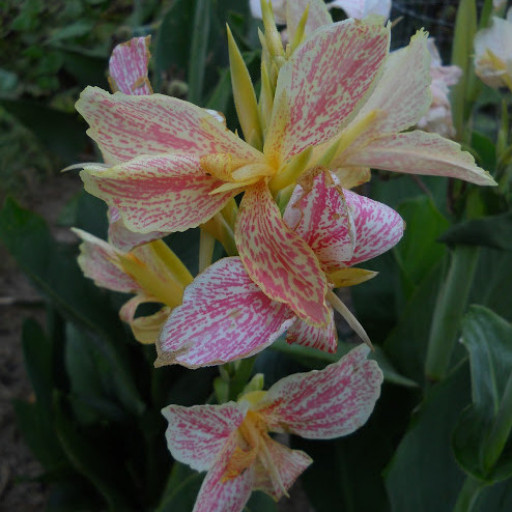
Plant Overview
Often called the "Indian Shot" or simply the Garden Canna, these tropical showstoppers bring an immediate jungle vibe to any landscape. While their name suggests otherwise, they aren't true lilies; they are actually closer relatives to ginger and bananas. These hybrids are the result of centuries of careful breeding, designed to produce the most vibrant, oversized blooms and dramatic foliage possible.
🔍 How to Identify
- 🍃 The Foliage: Massive, paddle-shaped leaves that look remarkably like banana leaves. Depending on the variety, they can be solid emerald green, deep bronze, or even flamboyantly variegated with stripes.
- 🌺 The Blooms: Asymmetrical, orchid-like flowers that cluster at the top of thick stalks. They come in a fiery palette of reds, oranges, yellows, and pinks, often with contrasting spots.
- 📏 The Stature: They are architectural giants, typically standing 3 to 6 feet tall, though some "dwarf" varieties stay compact at 2 feet.
🏡 In Your Garden
- ☀️ Sun & Thirst: Cannas are true sun-worshippers that crave "wet feet." Unlike many garden plants that fear root rot, Cannas thrive in poorly drained soil and are even used as spectacular accents in the shallow edges of garden ponds.
- 🍴 Heavy Feeders: Because they produce so much biomass in a single season, they are incredibly hungry. They require rich, organic-heavy soil to maintain their lush look and prevent the leaves from tattering.
- ❄️ Winter Storage: In temperate climates, these tropicals cannot survive a deep freeze. Their thick rhizomes (underground energy stores) must be "lifted" from the ground in autumn and stored in a cool, dark place until the spring warmth returns.
⚠️ Safety & Toxicity
- 🐾 Pet Friendly: Canna lilies are a wonderful choice for pet owners. They are generally considered non-toxic to dogs, cats, and horses by the ASPCA.
- 👶 Choking Hazard: While the plant isn't poisonous, it produces very small, perfectly round, and incredibly hard black seeds. These should be kept away from small children as they represent a significant choking hazard.
✨ Fun Fact
The nickname "Indian Shot" isn't just a metaphor. The seeds of the Canna are so dense and heavy that they were reportedly used as substitute ammunition for flintlock muskets during the 18th and 19th centuries when lead shot was unavailable!

Detailed Care Instructions
| Color | Yellow, Orange, Red, Pink |
| Soil Ph | 6.0-6.5 |
| Lighting | Full Sun |
| Soil Type | Rich, Moist |
| Bloom Time | Summer |
| Plant Type | Annual Flower (In Most Zones) |
| Mature Size | 2 To 10 Feet Tall And 1.5 To 6 Feet Wide |
| Native Area | Tropics |
| Sun Exposure | Full Sun |
| Hardiness Zones | 8-11 |
To grow Canna X Generalis (Canna Lily) plants, you can follow these steps:
- Choose the right location: Canna Lily plants require full sun to grow properly, so select a location where they can receive at least 6-8 hours of direct sunlight each day. Additionally, the area should have well-draining soil.
- Prepare the soil: Loosen the soil and add organic matter like compost or well-rotted manure to improve its fertility and drainage. Canna Lily plants prefer slightly acidic to neutral soil with a pH range of 6.0-7.0.
- Planting: Dig a hole, approximately 4-6 inches deep, and place your Canna Lily rhizome (bulb-like structure with "eyes") in the hole with the eyes facing upward. Fill the hole with soil, gently firm it around the rhizome, and water it thoroughly.
- Watering: Canna Lilies require regular watering, especially during dry periods. Keep the soil moist but not waterlogged. Avoid overhead watering, as it can encourage fungal diseases. Instead, water at the base of the plant.
- Fertilization: Apply a balanced, slow-release fertilizer or organic fertilizer to the soil when planting. You can also supplement with additional fertilizer throughout the growing season, following the package instructions. This will help provide the necessary nutrients for healthy growth and blooming.
- Mulching: Apply a layer of mulch around the plants to retain moisture, suppress weed growth, and regulate soil temperature. Organic mulches like straw or wood chips work well.
- Support: As your Canna Lily plants grow taller, they may require support. Consider placing stakes or cages around the plants to prevent them from falling over in strong winds or heavy rain.
- Pruning: Remove spent flowers to encourage continuous blooming and prevent seed production. Trim dead or damaged leaves as needed.
- Overwintering: In areas with freezing temperatures, Canna Lilies are typically treated as annuals. However, if you want to save them for the next year, lift the rhizomes in late fall after foliage dies back and store them in a cool, dry place (around 45-55°F or 7-13°C) over the winter.
By following these guidelines, you should be able to grow healthy and vibrant Canna X Generalis plants.

Place in a window with dappled sun or a spot in the middle of a room. Or directly in a window facing west or east.

To water this particular plant, you should thoroughly moisten the soil around the base of the stem, being careful not to get water on the leaves or flowers. The plant should receive enough water to keep the soil consistently moist, but not so much that it becomes waterlogged or the roots begin to rot. It is important to choose a well-draining soil mix and a pot or planting location with good drainage to prevent water from accumulating around the roots. Additionally, this plant may benefit from a regular schedule of fertilization to encourage healthy growth and blooming.
To fertilize this plant, mix a balanced fertilizer with equal parts nitrogen, phosphorus, and potassium. Apply the fertilizer to the soil around the plant, making sure it is evenly distributed. Water the plant thoroughly to help the fertilizer seep into the soil. Repeat this process every 4-6 weeks during the growing season, being careful not to over-fertilize.
For the best growth of Canna X Generalis plants, it is recommended to use a well-draining soil rich in organic matter. A pH level of 6.0-7.5 is ideal for these plants. It is important to avoid soils that are compact or have poor drainage as this can cause root rot. Adding perlite or sand to the soil can improve drainage. Additionally, incorporating compost or other organic matter into the soil can provide necessary nutrients to support healthy growth. It is also important to ensure that the soil is moist but not waterlogged, as overwatering can harm the plant.
To propagate this plant, you will need to select a healthy stem. Then, using a sharp pruning shears, cut the stem about 4-6 inches long just below a leaf node. Remove the lower leaves from the cutting, leaving only the top two or three.
Next, prepare a potting mixture that is equal parts of peat moss and perlite. Moisten the mixture lightly and make a hole in the center with a pencil or similar tool.
Then, dip the cut end of the stem into a rooting hormone powder and gently insert it into the hole in the potting mixture. Firm the mixture around the stem, leaving the top two or three leaves exposed.
Place the cutting in a bright, warm area but out of direct sunlight as it may scorch the leaves. Keep the soil moist but not waterlogged.
After about 4-6 weeks, the cutting should have developed roots. You can this time to transplant the cutting into a larger pot or outside in the garden.
Common pests of the garden canna include Mealybugs, spider mites, aphids, thrips. Make a habit of checking your garden canna frequently for pests so that any infestations can be caught and managed early.








