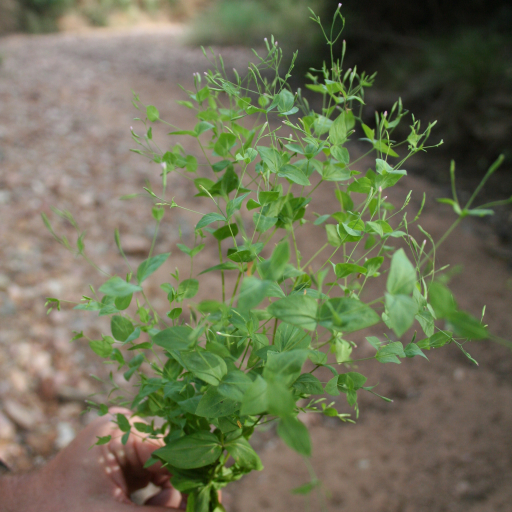
Plant Overview
Known as the "Spreading Canscora" or "Kilwar," this petite herb is like a delicate lace draped over damp rocks and old stone walls across tropical Asia and Africa. While it might look like a fragile weed, it is a resilient survivor that specializes in colonizing moist, shaded micro-habitats. In traditional folklore, it is often whispered about as a "brain tonic," holding a mysterious place in ancient herbal traditions.
🔍 How to Identify
- 🦋 Winged Stems: The most distinctive feature is the four-angled stem, which has thin, papery "wings" running along the corners, making it feel square to the touch.
- 🌸 Asymmetrical Blooms: It produces tiny, rosy-pink or white flowers. Interestingly, the four petals are often unequal in size, giving the bloom a slightly lopsided, charming appearance.
- 🍃 Delicate Foliage: The leaves are thin and egg-shaped (ovate). The upper leaves are often "sessile," meaning they clasp directly onto the stem without a stalk.
🏡 In Your Garden
- 💧 The Moisture Magnet: This plant thrives in "seepage" areas. If you find it in the wild or want to keep it nearby, remember it requires constant humidity and damp soil; it will wilt almost instantly if the roots dry out.
- 🌑 Shade Specialist: Unlike most flowering herbs that crave the sun, Canscora diffusa is a lover of the dark. It is perfectly adapted to the dappled light of forest floors or the cool shadows of north-facing rocky outcrops.
- 🌱 Self-Sowing Nature: As an annual herb, it lives fast. It focuses its energy on producing hundreds of tiny seeds that hitch a ride on water droplets to find new damp crevices to call home.
⚠️ Safety & Toxicity
- ✅ Generally Safe: There are no widespread reports of Canscora diffusa being toxic to touch or causing severe poisoning upon accidental contact.
- 🐾 Pet Precaution: While it is used in some traditional human medicines, it is best to keep curious cats and dogs from munching on it, as wild herbs can cause mild digestive upset in domestic animals.
- 💊 Medicine Note: It is often confused with other plants sold as "Shankhapushpi" in Ayurvedic medicine. Never consume wild plants for medicinal purposes without expert verification.
✨ Fun Fact
In some cultures, this plant is considered a "Saraswati" plant—named after the goddess of knowledge—because it was historically believed to sharpen the memory and improve mental clarity!

Detailed Care Instructions








