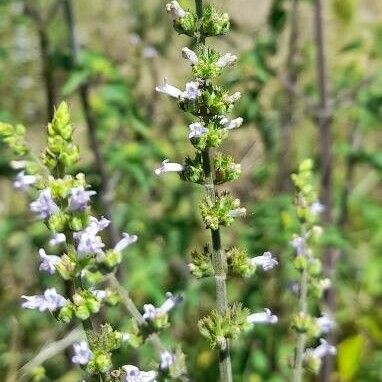
Plant Overview
Often called the "Wild Spikenard" or "Tropical Bush Mint," Cantinoa mutabilis is a hardy traveler that has migrated from its native South American roots to sun-drenched regions across the globe. A member of the mint family, it carries a distinctive, spicy aroma that bridges the gap between camphor and sage. While some consider it a spirited wildflower, it is beloved by traditional herbalists and pollinators alike for its resilience and nectar-rich blooms.
🔍 How to Identify
- ⏹️ Square Stems: Like most members of the Lamiaceae family, its stems are distinctly four-angled (square) and often feature a fine coating of downy hairs.
- 🍃 Serrated Leaves: The leaves are heart-shaped or ovate with jagged, "toothed" edges. They grow in opposite pairs along the stem and release a pungent, herbal scent when bruised.
- 🟪 Lavender Spikes: It produces tall, airy clusters of tiny, tubular flowers that range from pale lilac to deep violet, usually concentrated at the ends of the branches.
🏡 In Your Garden
- 🦋 The Butterfly Effect: If you are looking to create a sanctuary for local wildlife, this plant is a must-have. It acts as a high-energy "gas station" for bees, butterflies, and even hummingbirds, who are drawn to its long-lasting flowering season.
- ☀️ Drought Warrior: This plant thrives in "tough" spots where other plants might wilt. It prefers full sun and well-draining soil. Because it has a vigorous growth habit, it is best suited for the back of a border or a wilder patch of the garden where it has room to stretch its limbs.
⚠️ Safety & Toxicity
- ✅ General Status: Cantinoa mutabilis is generally considered non-toxic to humans and is used in various traditional teas; however, it should not be consumed without expert guidance.
- 🐾 Pets & Kids: It is largely safe for curious pets and children. However, the high concentration of essential oils in the leaves can cause mild stomach upset if large quantities are ingested by dogs or cats.
✨ Fun Fact
In various parts of the world, this plant is nicknamed the "Changeable Mint" because its appearance—from the size of its leaves to the intensity of its purple flowers—can change dramatically based on how much water and sunlight it receives!

Detailed Care Instructions

Some plants require more regular watering than others, which should be done every few days. It's critical to maintain the soil moist all of the time. The water requirements of the same plant placed in pots with varying sizes will differ. Because the water in the smaller pot evaporates faster than the water in the larger pot, it will require more watering. Regardless of pot size, the surface should constantly be maintained moist.








