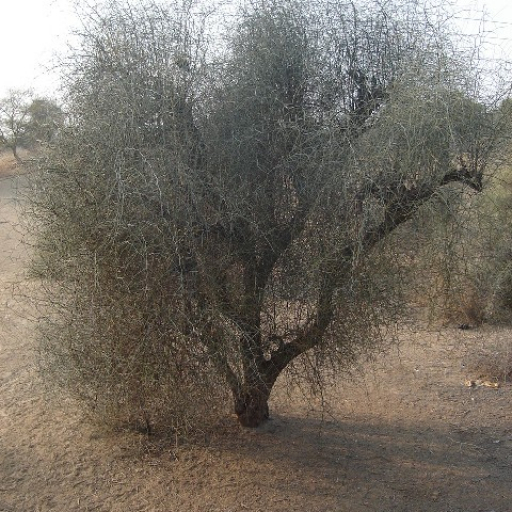
Plant Overview
Known as the "Kair" or "Karira," Capparis decidua is a true desert warrior. This resilient shrub is famous for its "leafless" appearance and its ability to thrive in the harshest, most arid landscapes of Africa and South Asia. While it may look like a tangle of green thorns for most of the year, it transforms into a stunning spectacle when it erupts in vibrant, fiery blossoms.
🔍 How to Identify
- 🌵 The Stems: The plant consists of a dense mass of leafless, green, zig-zagging twigs. These stems perform photosynthesis for the plant, allowing it to survive without traditional leaves.
- ⚔️ The Thorns: Sharp, hooked thorns appear in pairs at the base of the branches, serving as a natural defense against hungry desert herbivores.
- 🌺 The Flowers: Striking brick-red or orange-pink flowers with long, wispy stamens that give them a delicate, feathery appearance.
- 🍒 The Fruit: Small, round berries that start green and turn a bright, waxy red when fully ripe.
🏡 In Your Garden
- 🏜️ Tough Love: This plant thrives on neglect and requires "bone-dry" conditions. It has a massive, deep taproot that seeks out underground water, making it almost impossible to move once established.
- ☀️ Sun Worshiper: It requires full, punishing sun to produce its iconic flowers. In a garden setting, it is often used as a "living fence" or a structural focal point in xeriscapes (water-wise gardens).
- 🪨 Soil Preference: It prefers sandy or rocky soil with perfect drainage. If the roots sit in water for even a short period, the plant may suffer from rot.
⚠️ Safety & Toxicity
- 🟢 Status: Generally non-toxic to humans and pets, but the physical structure is the primary hazard.
- 📌 Mechanical Injury: The sharp, hooked thorns can cause painful scratches or skin punctures. Always wear thick leather gloves when pruning.
- 🍽️ Edibility Note: The unripe green berries are a culinary staple in regions like Rajasthan, but they are extremely bitter and must be soaked in brine or buttermilk before being cooked or pickled.
✨ Fun Fact
- 🍲 A Desert Delicacy: Despite its prickly exterior, the Kair berry is one of the two main ingredients in "Ker Sangri," a famous and nutritious gourmet dish from the Thar Desert that has sustained desert-dwelling communities for centuries!

Detailed Care Instructions
To grow Capparis decidua, also known as the ker or Caper bush, follow these steps:
- Climate and Soil Requirements: Capparis decidua thrives in arid regions with hot climates. It grows well in sandy, loamy soil that is well-draining and has a pH between 7.2 and 8.5.
- Seeds and Propagation: Obtain Capparis decidua seeds from a reliable source. Soak the seeds in water for 24 hours before sowing to enhance germination. You can also propagate the plant through stem cuttings.
- Sowing Seeds: Plant the soaked seeds in pots or directly in the ground during spring or early summer. Prepare the planting hole by loosening the soil and mixing in some organic matter. Sow the seeds at a depth of 1-2 cm and water thoroughly. Maintain a space of about 3-4 feet between each plant.
- Watering and Drainage: Capparis decidua requires regular watering during the initial stages of growth, but it is a drought-tolerant plant once established. Ensure that the soil has good drainage to prevent waterlogging.
- Sunlight and Temperature: Provide full sunlight exposure to Capparis decidua, as it requires at least 6-8 hours of direct sunlight daily. It can tolerate high temperatures but might require some protection during extreme heatwaves.
- Pruning and Maintenance: Regular pruning is necessary to maintain the desired shape and to remove dead or damaged branches. Prune the plant in late winter to stimulate new growth.
- Fertilization: Apply organic fertilizer or well-rotted compost during the growing season to provide essential nutrients to the plant. Avoid over-fertilizing, as it can negatively impact growth.
- Pests and Diseases: Capparis decidua is generally resistant to pests and diseases. However, keep an eye out for aphids, scale insects, or fungal infections. Use appropriate organic insecticides or fungicides if necessary.
- Harvesting: Capparis decidua produces small edible fruits (caper buds) that can be harvested when they are still green. They are traditionally used in culinary applications. Harvest the buds before they start turning yellow.
- Winter Care: Capparis decidua is a hardy plant that can tolerate low temperatures but might require protection during frost or extreme cold. Mulch the base of the plant with organic matter to insulate the roots.
Remember to check your local gardening guidelines and regulations, as Capparis decidua might be considered an invasive species in some regions.

Place in a bright room that is sun drenched almost all day. Or directly in a south-facing window.

Capparis Decidua is a plant that requires moderate watering. Excessive watering can lead to root rot and ultimately kill the plant, while inadequate watering can make the plant wilted and dry. The recommended watering frequency depends on the weather conditions and the soil type. In hot and dry weather, the plant needs regular watering, while it can survive longer without water in cooler and humid conditions. When watering, it's important to water the roots directly rather than the leaves or stem to avoid rot and fungal diseases. A good way to test whether the plant needs water is to check the soil moisture level by inserting a finger about an inch deep into the soil. If the soil is dry, it's time to water. Water the plant slowly, taking care not to disturb the root system. It's also important to use well-draining soil to avoid waterlogging the roots.
The fertilizing instructions for Capparis Decidua plant are as follows:
- Use a balanced fertilizer with an N-P-K ratio of 10-10-10 or 20-20-20.
- Apply the fertilizer during the growing season from spring to summer.
- Dilute the fertilizer to half strength and apply it once every two weeks.
- Water the plant thoroughly after fertilization.
- Avoid fertilizing during the dormant period in winter.
The ideal soil for the Capparis Decidua plant should be well-draining with good moisture retention. It should be slightly alkaline, with a pH range of 7.5 to 8.5. The soil should be rich in organic matter and have good nutrient content, particularly high levels of phosphorus and potassium.
The soil texture should be medium to coarse, with good water-holding capacity. The plant prefers soil that is sandy-loam in texture and does not tolerate heavy or clay soils. The soil should also be well-aerated, allowing for good root growth and nutrient uptake.
When planting, it is important to prepare the soil properly by incorporating organic matter and adding fertilizers to ensure the plant gets off to a healthy start. It is also recommended to top-dress the soil with compost or manure annually to maintain soil fertility and structure.
Overall, the soil for the Capparis Decidua plant should be well-draining, slightly alkaline, and rich in nutrients and organic matter, with a sandy-loam texture.
The Capparis Decidua plant can be propagated through seeds and cuttings. To propagate through seeds, collect the ripe seeds from the plant and sow them in well-draining soil. Water regularly and keep the soil moist until the seeds germinate.
To propagate through cuttings, take a 10-15 cm long stem cutting from the plant and dip it in rooting hormone. Plant the cutting in well-draining soil and keep it in a shaded area. Water sparingly and wait for the cutting to develop roots before transplanting it to a larger pot or to an outdoor location.
It is recommended to propagate the Capparis Decidua plant during its active growth period, which is typically in the spring or summer months. With proper care and maintenance, the propagated plant can grow into a beautiful and healthy specimen.








