Plant Overview
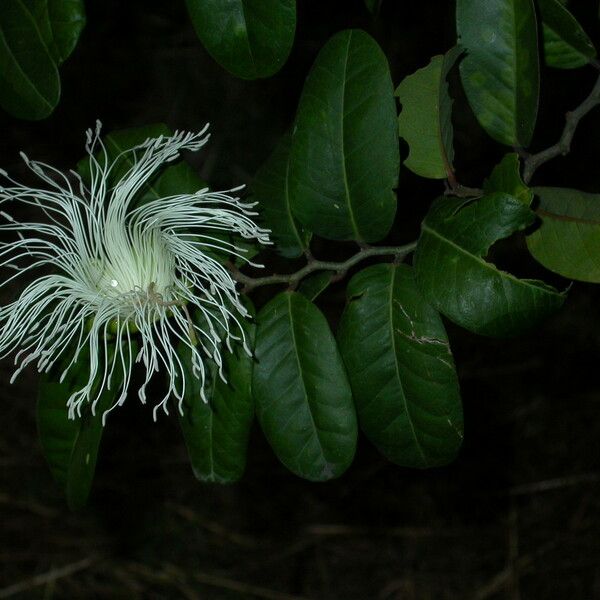
Known as the Limber Capparis or Bayleaf Caparbush, this versatile native of Florida, the Caribbean, and South America is a master of transformation. While it often begins life as a modest, glossy-leaved shrub, it eventually reveals a wilder side, "scrambling" over neighboring plants like a vine. It is most famous for its dramatic, nighttime floral displays that look like white fireworks frozen in time.
🔍 How to Identify
- 🍃 The Foliage: The leaves are leathery, oblong, and a deep, glossy green. They are arranged alternately along zig-zagging (flexuose) stems that give the plant its scientific name.
- 🎇 The "Exploding" Flowers: The blossoms feature incredibly long, white stamens that fan out like delicate silk threads. They usually open in the evening, emitting a sweet fragrance to attract nocturnal pollinators.
- 🌶️ The Showy Seed Pods: Perhaps its most striking feature is the fruit. Long, green, bean-like pods eventually split open to reveal a startling, fleshy bright-red interior and white seeds.
🏡 In Your Garden
- 🦋 A Butterfly Buffet: This plant is a critical host for the Great Southern White and Florida White butterflies. If you see tiny caterpillars munching on the leaves, don’t reach for the pesticide—they are the next generation of garden beauties!
- 🧂 Coastal Warrior: Because it is highly salt-tolerant and drought-resistant once established, it is a favorite for seaside landscaping where other plants might wither from the salt spray.
- 🧗 The Scrambling Habit: Unlike a true vine, it doesn't have tendrils to grip. Instead, it "leans" on other plants or fences. It’s perfect for adding a layered, naturalistic look to a wild garden or privacy screen.
⚠️ Safety & Toxicity
- 🟢 Status: Generally non-toxic to touch and safe for most gardens.
- 🐾 Details: While not considered dangerous to pets or children, it is not a culinary plant. Unlike its cousin, the edible Caper (Capparis spinosa), the Limber Capparis is grown for beauty and ecology rather than the kitchen. Ingesting large amounts of any non-food plant may cause mild stomach upset in curious pets.
✨ Fun Fact
The "flexuosa" in its name refers to its "limber" or "flexible" branches. In the wild, these branches are so bendy that they can weave themselves through dense forest canopies without snapping, allowing the plant to reach for the sunlight!

Detailed Care Instructions








