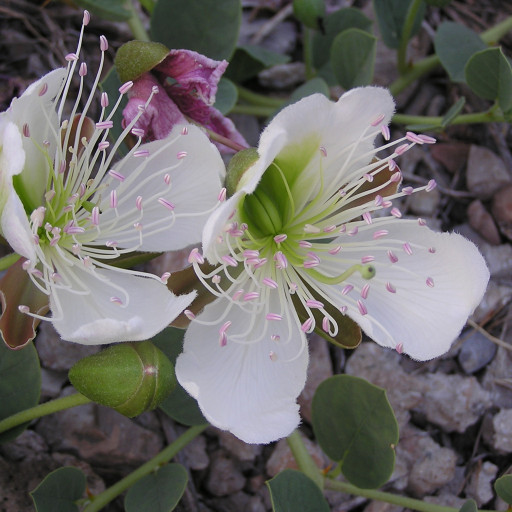
Plant Overview
Often called the "Orchid of the Mediterranean," the Caper Bush is far more than just the source of your favorite salty garnish. This resilient, sun-loving shrub is famous for its ability to grow out of ancient stone walls and rocky crevices where few other plants could survive. Its delicate, short-lived flowers look like a floral firework display, blooming for just a single day before fading.
🔍 How to Identify
- 🌸 The Bloom: Large, four-petaled white or pale-pink flowers featuring a dramatic "explosion" of long, violet-colored stamens in the center.
- 🍃 The Foliage: Round, fleshy, and dark green leaves with a waxy texture that helps the plant retain moisture in scorching heat.
- 🌵 The Spines: Look closely at the base of the leaf stalks; you’ll find small, curved thorns (stipules) that give the species its name, spinosa.
🏡 In Your Garden
- 🧱 The Hardship Lover: This plant thrives on neglect. It prefers poor, rocky, or sandy alkaline soil and is perfectly suited for rock gardens or cascading over stone retaining walls.
- 💧 Taproot Nuance: Because it develops a very deep, powerful taproot to find water, the Caper Bush is incredibly drought-tolerant once established. However, this also means it absolutely hates being transplanted; once you pot it or plant it, avoid moving it at all costs.
⚠️ Safety & Toxicity
- ✅ Status: Non-toxic and widely consumed by humans.
- 🐾 Details: While the plant is safe for humans and generally non-toxic to pets, the sharp recurved spines along the stems can cause scratches. Always wear gloves when pruning or harvesting to avoid "caper-claw."
✨ Fun Fact
The "caper" you find in jars is actually the plant’s unopened flower bud, harvested by hand early in the morning. If you miss the harvest and the bud opens into a flower, it eventually turns into a "caper berry"—a larger, seedy fruit that is also pickled and eaten!

Detailed Care Instructions
| Color | White, Pinkish-White, Red |
| Soil Ph | Tolerates A Variety |
| Lighting | Full Sun |
| Soil Type | Tolerates A Variety Of Well-Drained Soils |
| Bloom Time | Spring |
| Plant Type | Evergreen Shrub |
| Mature Size | Up To 2 Meters |
| Native Area | Mediterranean And Himalayas |
| Sun Exposure | Full Sun |
| Hardiness Zones | 8-10 |
To grow Capparis Spinosa, also known as the caper bush, you can follow these steps:
- Climate and soil requirements: Capparis Spinosa thrives in warm and sunny climates with hot summers, and it prefers well-draining soil. If you live in an area with cold winters, it's best to grow it in a pot and bring it indoors during the cold season.
- Selecting a location: Choose a sunny spot in your garden or a large pot if you plan to grow it indoors. Ensure the location provides at least six hours of direct sunlight every day.
- Planting: If starting from seeds, soak them in warm water overnight to help with germination. Alternatively, purchase a young plant from a garden center or online nursery. Dig a hole in the soil or pot and place the seeds or young plant inside, covering the roots with soil. Space multiple plants at least two feet apart to provide enough room for growth.
- Watering: Capparis Spinosa prefers moderate watering. Water the plant deeply once every week during the growing season, allowing the soil to dry out slightly between waterings. Reduce watering during winter when the plant is dormant.
- Fertilizing: Use a balanced organic fertilizer during the growing season to provide essential nutrients. Apply the fertilizer according to the package instructions, usually once every one to two months.
- Pruning: Prune the plant in early spring before new growth appears to control its size and shape. Remove any dead or damaged branches and cut back long, straggly stems. Pruning helps promote bushier growth and increases flowering.
- Protecting against pests and diseases: Although caper bushes are relatively pest and disease-resistant, they can occasionally be affected by aphids, spider mites, or fungal diseases. Regularly inspect the plant for any signs of infestation or disease and take appropriate measures, such as using organic insecticides or fungicides if necessary.
- Harvesting capers: Caper buds are picked when they are small and tender, usually before they open. Pick the buds regularly throughout the growing season. Rinse them thoroughly in water, then soak them in a brine solution or vinegar to preserve them for culinary use.
By following these steps, you should be able to successfully grow Capparis Spinosa and enjoy its unique and flavorful capers.

Place in a bright room that is sun drenched almost all day. Or directly in a south-facing window.

Capparis Spinosa is a plant that requires sufficient watering in order to thrive. It is important to water the plant regularly, especially during the summer months when the weather is warm and dry.
When watering the plant, it is important to ensure that the soil is moist but not saturated. Overwatering can cause the roots to rot and result in the death of the plant. On the other hand, allowing the soil to dry out completely can also harm the plant.
The best way to water Capparis Spinosa is to check the soil regularly by inserting your finger into the soil up to the first knuckle. If the soil feels dry, then it is time to water the plant.
When watering, pour the water slowly and directly onto the soil around the base of the plant. Avoid getting the leaves or flowers wet as this can cause damage or disease.
It is also important to note that Capparis Spinosa prefers well-draining soil. If the soil remains too wet, it can lead to root rot and other issues. If your soil is heavy and clay-like, consider adding sand, peat moss, or other materials to improve drainage.
To fertilize this plant, use a balanced fertilizer with equal parts nitrogen, phosphorus, and potassium. Apply the fertilizer once per month during the growing season, which is typically from spring to early fall. Be sure to dilute the fertilizer according to the manufacturer's instructions before applying. Avoid over-fertilizing, as this can lead to root damage and other adverse effects. Additionally, consider supplementing with organic fertilizers like compost or well-rotted manure for added nutritional benefits.
The ideal soil for this plant should be well-draining, sandy or loamy soil that is rich in organic matter. The pH level of the soil should be between 6.0 and 8.0. The plant prefers soil that is moderately fertile and not too compacted. It is important to ensure that the soil does not become waterlogged, as this can cause root rot. Adding compost or aged manure to the soil before planting can help improve soil quality and fertility. It is also recommended to mulch around the base of the plant to help retain moisture and regulate soil temperature.
This plant can be propagated asexually through hardwood cuttings taken in mid-autumn or by layering in early spring. Softwood cuttings can also be taken in late spring or early summer. The cuttings should be dipped in rooting hormone before being placed in well-draining soil. The soil should be kept moist but not waterlogged, and the cuttings should be kept in a shaded area until they begin to show signs of new growth. Once the cuttings have rooted, they can be transplanted into their final location. Layering involves bending a low-growing branch down and burying a portion of it in soil, allowing it to root before being cut from the parent plant. This method can take several months to a year to produce a new plant.
Common pests of the caper include Larvae. Make a habit of checking your caper frequently for pests so that any infestations can be caught and managed early.








