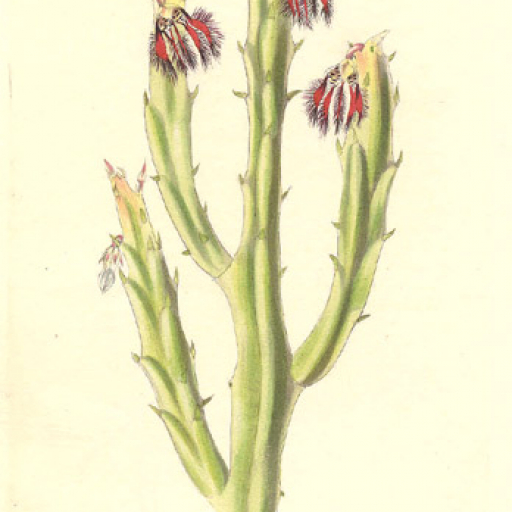
Plant Overview
Known as the Slender Caralluma, this peculiar succulent looks more like a collection of geometric wands than a typical leafy plant. Native to the arid landscapes of India, the Middle East, and Africa, it has a long history as a "portable snack" for tribal hunters who used it to suppress hunger during long journeys. Its architectural, four-angled stems make it a prized specimen for collectors of "weird" and wonderful desert flora.
🔍 How to Identify
- 🌵 Angular Stems: The plant grows in upright, fleshy columns that are distinctly four-sided (quadrangular) and often branch out from the base like a small, leafless shrub.
- 🌸 Starry Blooms: It produces tiny, star-shaped flowers that are usually deep maroon, purple, or even striped. These flowers often have a "fuzzy" texture with microscopic hairs that wiggle in the breeze.
- 🍂 Invisible Leaves: At first glance, it looks leafless. It actually produces tiny, tooth-like leaves along the ridges of the stems, but they are fleeting and often fall off to prevent water loss.
🏡 In Your Garden
- 🏜️ The Drainage Rule: This plant is a survivor of rocky, harsh terrains. In a home setting, it is highly sensitive to "wet feet." Using a specialized cactus mix with extra perlite or pumice is essential to prevent root rot.
- ☀️ Light & Color: While it loves bright light, it prefers a bit of afternoon shade in scorching climates. If the stems start turning a stressed reddish-bronze, it’s a sign the plant is getting maximum sun exposure.
- 💧 Drought Logic: Because the stems store a massive amount of water, it prefers a "soak and dry" method. Wait until the soil is bone-dry all the way through before offering another drink.
⚠️ Safety & Toxicity
- ✅ Generally Safe: Caralluma adscendens is not known to be toxic to humans; in fact, specific varieties are processed into health supplements.
- 🐾 Pet Check: It is generally considered non-toxic to cats and dogs, though the bitter taste usually prevents curious pets from taking a second bite.
- 🖐️ Sticky Sap: Like many members of the Apocynaceae family, it contains a milky sap. While not deadly, it can cause minor skin irritation or eye stinging if handled carelessly during pruning.
✨ Fun Fact
In traditional Indian folklore, this plant is known as "famine food." Because it contains "pregnane glycosides"—compounds that signal the brain to feel full—it was historically eaten raw by forest dwellers to suppress both hunger and thirst during times of scarcity.

Detailed Care Instructions
Caralluma adscendens, also known as Caralluma fimbriata, is a succulent plant that is native to India. It is known for its appetite-suppressing properties and it is commonly used as a natural weight loss supplement. If you want to grow Caralluma adscendens plant, here are some tips to help you:
- Choose the right location: Caralluma adscendens thrives in full sun to partial shade. Make sure to plant it in a location that receives at least 6-8 hours of direct sunlight each day.
- Prepare the soil: Caralluma adscendens prefers well-draining soil with a pH level of 6.0 to 7.0. If your soil is not well-draining, you can amend it with perlite or sand to improve drainage.
- Planting: Plant the Caralluma adscendens cuttings or seeds in the prepared soil and water thoroughly. Keep the soil moist but not waterlogged.
- Watering: Caralluma adscendens is drought-tolerant once established, so water sparingly. Water the plant only when the top inch of soil is dry.
- Fertilizing: You can fertilize the Caralluma adscendens plant with a balanced fertilizer once a month during the growing season to promote healthy growth.
- Pruning: Prune the plant regularly to encourage branching and to maintain its shape. You can also pinch off the tips of the plant to promote bushier growth.
- Pests and diseases: Keep an eye out for pests such as aphids and mealybugs, and treat them promptly with insecticidal soap. Make sure to also keep the plant well-ventilated to prevent diseases such as root rot.
With proper care and maintenance, you can successfully grow Caralluma adscendens plant in your garden or indoor space.
To water this particular plant, it's essential to monitor its soil moisture levels and ensure it doesn't become too wet or too dry. Adequate drainage holes should be available in the pot or container to let any excess water escape. Water thoroughly once the top inches of soil feel dry to the touch, ensuring water reaches the roots and not just the surface. Avoid spraying or misting the plant's leaves as they may rot or develop fungal infections. Additionally, avoid watering during peak sun hours, as the leaves may scorch or burn. It's best to water this plant early in the morning or late in the day, allowing any excess water to evaporate before the sun is at its peak.
To fertilize Caralluma adscendens, use a balanced liquid fertilizer diluted to half strength. Apply the fertilizer every 2 weeks during the growing season, which is typically spring and summer. Avoid fertilizing in the fall and winter when the plant is dormant. Water the plant thoroughly after fertilizing to help the nutrients penetrate the soil.
The recommended type of soil for this plant is a well-draining and nutrient-rich soil that is slightly alkaline. It should have a pH level of around 7.5 to 8.5, with a mixture of sand, loam, and peat moss. The soil should also have good drainage to prevent waterlogging, as this plant is susceptible to root rot. Additionally, adding a layer of organic matter, such as compost or manure, can provide some extra nutrients for the plant to thrive. It is important to avoid using heavy clay soils or soils with high levels of salinity.
Caralluma Adscendens can be propagated through various methods such as stem cuttings, division, and seeds. To propagate through stem cuttings, select a healthy, mature stem and cut it just below a node. Remove any excess leaves from the bottom of the cutting and allow it to dry out for a few days. Then, plant the cutting in a well-draining soil mix and keep it in a warm, bright location. Water the cutting regularly to keep the soil slightly moist.
To propagate through division, carefully dig up the plant and separate the rhizomes into smaller sections, making sure each section has a healthy root system. Replant the divided sections in pots or directly in the ground, and water them well.
To propagate Caralluma Adscendens from seeds, collect mature seed pods from the plant and allow them to dry out completely. Remove the seeds from the pods and plant them in a well-draining soil mix. Keep the soil consistently moist and place the pots in a warm, bright location. Germination can take anywhere from a few days to a few weeks.
Overall, propagating Caralluma Adscendens can be a rewarding process that allows you to create new plants to enjoy in your garden or home.








