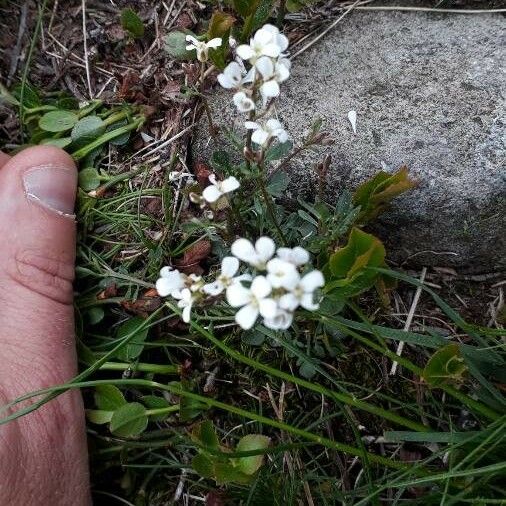
Plant Overview
Often called the Alpine Bittercress or Daisy-leaf Bittercress, this tiny survivor is a master of the mountains. Its name, bellidifolia, literally means "leaves like a Daisy," referencing its charming rosettes that look like miniature versions of a common lawn flower. It is a circumpolar specialist, meaning it thrives in the coldest regions around the top of the globe, clinging to rocky crevices and snowy slopes where few other plants dare to grow.
🔍 How to Identify
- 🍃 The Foliage: Small, fleshy, dark green leaves that are oval or "spatulate" in shape. They form a tight, ground-hugging rosette to stay protected from freezing winds.
- 🌸 The Bloom: Dainty, four-petaled white flowers cluster at the top of a short, sturdy stem. These are classic "crucifer" flowers, typical of the Mustard family.
- 📏 Growth Habit: A true "micro-plant," it rarely reaches more than 4 inches in height. Its compact, tufted form helps it trap heat near the soil surface.
🏡 In Your Garden
- 🏔️ Alpine Aspirations: This isn't your typical garden plant; it requires "Alpine house" conditions to thrive. It needs exceptionally gritty, well-draining soil—think crushed gravel or slate—to prevent its roots from rotting.
- ❄️ Climate Sensitivity: It is incredibly cold-hardy but very sensitive to heat. In temperate climates, it will often "melt" or go dormant if the night temperatures stay too warm or if the humidity is too high.
- 💧 The Melt Factor: In nature, it often grows near the edges of melting snowbanks. It loves "moving" moisture—cool water that trickles through rocks rather than sitting in heavy, stagnant soil.
⚠️ Safety & Toxicity
- ✅ General Safety: Alpine Bittercress is considered non-toxic to humans, dogs, and cats.
- 👅 Edibility Note: While it is a distant relative of edible Watercress and technically non-poisonous, it is far too small and rare to be harvested for food. Its flavor is often described as slightly peppery, typical of the Brassicaceae family.
✨ Fun Fact
This plant is a biological "time traveler." Because it grows so slowly in the harsh Arctic tundra, a tiny tuft that fits in the palm of your hand could potentially be several decades old, having survived countless freezing winters that would kill most other garden plants.

Detailed Care Instructions
To grow Cardamine Bellidifolia, also known as Girl-on-the-Mountain, you can follow these steps:
- Choose a suitable location: Cardamine Bellidifolia prefers partial shade or dappled sunlight. Select a location with well-draining soil. If your soil is heavy or compacted, you can amend it with organic matter to improve drainage.
- Prepare the soil: Clear any debris or weeds from the planting area. Loosen the soil with a garden fork or tiller to a depth of about 6 inches. Remove any large stones or roots.
- Sow the seeds: Cardamine Bellidifolia seeds are tiny, so it is best to mix them with sand or fine soil to make it easier to sow them. Sprinkle the seeds over the prepared soil and lightly press them into the surface. Do not bury them too deep, as they require light for germination.
- Water and keep moist: Keep the seeds consistently moist but avoid overwatering, as this can cause the seeds to rot. Mist the soil surface with water regularly, especially during dry spells or if the top layer of soil becomes dry.
- Germination and growth: Cardamine Bellidifolia seeds typically germinate within a few weeks to a couple of months. Once they sprout, thin the seedlings to allow enough space for each plant to grow. Maintain a spacing of at least 6-12 inches between each plant.
- Mulch and weed control: Apply a layer of organic mulch around the plants to conserve moisture, suppress weed growth, and provide insulation to the soil. Avoid mulching directly over the seedlings to prevent them from being smothered.
- Watering and maintenance: Keep the soil consistently moist, but not waterlogged, throughout the growing season. Regularly check the soil moisture level and water as necessary.
- Fertilizer: Cardamine Bellidifolia generally does not require much fertilizer. However, you can apply a slow-release or organic balanced fertilizer according to the package instructions once or twice during the growing season to provide some nutrients.
- Pest and disease control: Monitor the plants regularly for any pests or diseases. Common pests that may affect Cardamine Bellidifolia include slugs, snails, and aphids. Promptly address any issues using organic pest control methods if needed.
- Propagation: Cardamine Bellidifolia readily self-seeds, so it can spread on its own. If you want to propagate more plants, you can collect the seeds from the mature seed pods and sow them in a new location, or you can divide established clumps in early spring or late fall.
By following these steps, you can successfully grow Cardamine Bellidifolia plants in your garden or landscape.

To water this plant, wait until the top layer of soil feels slightly dry to the touch. Then, pour water slowly and evenly around the base of the plant, being careful not to splash water onto the leaves. Allow excess water to drain out of the pot before returning it to its saucer or tray. Avoid letting the plant sit in standing water for extended periods of time, as this can lead to root rot and other issues. It is also important to avoid overwatering, as this can suffocate the roots and cause them to rot.
To promote healthy growth of this plant, apply a balanced fertilizer during the growing season. Make sure to follow the instructions on the fertilizer packaging carefully and avoid over-fertilization, as this can lead to root burn and damage to the plant. Additionally, consider adding organic matter to the soil to increase nutrient availability and improve soil drainage. Finally, monitor the plant regularly for signs of stress or nutrient deficiencies, such as yellowing leaves or stunted growth, and adjust your fertilization routine accordingly.
The ideal type of soil to use with this plant is a well-draining, nutrient-rich soil that is slightly acidic. The soil should be moisture-retentive, but not waterlogged. A pH level between 5.5 and 6.5 is the most suitable for this plant. It is important that the soil is loose and crumbly, allowing for air and water to circulate around the roots. A mix of peat moss, compost, and perlite can be a good option for potting the plant. In an outdoor setting, the plant can be grown in a shaded or partially shaded area with well-drained soil that has been mixed with organic matter.
To propagate this plant, you will need to carefully separate the plantlets that have grown on the stems. Gently remove these plantlets from the parent plant and ensure they have some of their own roots attached. Plant each plantlet in a small pot with well-draining soil and keep them in a warm, humid and bright place until they start to grow. Ensure that the soil is kept moist, but not overly wet. Once the plantlets have established themselves and grown a bit, they can be transplanted into larger pots or planted outside in a suitable garden bed.








