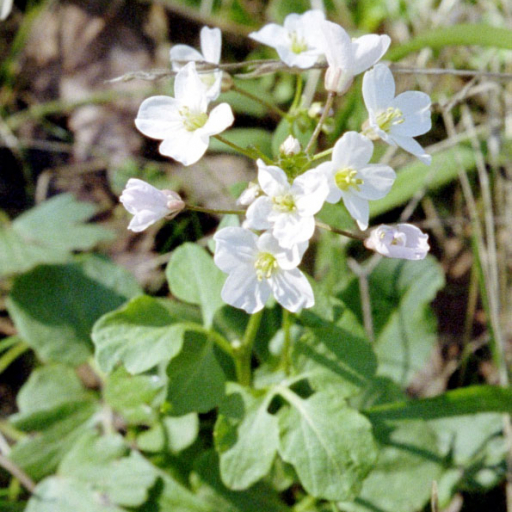
Plant Overview
Often called "Milkmaids," this delicate wildflower is a beloved harbinger of spring along the Pacific Coast. Emerging from underground rhizomes as early as January, its pale blossoms signal the end of winter long before most other native plants wake up. In the dappled light of a redwood forest or a coastal canyon, these "maids" appear like scattered pearls across the greening forest floor.
🔍 How to Identify
- 🌸 The Bloom: Small, four-petaled flowers that range from stark white to a soft, blush pink. They grow in loose clusters at the top of a slender, upright stem.
- 🍃 Two-Faced Foliage: This plant features "dimorphic" leaves. The leaves at the very base are rounded and heart-shaped, while the leaves higher up the stem are narrower and more sharply divided.
- 🦷 The Root System: If you were to look underground, you would find a "toothed" rhizome. These are small, white, knobby segments that give the plant its other common name: California Toothwort.
🏡 In Your Garden
- 🌳 The Woodland Vibe: Milkmaids thrive in "edge" habitats. They love the cool, moist soil found under deciduous trees or large shrubs where they can catch filtered winter sun.
- 💤 The Summer Disappearing Act: Don’t be alarmed when the plant turns yellow and vanishes by June. It is drought-deciduous, meaning it retreats into its underground rhizome to survive the dry California summer, waiting for the first autumn rains to wake up again.
- 🌱 Native Resilience: Because they are adapted to the Mediterranean climate, they are incredibly low-maintenance once established, requiring no supplemental water during their summer dormancy.
⚠️ Safety & Toxicity
- ✅ Safe Status: Cardamine californica is generally considered non-toxic to humans, dogs, and cats.
- 👅 Peppery Profile: As a member of the Mustard family (Brassicaceae), the leaves have a mild, peppery flavor similar to radish or watercress, though they are rarely consumed in large quantities.
- 🧤 Low Irritation: Unlike some of its woodland neighbors (like Poison Oak), Milkmaids are gentle to the touch and safe for children to explore.
✨ Fun Fact
Milkmaids are a critical "host plant" for the Sara Longwing butterfly (Anthocharis sara). These butterflies specifically look for Milkmaids in the early spring to lay their eggs, ensuring their caterpillars have a fresh, peppery snack the moment they hatch!

Detailed Care Instructions
To grow Cardamine californica successfully, follow these steps:
- Choose a suitable location: Cardamine californica plants prefer partial to full shade and moist soil conditions. Find a spot in your garden that receives filtered sunlight or is shaded for a significant part of the day.
- Prepare the soil: The soil should be rich in organic matter and well-draining. Cardamine californica prefers slightly acidic to neutral soil. Add compost or peat moss to improve soil structure and fertility.
- Sow the seeds: Cardamine californica can be grown from seeds. Sow the seeds directly into the prepared soil in late winter or early spring, or sow them indoors and transplant when the seedlings are young. Lightly cover the seeds with soil, about ¼ inch deep.
- Watering: Keep the soil evenly moist but not waterlogged. Water regularly, especially during dry periods, to provide consistent moisture to the growing plants.
- Mulch: Apply a layer of organic mulch around the plants. This will help retain soil moisture, regulate temperature, and suppress weed growth.
- Fertilization: Cardamine californica generally doesn't require much fertilization. However, if your soil is poor in nutrients, you can apply a balanced organic fertilizer in early spring or late winter.
- Maintenance: Remove weeds regularly to prevent competition for resources. Deadhead spent flowers to encourage more blooms and prevent self-seeding if desired.
- Propagation: Cardamine californica can also be propagated by dividing mature plants or taking root cuttings. This process is best done in the early spring or fall.
- Overwintering: Cardamine californica plants are hardy perennials and will go dormant in winter. It's important to protect their roots during colder months by mulching and providing extra moisture. They will resprout in the spring.
Remember to check local gardening guides and consult with local nurseries for specific regional advice and potential plant restrictions.

Place in a window with dappled sun or a spot in the middle of a room. Or directly in a window facing west or east.

The watering requirements for this plant depend on various factors like the soil, climate, and light. To water this plant, you should first check the soil moisture level by either sticking your finger into the soil or using a moisture meter. If the soil feels dry to the touch, it is time to water the plant.
When watering, you should avoid overwatering as it could lead to rotting of the roots. Ensure that the drainage holes are clear to allow excess water to drain out. You can either water the plant directly from the top or use a tray to water from the bottom. Water the plant until water starts to come out of the drainage holes.
It is also essential to consider the temperature and humidity when watering. During hot and dry weather, you may need to water the plant more frequently than during cooler weather. Indoor plants may also require more frequent watering during the winter season when the heating system reduces humidity levels.
In conclusion, to water Cardamine Californica plant, you should check soil moisture, avoid overwatering, ensure proper drainage and consider temperature and humidity levels.
For optimal growth and flowering of this plant, fertilize it with a water-soluble, balanced, all-purpose fertilizer once a month during the growing season. Make sure to dilute the fertilizer as recommended on the package. Avoid fertilizing in the winter when the plant is dormant. Apply the fertilizer around the base of the plant and water thoroughly afterward to ensure proper absorption.
The soil requirements for the plant you are referring to are fairly specific. It prefers well-drained soil that is slightly acidic with a pH between 5.5 and 6.5. Additionally, the soil should be rich in organic matter and have good moisture retention without being waterlogged. Adding compost or well-rotted manure to the soil can help improve its structure and fertility, and adding sand or perlite can improve drainage. It is also important to avoid using heavy clay soil that can become waterlogged and stunt the growth of the plant.
Cardamine Californica is propagated by seed, stem cuttings, and division. Seeds should be sown in early spring in well-drained soil. The small seeds can be broadcast over the soil surface or planted in rows. It is important to keep the soil moist until the seedlings have established themselves.
Stem cuttings can be taken in late spring or early summer when the plant is actively growing. Cut a 4-6 inch stem, remove the lower leaves, and stick the cuttings in moist, well-drained soil. Keep the soil moist until the cuttings have rooted and new growth appears.
Propagation by division is best done in the fall or early spring when the plant is dormant. Dig up the plant and carefully separate the roots. Plant the divisions in a well-drained soil and keep the soil moist until new growth appears.
No matter what method is used for propagation, it's important to provide the new plant with the right growing conditions. Cardamine Californica prefers partial shade and moist soil. It also benefits from regular fertilization and occasional pruning to keep it from getting too leggy.








