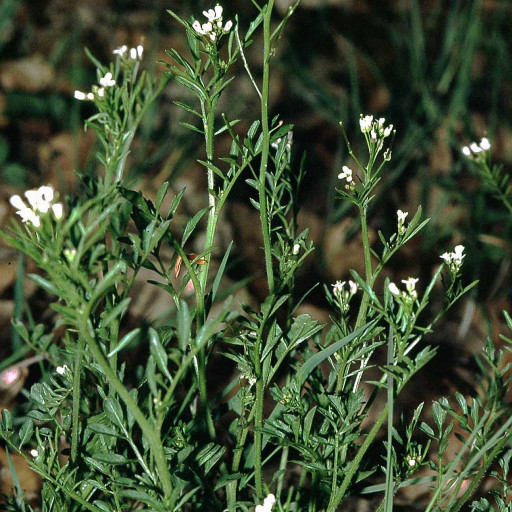
Plant Overview
Often called the Wavy Bittercress, this little hitchhiker is a common sight in damp garden corners, nursery pots, and shady paving cracks. While many gardeners view it as a persistent weed, it is actually a hardy member of the mustard family that has followed human cultivation across the globe. It’s a quiet survivor that thrives exactly where other plants might find the soil too wet or the shade too deep.
🔍 How to Identify
- 🌿 The "Flexuose" Stem: True to its name, the central flower stalk often has a distinct "zig-zag" or wavy shape rather than growing perfectly straight.
- 🌸 Tiny Blooms: It produces very small white flowers with four petals. Unlike its cousin, the Hairy Bittercress, the Wavy Bittercress usually has six stamens inside the flower.
- 🍃 Leaf Pattern: It features a "basal rosette" (a circle of leaves at the ground level) and several leaves growing up the stem, each divided into small, rounded leaflets.
🏡 In Your Garden
- ☁️ Shade Specialist: This plant is an expert at finding the "cool spots." It prefers moist, loamy soil and will often pop up in the shadows of larger potted plants or near leaky garden taps.
- 🚀 Ballistic Seeding: If you see long, thin green pods (siliques), be careful! When ripe, these pods explode at the slightest touch, launching seeds several feet away to ensure the next generation takes over your garden beds.
⚠️ Safety & Toxicity
- 🥗 Safe & Edible: Wavy Bittercress is non-toxic and actually quite tasty! It has a peppery, mustard-like flavor similar to watercress or arugula.
- 🐾 Pet Friendly: It is generally safe for cats, dogs, and horses. However, because it grows in damp areas, always ensure the plant hasn't been treated with garden chemicals or herbicides before letting a pet (or yourself) nibble on it.
✨ Fun Fact
The Wavy Bittercress is a "polyploid" plant, meaning it contains double the usual number of chromosomes. This genetic quirk resulted from a natural hybridization of two other species thousands of years ago, giving it the extra "biological instructions" needed to survive in such a wide variety of climates.

Detailed Care Instructions
| Humidity | High |
| Lighting | Part Sun |
| Difficulty | Medium |
| Hibernation | Cold Period |
| Hardiness Zones | 4 - 8 |
Here are some steps to grow Cardamine Flexuosa plant:
- Choose a location: Cardamine Flexuosa, also known as Woodland Bittercress, prefers partial shade to shade. Look for a spot in your garden that receives filtered sunlight or only a few hours of direct sun per day.
- Prepare the soil: This plant thrives in moist and well-drained soil. Amend the soil with organic matter like compost or well-rotted manure to enhance fertility and drainage.
- Sow the seeds: Cardamine Flexuosa is usually propagated through seeds. Sow the seeds directly in the ground in the early spring or early fall. Scatter the seeds over the prepared soil surface and lightly press them into the soil. Keep in mind that the seeds need light to germinate, so don't bury them too deeply.
- Water regularly: Keep the soil consistently moist but not waterlogged. Water the plants regularly, especially during dry periods. Avoid allowing the soil to dry out completely.
- Mulch and weed control: Apply a layer of organic mulch around the plants to help retain moisture in the soil and suppress weeds. Remove any weeds that may compete for nutrients and space with the Cardamine Flexuosa.
- Pruning and maintenance: Cardamine Flexuosa is a low-maintenance plant, but it may benefit from occasional pruning to shape it or remove any dead or damaged foliage. Trim the plant back after flowering to promote bushier growth.
- Protect from harsh conditions: During extreme heat or frosty periods, provide some protection to the plants by using shade cloth or covering them with a frost blanket.
- Division and transplantation: As Cardamine Flexuosa grows, it may form dense clumps. Once established, you can divide the plant every few years in early spring or late fall to rejuvenate it or propagate more plants. Dig up the clump, separate it into smaller sections, and replant them in suitable locations.
Remember to check your local gardening zone and climate conditions to ensure that Cardamine Flexuosa is suitable for your area.

Place in a window with dappled sun or a spot in the middle of a room. Or directly in a window facing west or east.

To properly water this plant, you should first check the soil moisture using your fingers or a soil moisture meter. Water only when the top inch of soil is dry to the touch. When watering, pour water slowly and evenly over the soil until it drains out of the bottom of the pot. Avoid letting the plant sit in standing water as this can lead to root rot. It's important to note that this plant prefers moist soil, so it's important to not let the soil dry out completely. Watering frequency will depend on environmental factors such as temperature and humidity, so monitor the soil moisture regularly to determine the appropriate watering schedule.
To fertilize this plant, choose a balanced fertilizer with an equal ratio of nitrogen, phosphorus, and potassium. Apply the fertilizer every two to three weeks during the growing season, reducing the frequency during the dormant period. Dilute the fertilizer to half strength and apply it to the soil around the base of the plant, avoiding the leaves. Water the plant well after fertilizing to ensure the nutrients are absorbed properly.
The ideal soil for growing this plant should be a well-draining, moist soil that is rich in organic matter. It should have a slightly acidic pH, with a range of about 5.5-6.5. The soil should be loose and well-aerated to promote healthy root growth, and should not be too heavy or dense. It should also be free of any contaminants or pollutants, as this plant is sensitive to environmental toxins. Adding a layer of mulch around the base of the plant can help to maintain moisture levels in the soil and prevent weed growth. Overall, it is important to choose a high-quality soil that provides the necessary nutrients and growing conditions for Cardamine Flexuosa to thrive.
To propagate this plant, take stem cuttings of around 8cm in length from the parent plant. Make sure the cuttings have at least two or three leaves attached. Remove any lower leaves and dip the cut end of the stem in rooting hormone. Place the cutting in a pot filled with well-draining soil and keep it in a shady location. Keep the soil moist but not waterlogged and after a few weeks, new growth should appear. Once the plant has established roots and is growing well, it can be transferred to a larger pot or planted in the garden.








