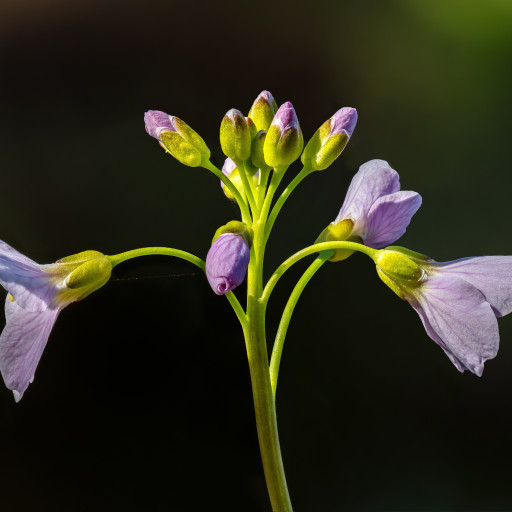
Plant Overview
Often called the Cuckoo Flower because its delicate blossoms appear just as the first cuckoos begin to sing in spring, this charming wildflower is a staple of damp European and Asian meadows. In folklore, it was known as "Lady’s Smock," as the fields of pale lilac flowers were said to look like linen smocks bleaching in the sun. It is a symbol of the shifting seasons and a vital lifeline for early spring pollinators.
🔍 How to Identify
- 🌸 The Flowers: Clusters of four-petaled flowers that range from white to a soft, pale lilac. Each petal often features delicate, darker violet veins.
- 🍃 Dual Foliage: The plant has two distinct leaf shapes; the base features a rosette of rounded leaflets, while the leaves on the upright stem are much narrower and pointed.
- 🌱 Growth Habit: It typically grows in slender, upright stalks reaching about 30–50 cm, often swaying gracefully in the breeze over damp soil.
🏡 In Your Garden
- 💧 The Moisture Lover: This isn't a plant for dry, sandy borders. It thrives in "wet feet" conditions, making it the perfect choice for the edges of garden ponds, bog gardens, or naturally damp lawns.
- 🦋 A Butterfly Nursery: It is the primary food source for the caterpillars of the Orange-tip butterfly. If you see tiny orange eggs on the flower stalks, avoid mowing or pruning, as you are hosting the next generation of pollinators.
⚠️ Safety & Toxicity
- 🟢 Generally Safe: Cardamine pratensis is non-toxic to humans and is actually a member of the mustard family.
- 🥗 Edible Note: The leaves have a spicy, peppery kick similar to watercress and are often used in salads. However, always ensure the area hasn't been treated with chemical fertilizers or pesticides before tasting.
- 🐾 Pets: It is not considered toxic to cats or dogs, though grazing on large amounts of any fibrous plant may cause mild stomach upset in pets.
✨ Fun Fact
In many ancient cultures, it was considered unlucky to bring Cuckoo Flowers indoors. They were believed to be "fairy flowers," and bringing them across the threshold was said to invite a mischievous sprite to cause havoc in the kitchen!

Detailed Care Instructions
| Color | White |
| Soil Ph | Circumneutral (Ph 6.8-7.2) |
| Humidity | Normal |
| Toxicity | Non-Toxic |
| Soil Type | Well-Drained Organically Rich, Mesic To Moist |
| Bloom Time | April To May |
| Difficulty | Medium |
| Plant Type | Herbaceous Perennial |
| Mature Size | Up To 22 In. |
| Native Area | Western Asia |
| Temperature | 20°C - 25°C |
| Sun Exposure | Part Shade |
| Hardiness Zones | 4-8 |
To grow Cardamine pratensis plant, also known as Cuckooflower or Lady's smock, follow these steps:
- Choose a suitable location: Cardamine pratensis prefers partially shaded areas, such as woodland edges or damp meadows. Ensure the location has moist soil with good drainage.
- Obtain seeds or young plants: You can find seeds or young plants from local nurseries, garden centers, or online suppliers. Alternatively, you can collect seeds from existing wild populations, ensuring you have permission and follow local regulations.
- Prepare the soil: Cardamine pratensis prefers moist, fertile soil. Remove any weeds or grass from the area and loosen the soil with a garden fork. You can add organic matter like compost or well-rotted manure to improve the soil fertility.
- Sow the seeds or plant the young plants: If using seeds, sow them on the prepared soil at a depth of about ¼ inch (0.6 cm). If using young plants, dig a hole slightly larger than the root ball and place the plant in it, backfilling with soil. Space the plants around 6-12 inches (15-30 cm) apart.
- Water regularly: Keep the soil consistently moist but not waterlogged. Water the plants regularly, especially during dry periods, to mimic the plant's natural habitat.
- Mulch the area: Mulching can help retain moisture and suppress weeds. Apply a layer of organic mulch like wood chips or straw around the plants, taking care not to cover the growing stems.
- Prune and deadhead: Prune the plants after blooming to remove any dead or damaged foliage. Deadhead the flowers by removing faded blooms to encourage continuous flowering.
- Monitor for pests and diseases: Cardamine pratensis is generally resistant to pests and diseases, but occasional aphids or slugs/snails might be attracted to them. Monitor the plants regularly and apply appropriate organic pest control methods if necessary.
- Allow some plants to go to seed: To maintain populations and spread, allow some flowers to go to seed. This will help ensure the survival of the plant in the long term.
By following these steps, you can successfully grow Cardamine pratensis and enjoy its delicate flowers in your garden.

Place in a window with dappled sun or a spot in the middle of a room. Or directly in a window facing west or east.

Cardamine Pratensis is a plant that requires frequent watering in order to thrive. It is important to ensure that the soil remains consistently moist, but not waterlogged or water stagnant. The optimal way to water this plant is to use a watering can with a spout that allows for a precise and gentle stream of water. It is recommended to water the plant from below, by filling up a tray or saucer with water and allowing the plant to absorb the water through the drainage holes in the bottom of the pot. This method helps to maintain a consistent level of moisture in the soil, which is essential for the health of the plant. It is important to avoid getting the foliage and flowers wet, as this can lead to fungal infections or other diseases. Overall, consistent and careful watering is key to keeping the Cardamine Pratensis plant healthy and thriving.
To fertilize this plant, use a balanced fertilizer with equal parts of nitrogen, phosphorus, and potassium. Apply the fertilizer in early spring before new growth appears. Use a slow-release formula that will slowly feed the plant over several weeks. Avoid over-fertilizing, as this can cause root burn and damage to the plant. Water the plant well after fertilizing to help the nutrients absorb into the soil.
The ideal soil to use with this plant is a well-draining, moist soil that is rich in organic matter. It prefers a soil with a slightly acidic to neutral pH level. It can thrive in soils with varying textures, from sandy loams to clay soils, but it prefers a soil that is consistently moist. Adequate drainage is important to prevent waterlogging, which can be detrimental to the plant's health. A layer of mulch around the plant can help to maintain soil moisture and provide additional organic matter. Fertilization should be minimal, as too much can lead to excessive foliage growth and reduced flower production.
Cardamine Pratensis plant can be propagated through several methods. One of the easiest ways to propagate the plant is through division. To do this, carefully dig up the plant and gently separate it into sections, making sure each section has some roots. Replant the sections in potting soil and keep them moist until they have established new growth.
Another way to propagate the plant is through stem cuttings. Take 3-4 inch long cuttings from healthy stems and remove the lower leaves. Dip the cut end in rooting hormone and place the cutting in moist potting soil. Keep the cutting moist and in a shaded area until it roots and new growth appears.
Cardamine Pratensis plant can also be propagated through seeds. Collect mature seeds from the plant and sow them in a well-draining potting mix. Keep the soil moist and place the pot in a shaded area until the seeds germinate and new growth appears.
To ensure successful propagation, make sure the plant is healthy and free from pests and diseases. Also, provide the appropriate amount of light, water, and nutrients for the plant's needs.








