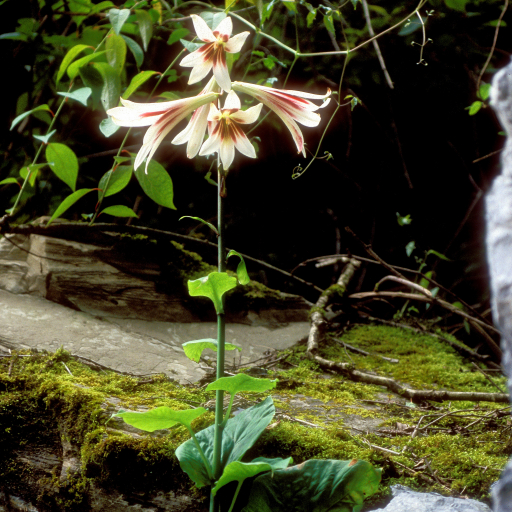
Plant Overview
Known as the Giant Himalayan Lily, this towering titan is the undisputed monarch of the woodland garden. Native to the cool, misty slopes of the Himalayas and China, it spends up to seven years building energy in a massive bulb before erupting into a fragrant, 10-foot-tall floral spire. It is a plant for the patient gardener, offering a "once-in-a-lifetime" spectacle that concludes its life cycle in a dramatic blaze of glory.
🔍 How to Identify
- 🍃 The Foliage: Unlike true lilies with narrow leaves, this giant produces large, glossy, heart-shaped leaves that look remarkably like an oversized Hosta.
- 🎺 The Flowers: Massive, pendulous, creamy-white trumpets (up to 8 inches long) marked with striking maroon-purple streaks deep within their throats.
- 🎋 The Stem: A thick, hollow, bamboo-like green stalk that can reach staggering heights of 6 to 12 feet in a single growing season.
🏡 In Your Garden
- 🌲 Woodland Requirements: This giant craves "goldilocks" conditions—dappled shade and complete protection from harsh winds that could snap its heavy flowering stalk.
- 🍰 Soil Hunger: It is a famously heavy feeder; think of it as a hungry giant that requires deep, humus-rich, and consistently moist soil to fuel its massive growth.
- ⏳ The Monocarpic Sacrifice: This plant is monocarpic, meaning the mother bulb dies immediately after its spectacular bloom. However, it is a generous parent, usually leaving behind several "daughter" bulbs (offsets) at its base to continue the cycle.
⚠️ Safety & Toxicity
- 🐾 Pet Safety: While not as notoriously lethal to cats as true Lilium species, it should still be treated with high caution. Ingestion can lead to vomiting or lethargy in pets.
- ✋ Skin Sensitivity: The sap can occasionally cause mild skin irritation for those with sensitive skin, so wearing gloves during maintenance is recommended.
✨ Fun Fact
The name Cardiocrinum comes from the Greek words kardia (heart) and krinon (lily). It is often called the "Kamikaze Lily" because it pours every drop of its life force into one final, magnificent flowering event before perishing.

Detailed Care Instructions
To grow Cardiocrinum giganteum, also known as giant Himalayan lily, follow these steps:
- Choose a suitable location: Select a spot in your garden that receives partial shade to full sun. The soil should be well-draining and rich in organic matter.
- Planting: Plant the bulbs in the spring or early fall. Dig a hole about 6 inches deep and place one bulb in each hole, with the pointed end facing upward. Space the bulbs about 3 feet apart to allow them enough room to grow.
- Soil preparation: Before planting, amend the soil with compost or well-rotted manure. This will provide the plant with necessary nutrients and improve drainage.
- Watering: Provide regular watering to keep the soil slightly moist, but not soggy. Avoid overwatering as it may cause the bulbs to rot. During the growing season, watering twice a week should be sufficient. In hot climates, provide more water to prevent the soil from drying out.
- Mulching: Apply a layer of organic mulch, such as shredded bark or straw, around the base of the plant. This will help retain moisture in the soil and suppress weed growth.
- Fertilization: Feed the plants with a balanced, slow-release fertilizer in early spring when new growth appears. Follow the package instructions for application rates.
- Support: Cardiocrinum giganteum can grow up to 10 feet tall, so it is beneficial to provide support for the flower stalk. Use stakes or a plant support ring to prevent damage from wind or heavy rain.
- Pruning: Once the flowers have faded and the leaves have turned yellow, cut back the stem to ground level. Leave the foliage intact to allow the bulbs to gather energy for the next growing season.
- Division: Every four to five years, lift and divide the bulbs. This will prevent overcrowding and promote healthier growth. Do this in early fall when the plant is dormant.
- Pest and disease control: Keep an eye out for slugs and snails, which can damage the leaves and flowers. Use organic pest control methods or handpick them off the plant. Check for any signs of fungal diseases, such as powdery mildew or leaf spot, and promptly treat them with an appropriate fungicide if necessary.
By following these steps, you can successfully grow Cardiocrinum giganteum and enjoy its stunning flowers in your garden.

Place in a window with dappled sun or a spot in the middle of a room. Or directly in a window facing west or east.

To water this particular plant, you should provide it with a moist, but well-draining soil. Overwatering can lead to root rot and damage to the plant. You should water the plant deeply and less frequently, allowing the soil to dry out slightly before watering again. You can also mist the leaves with water to provide humidity. Avoid getting water on the flowers as they can be quite delicate and easily damaged. During periods of heavy rainfall, you may not need to water as frequently. It is important to monitor the soil moisture and adjust your watering schedule accordingly.
- Begin fertilizing the plant in the early spring, once the snow has melted and the soil has thawed.
- Use a balanced, slow-release fertilizer to avoid burning the plant's delicate roots.
- Apply the fertilizer according to the product label instructions, being careful not to over-fertilize.
- Water the plant after fertilizing to ensure the nutrients reach the roots.
- Repeat the fertilization process every 4-6 weeks throughout the growing season.
- Stop fertilizing in the fall when the plant begins to die back for the winter.
Cardiocrinum Giganteum plant requires well-draining and slightly acidic soil with a pH level of 5.5 to 6.5. It also requires soil that is rich in organic matter and has good water retention properties. The ideal soil type for Cardiocrinum Giganteum plant is loamy soil, which is a mixture of sand, silt, and clay. Additionally, it is important to ensure that the soil is aerated and fertile, and it should not be compacted or waterlogged. To maintain good soil quality, it is recommended to fertilize the soil with organic compost or a balanced fertilizer before planting the Cardiocrinum Giganteum plant.
To propagate this plant, you can collect the seeds once they have ripened and become black. The seeds can be sown in a seed tray filled with well-draining soil and kept moist until germination occurs. Once the seedlings have grown to a suitable size, they can be transplanted into individual pots or directly into the garden. Alternatively, you can divide established clumps of the plant in early spring before they begin to grow again. Carefully dig up the clump and separate it into smaller sections, making sure each section has a good root system and a few shoots. Replant the sections in a new location with well-draining soil and keep them well watered until they become established.








