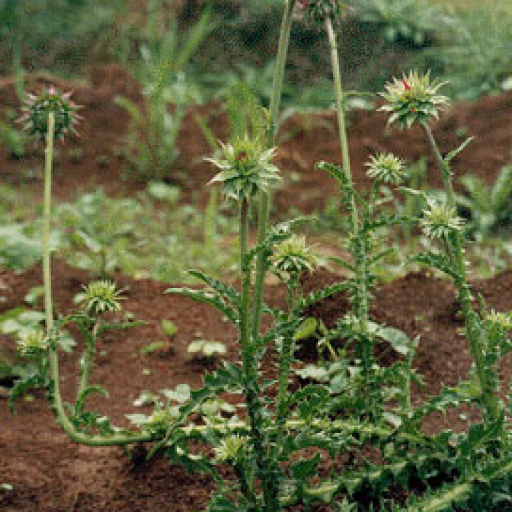
Plant Overview
Known as the "Nodding Thistle," Carduus nutans is a statuesque biennial that looks like it’s constantly bowing to the wind. While many gardeners view it as a stubborn intruder, its vibrant purple blooms have a regal, almost medieval charm. Originally from Eurasia, it has traveled the globe, often reclaiming barren lands and sun-drenched hillsides with its hardy, prickly spirit.
🔍 How to Identify
- 🌸 The "Nodding" Bloom: The flower heads are large (up to 2 inches across), solitary, and a brilliant purple-crimson. As they mature, the heads become heavy and "nod" or droop at a 90-degree angle.
- 🛡️ Spiny Armor: The stems are "winged," meaning they have leafy, prickly ridges running down their entire length, making them almost impossible to grab without thick gloves.
- 🌿 Waxy Foliage: The dark green leaves are deeply lobed and often have a silvery-white margin or a "frosted" look. Each leaf tip ends in a sharp, yellowish spine.
🏡 In Your Garden
- 🚜 Disturbed Ground Specialist: You’ll rarely find this in a manicured flower bed; it prefers "rough" areas like pastures or roadsides where the soil has been turned. If it appears in your yard, it’s a sign of dry, well-drained soil.
- 🔗 The Taproot Strategy: It spends its first year as a flat rosette. By the second year, it sends down a massive, deep taproot. This makes it incredibly drought-resistant but means you must dig deep to remove it—simply cutting the top won't stop it.
- 🦋 Pollinator Magnet: Despite its prickly reputation, it is a high-value nectar source. It is a favorite of Monarch butterflies and honeybees, while goldfinches frequently visit to feast on the fluffy seeds.
⚠️ Safety & Toxicity
- 🌵 Mechanical Irritant: The plant is not chemically toxic to humans or pets, but its sharp spines are a significant physical hazard. They can easily puncture skin or get stuck in a pet's paws or fur.
- 🐑 Livestock Warning: While not "poisonous," the dense prickles can cause "scabby mouth" in sheep and cattle, leading most livestock to avoid grazing near it, which allows the plant to spread even faster.
✨ Fun Fact
A single Musk Thistle plant is a biological seed factory; it can produce up to 20,000 seeds in a single season, and those seeds can wait patiently in the soil for over a decade for the perfect moment to sprout!

Detailed Care Instructions
To grow Carduus Nutans plants, also known as Musk Thistle or Nodding Thistle, follow these steps:
- Choose the right location: Carduus Nutans thrives in full sun with well-draining soil. Ensure the location has sufficient space as these plants can reach a height of four to six feet and spread about two feet.
- Prepare the soil: Loosen the soil and remove any weeds or grass from the planting area. Thistles prefer slightly acidic to neutral soil with a pH range of 6.0 to 7.0. If needed, amend the soil with organic matter like compost or well-rotted manure.
- Sow the seeds: Sow the seeds directly into the prepared soil in early spring or late summer/early fall. Carduus Nutans is a biennial, meaning it completes its life cycle over two growing seasons. The first year is dedicated to vegetative growth, while the second year focuses on flowering and reproduction.
- Water regularly: Keep the soil moist but not waterlogged throughout the growing season. However, these plants have some drought tolerance once established, so be careful not to overwater.
- Apply mulch: Apply a layer of organic mulch, such as straw or wood chips, around the base of the plants. Mulch helps retain soil moisture, suppresses weed growth, and protects the plant during extreme temperatures.
- Control weeds: Regularly remove weeds that compete with the Carduus Nutans for nutrients, water, and sunlight. Be cautious when weeding, as mature plants can be prickly.
- Provide support: Optionally, you can provide support for taller Carduus Nutans plants by staking them. This prevents them from toppling over during windy conditions.
- Manage pests and diseases: Carduus Nutans has few major pest or disease problems. However, keep an eye out for aphids, slugs, and leaf spot diseases. If necessary, take appropriate measures to control them.
- Harvest or cut back: In the second year, Carduus Nutans produces attractive lavender-pink flowers. If desired, you can harvest the flowers for floral arrangements. After flowering, or in the late fall, you can cut back the plants to ground level to promote new growth in the following year.
Remember that Carduus Nutans is considered an invasive plant in some regions, so it's important to check local regulations before growing it.

Place in a bright room that is sun drenched almost all day. Or directly in a south-facing window.

1. Watering Frequency: Carduus Nutans requires regular watering to thrive. However, it should not be overwatered, as excessive moisture can lead to root rot. Water the plant once a week during the growing season, and reduce the frequency to once in two weeks during winters.
2. Watering Method: The best way to water the Carduus Nutans plant is to use a watering can or a hose with a gentle nozzle. Slowly pour water at the base of the plant until the soil is moist, but not waterlogged.
3. Soil Moisture: Check the soil moisture before watering the plant. Insert your finger up to two inches deep into the soil. If the soil feels dry, it's time to water the plant. If the soil feels damp, wait for a few more days before checking again.
4. Watering Timing: Water the plant in the morning or evening, when the temperature is cooler, and the sun is not too strong. This will prevent the water from evaporating too quickly, and the plant will have time to absorb moisture before the heat sets in.
5. Humidity: Carduus Nutans plant thrives in a humid environment. If the air is dry, you can mist the plant with water once a day to increase humidity. This will not only provide moisture to the leaves but also prevent pests and fungal diseases.
6. Drainage: Ensure that the pot or container has proper drainage holes to allow excess water to escape. This will prevent waterlogging, which can lead to root decay. If the soil is heavy, add a layer of gravel at the bottom of the container to improve drainage.
To provide adequate nutrients for this plant, apply a balanced fertilizer once a month during the growing season. Use a water-soluble fertilizer, following the instructions on the packaging for dilution and application rates. Spread the fertilizer evenly around the base of the plant, being careful not to get any on the leaves or stems. Water the plant immediately after fertilizing to help the nutrients penetrate the soil and reach the roots. Avoid fertilizing in the winter or during the plant's dormant period.
Carduus Nutans plant requires a well-draining soil that is rich in organic matter and nutrients. It prefers a soil that is slightly acidic to neutral with a pH range of 6.0 to 7.0. A loamy soil with a mix of sand, silt, and clay is ideal for the plant's growth. The soil should also be able to retain moisture without becoming waterlogged. It is recommended to add compost or other organic matter to the soil before planting to improve the soil's fertility and structure. Additionally, the plant does not thrive in compacted soils and requires adequate soil aeration to flourish.
To propagate this plant, you will need to collect the seeds from the mature flower heads and allow them to dry out. Once they are dry, you can sow them into well-draining soil and lightly cover them with a thin layer of soil. Water the soil lightly and keep it consistently moist until the seeds germinate, which can take up to several weeks. Once the seedlings have developed a few sets of leaves, you can transplant them into individual pots or into the ground. Be sure to provide the plant with full sun and well-draining soil, and water as needed to keep the soil consistently moist. Over time, the plant will develop deep roots and may spread by self-seeding.








