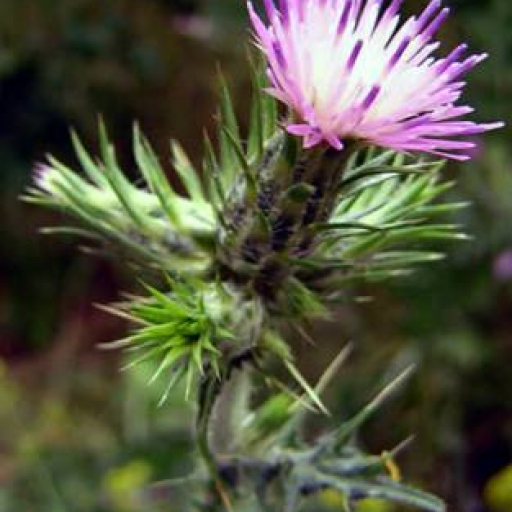
Plant Overview
Often called the Slender Thistle or Winged Thistle, this plant is a striking yet prickly character originally hailing from the Mediterranean and Western Europe. While it is often labeled a stubborn weed in pastures and along roadsides, its architectural "winged" stems and delicate purple crowns give it a rugged, wild beauty. It is a master of survival, thriving in disturbed soils where other plants might fail to take root.
🔍 How to Identify
- 🌸 Cluster Flowers: Unlike its larger cousins, this thistle produces small, narrow, cylindrical flower heads in tight groups. They range from pale pink to a deep rosy purple.
- 🥬 Winged Stems: The most distinctive feature is the "wings"—leafy, spiny ridges that run vertically down the entire length of the stem, making the stalk look ruffled and green.
- 🛡️ Silvery Foliage: The leaves are deeply lobed and covered in fine, cobweb-like white hairs, giving the plant a dusty, sage-green appearance that helps it reflect intense sunlight.
🏡 In Your Garden
- 🌱 Deep Taproot: The Slender Thistle anchors itself with a formidable taproot. This makes it incredibly drought-tolerant but very difficult to remove once established; if the root isn't fully extracted, the plant may try to bounce back.
- 🌬️ Prolific Seeder: If you spot one in your yard, act quickly! A single plant can produce thousands of seeds equipped with "pappus" (tiny parachutes) that allow them to travel miles on a light breeze to colonize new soil.
⚠️ Safety & Toxicity
- 🌵 Physical Hazard: The plant is heavily armed. Its spines are sharp enough to pierce standard gardening gloves and can cause painful skin punctures or localized irritation if handled carelessly.
- 🐄 Livestock Warning: While not typically "poisonous" to the touch, the Slender Thistle can accumulate high levels of nitrates if grown in certain soils. This can be toxic to grazing animals like cattle and sheep if they are forced to eat it.
✨ Fun Fact
The genus name Carduus is the ancient Latin word for thistle. Historical records suggest that the dried, prickly heads of plants in this family were used in early textile production to "card" or comb through wool, which is where we get the modern term "carding wool."

Detailed Care Instructions
To grow Carduus tenuiflorus (Plumeless thistle), follow these steps:
- Climate and soil requirements: Plumeless thistle thrives in full sun to partial shade and can tolerate various soil types but prefers well-draining, fertile soil. It is native to prairies, meadows, and open fields in several regions, including North America.
- Seed collection or purchase: Obtain seeds from a reputable source, or if you already have access to a plant, allow the flowers to dry and release their seeds. Collect seeds by gently shaking the dried flowers into a bag or container.
- Preparation and stratification: Plumeless thistle seeds require a process called stratification to break their dormancy. Mix the seeds with an equal amount of moist sand or peat moss in a sealed plastic bag and refrigerate the bag for 4-6 weeks at a temperature of 0-4 degrees Celsius (32-39 degrees Fahrenheit).
- Soil preparation and planting: Choose a suitable location with the right soil conditions. Remove any weeds or vegetation from the area. Loosen the soil with a garden fork or tiller to a depth of 6-8 inches. Rake the soil level and ensure there are no large clumps or debris. Sow the stratified seeds on the soil surface, pressing them gently into the soil.
- Watering and maintenance: Keep the soil slightly moist but not waterlogged. Water the seeds regularly during the germination period. Once the plants are established, they are relatively drought-tolerant. Monitor the plants for weed growth and remove any competing vegetation. Apply a layer of organic mulch around the plants to suppress weed growth, conserve moisture, and insulate the soil.
- Pruning and harvesting: Prune the spent blooms to prevent the plant from self-seeding excessively. This will help prevent the plant from becoming invasive. If you wish to collect more seeds, allow some flowers to mature fully and dry before harvesting the seeds. Be cautious when handling mature plants as they have sharp spines.
- Pests and diseases: Plumeless thistle is generally resistant to most pests and diseases. However, occasional aphid or caterpillar infestations might occur. Monitor the plants regularly and use organic pest control methods if necessary.
Note: Carduus tenuiflorus is considered invasive in certain areas, so ensure you check local regulations before planting it.

Place in a bright room that is sun drenched almost all day. Or directly in a south-facing window.

To water this plant, you should first check the moisture level in the soil. Stick your finger about an inch deep into the soil and if it feels dry, then it is time to water. When watering, make sure to water the soil directly at the base of the plant and avoid getting the foliage wet. You want to water deeply, but avoid overwatering as this can lead to root rot. It is best to water in the morning or early evening when the temperatures are cooler to prevent evaporation. It is important to maintain consistent moisture in the soil but also allow it to partially dry out before watering again.
- Begin fertilizing the plant when it is in its active growing season, which is typically in the spring and summer.
- Use a balanced fertilizer that contains equal amounts of nitrogen, phosphorus, and potassium. Look for a fertilizer with an NPK ratio of 10-10-10 or 5-5-5.
- Follow the instructions on the fertilizer packaging carefully. Generally, you should mix the fertilizer with water according to the recommended dilution rate.
- Apply the fertilizer to the soil at the base of the plant, being careful not to get any on the leaves or stems.
- Water the plant thoroughly after fertilizing to help the nutrients penetrate the soil and reach the roots.
- Repeat the fertilization process every four to six weeks during the growing season.
- Stop fertilizing the plant in the fall and winter when it goes dormant. Resume fertilizing again in the spring when it begins to grow again.
The Carduus Tenuiflorus plant thrives in soil that is well-draining and has a neutral to slightly acidic pH level. It prefers soil that is loose, aerated, and rich in organic matter. The ideal soil for this plant should contain a balanced mix of sand, clay, and loam, with good drainage and moisture retention. When planting this species, it is important to ensure that the soil is well-prepared and that the root ball is fully covered with soil to promote healthy growth. Regular fertilization and watering are also important to maintain optimal soil conditions and promote the growth of this plant.
This plant can be propagated by collecting its seeds in the fall and planting them directly in the soil where they are to grow. Alternatively, the plant can be propagated by taking cuttings in the spring or summer and rooting them in a rooting hormone before planting in moist soil. The cuttings should be taken from the healthy and mature parts of the plant and placed in a well-drained soil mix. The plant should be watered regularly and kept in a partially shaded area until the roots have taken hold. Once the plant has established itself, it can be transplanted to its permanent location.








