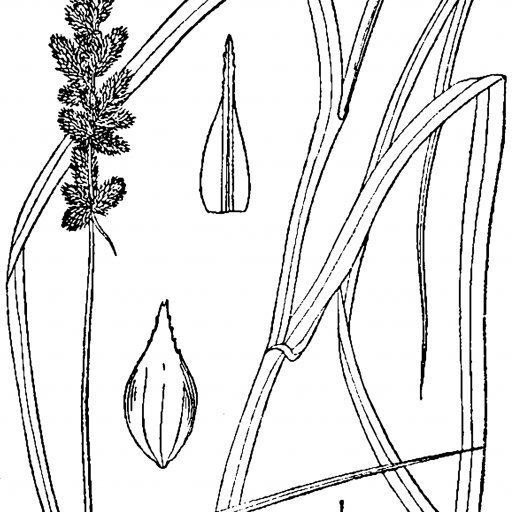
Plant Overview
Known as the Yellow-fruited Sedge, Carex annectens is a humble but hardworking native of North American meadows and prairies. It earns its botanical name, annectens (meaning "connecting"), because it looks like a bridge between several other similar sedge species. While it may look like a common grass at first glance, its golden-hued seed clusters make it a standout choice for naturalistic "matrix" plantings and rain gardens.
🔍 How to Identify
- 📐 Triangular Stems: Like most members of the sedge family, if you roll the stem between your fingers, you will feel distinct edges—remember the rhyme: "Sedges have edges."
- 🌾 Golden Seed Heads: The most identifying feature is the dense, spiked flower clusters that transition from a soft green to a rich, toasted yellow or tawny brown as they mature in mid-summer.
- ⛲ Growth Habit: It grows in tight, neat clumps (cespitose) rather than spreading via aggressive runners, forming an elegant fountain-like mound of fine-textured foliage.
🏡 In Your Garden
- 💧 The Rain Garden Hero: This plant is a "facultative wetland" species, meaning it loves moisture but isn't a snob about it. It is the perfect candidate for those tricky low spots in your yard that stay soggy after a heavy rain.
- 🦋 A Living Buffet: It serves as a vital host plant for several species of Satyrid butterflies and skippers. By planting this sedge, you are providing a "nursery" for caterpillars and a structural hideout for small meadow birds.
⚠️ Safety & Toxicity
- ✅ Safe for All: Carex annectens is considered non-toxic to humans, dogs, cats, and horses. It is a very safe addition to family-friendly landscapes.
- 🧤 Leaf Edges: While not poisonous, the leaf blades have microscopic serrations. If you are handling large quantities or dividing the root clumps, wearing gardening gloves is recommended to avoid minor skin irritation or "grass cuts."
✨ Fun Fact
The classic botanical mnemonic to tell sedges apart from grasses is: "Sedges have edges, rushes are round, and grasses are hollow right up from the ground." Carex annectens is the perfect specimen to test this theory—its sharply triangular stem is unmistakable!

Detailed Care Instructions

Place in a bright room that is sun drenched almost all day. Or directly in a south-facing window.

Some plants require more regular watering than others, which should be done every few days. It's critical to maintain the soil moist all of the time. The water requirements of the same plant placed in pots with varying sizes will differ. Because the water in the smaller pot evaporates faster than the water in the larger pot, it will require more watering. Regardless of pot size, the surface should constantly be maintained moist.








