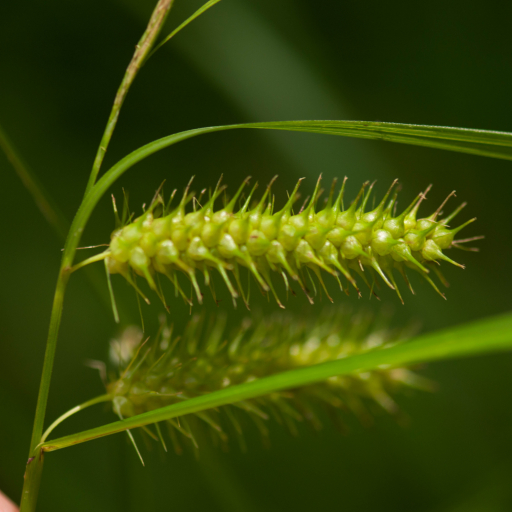
Plant Overview
Meet the Bailey’s Sedge, a hardy wetland gem often nicknamed the "Bottle-brush Sedge" due to its peculiar, fuzzy-looking seed heads. Native to the damp meadows and stream banks of eastern North America, this perennial grass-like plant is a favorite for those looking to add texture and wild elegance to water features or soggy garden corners.
🔍 How to Identify
- 🌾 The "Bottle-brush" Spikes: Its most striking feature is the yellowish-green flower spikes that appear in summer. They are thick, blunt, and resemble tiny, bristly clubs or cleaning brushes.
- 🍃 M-Shaped Leaves: The foliage is bright green and slender. If you look closely at a cross-section of a leaf, it often forms a distinct "M" or "V" shape, a classic hallmark of the sedge family.
- 🌱 Tufted Growth: Unlike some sedges that spread aggressively via underground runners, Bailey’s Sedge grows in neat, dense clumps (tussocks), making it much easier to manage in a landscape.
🏡 In Your Garden
- 💧 The "Wet Feet" Specialist: This plant is a champion for rain gardens or areas with poor drainage. It thrives in soil that stays consistently moist and can even handle temporary flooding, helping to prevent soil erosion.
- ☀️ Light & Soil Nuance: While it enjoys the sun, it prefers a bit of afternoon shade in hotter climates to keep its vibrant green color from bleaching. It is particularly fond of acidic, sandy, or loamy soils typically found near woodland springs.
⚠️ Safety & Toxicity
- ✅ Pet & Human Safe: Bailey’s Sedge is considered non-toxic to cats, dogs, and humans. It is a "worry-free" addition to households with curious pets.
- 🧤 Texture Warning: Like many sedges, the leaf edges can be slightly sharp or "saw-toothed." While not dangerous, it’s a good idea to wear gloves when dividing large clumps to avoid minor skin nicks.
✨ Fun Fact
This plant was named in honor of Liberty Hyde Bailey, an American botanist who is often called the "Father of Modern Horticulture." He was so obsessed with sedges that he reportedly collected over 1,000 different species during his lifetime!

Detailed Care Instructions
To grow Carex baileyi, also known as Bailey's sedge, you can follow these steps:
- Location: Choose a location that receives partial shade or full sun. Bailey's sedge can tolerate a range of soil types but prefers moist, well-draining soil.
- Planting: Dig a hole that is slightly larger than the root ball of the plant. Place the plant in the hole, backfill with soil, and gently firm it around the roots. Water thoroughly after planting.
- Watering: Keep the soil consistently moist but not waterlogged. Water the plant deeply whenever the top inch of soil feels dry. Avoid overwatering as it can lead to root rot.
- Mulching: Apply a layer of organic mulch around the base of the plant to help retain moisture, suppress weeds, and regulate soil temperature.
- Fertilizing: Bailey's sedge generally does not require much fertilizer. However, you can apply a slow-release, balanced fertilizer in spring to promote healthy growth. Follow the instructions on the fertilizer package.
- Pruning: Trim any damaged or dead leaves from the plant as needed. You can also trim back the plant in late winter or early spring to encourage fresh growth.
- Dividing: Over time, Carex baileyi can form clumps that may become overcrowded. To maintain plant vigor, you can divide the clumps every few years in early spring. Dig up the clump, separate the root sections, and replant them.
- Protection: Protect the plant from extreme cold in winter by covering it with a layer of mulch or using a frost cloth. Bailey's sedge is hardy to USDA hardiness zones 4-9.
With proper care and maintenance, your Carex baileyi plant should thrive and grow well.

Place in a window with dappled sun or a spot in the middle of a room. Or directly in a window facing west or east.

Carex baileyi, commonly known as Bailey's sedge, is a perennial grass-like plant that requires regular and proper watering to thrive. Here are the key details on how to water this plant:
1. Watering schedule: Water the Carex baileyi plant regularly to keep the soil consistently moist. Aim to water it once or twice a week, especially during the growing season (spring and summer).
2. Soil moisture: Ensure that the soil around the plant remains evenly moist but not overly saturated. Carex baileyi prefers moist conditions, so avoid letting the soil completely dry out between waterings.
3. Absorption: Water deeply and slowly to encourage the roots to absorb moisture efficiently. Allow the water to penetrate into the root zone, which is typically around 6-8 inches deep.
4. Drainage: Ensure that the soil has good drainage to prevent waterlogged conditions, as it can lead to root rot. If the soil tends to retain too much water, consider adding organic matter or amending the soil to improve drainage.
5. Mulching: Apply a layer of organic mulch around the base of the plant to help retain soil moisture and regulate soil temperature. This can be beneficial in preventing water evaporation and reducing watering frequency.
6. Rainfall consideration: Adjust your watering frequency based on natural rainfall. If the plant receives adequate rainfall, you may need to water it less frequently. However, make sure to monitor soil moisture levels to avoid dehydration.
7. Drought tolerance: While Carex baileyi prefers moist conditions, it also has some tolerance for short periods of drought. However, extended periods of dryness may cause the plant to suffer and lose vigor, so regular watering is still crucial.
Remember that the specific watering requirements can vary depending on factors such as climate, soil type, and overall plant health. Monitoring the plant's behavior and regularly checking the moisture level of the soil will help you determine the ideal watering routine for your Carex baileyi.
To fertilize Carex Baileyi plant, follow these instructions:
- Choose a balanced, slow-release fertilizer with equal proportions of nitrogen, phosphorus, and potassium.
- Prepare a diluted fertilizer solution by mixing the recommended amount of fertilizer with water as per the manufacturer's instructions.
- Water the plant thoroughly before applying the fertilizer to ensure the soil is moist.
- Apply the diluted fertilizer solution evenly around the base of the plant, avoiding direct contact with the leaves or stems.
- Use a watering can or a specialized fertilizer applicator to control the amount and area of fertilizer application.
- Avoid over-fertilizing as it can lead to burning of roots and foliage damage. Follow the recommended application rates based on the plant's size and growth stage.
- After fertilizing, water the plant again to help absorb the nutrients and prevent any potential fertilizer burn.
- Repeat the fertilization process following the recommended frequency, usually every 4-6 weeks during the active growing season (spring and summer).
- Monitor the plant for any signs of nutrient deficiency or excessive fertilization, such as yellowing leaves or stunted growth.
- Adjust the fertilizer application if needed based on the plant's response and consult a plant care expert for further guidance.
For Carex baileyi plant, it is important to choose a soil type that can provide the right conditions for its growth and development. The ideal soil for this plant should have specific characteristics to support its health and vigor.
Firstly, the soil should be well-draining to prevent the plant's root system from becoming waterlogged. Carex baileyi prefers moist soil but can suffer from root rot if the soil retains too much water. Use a soil mix that allows excess water to drain away quickly to maintain the right moisture balance.
Secondly, the soil should be rich in organic matter to provide essential nutrients for the plant's growth. Adding well-rotted compost or aged manure to the soil can help improve its fertility and supply the necessary soil nutrients. This will support the overall health and vigor of the plant.
Additionally, the soil should have a slightly acidic to neutral pH level, typically ranging between 5.5 to 7.0. This pH range ensures proper nutrient availability and absorption by the plant's roots.
Furthermore, the soil should be loose and friable, allowing the plant's roots to spread easily and access water and nutrients. A loose soil texture also promotes optimal root aeration and prevents compaction, which can restrict root growth.
Lastly, it is beneficial to incorporate some sand or perlite into the soil mix to enhance drainage and prevent waterlogging. This will create a well-draining environment for the plant's roots while still retaining adequate moisture.
It is worth mentioning that these soil requirements are general recommendations, and Carex baileyi can tolerate a range of soil conditions. However, providing the best possible soil environment will ensure that the plant can thrive and reach its full potential.
To propagate Carex Baileyi, you can follow these steps:
- Select a healthy parent plant: Choose a mature and healthy Carex Baileyi plant from which you want to propagate. This ensures that the new plants will be strong and disease-free.
- Prepare the soil: Fill small pots or containers with a well-draining potting mix. This will provide a suitable environment for root growth.
- Divide the parent plant: Carefully remove the parent plant from its pot or garden bed. Gently separate the root ball into smaller sections by pulling apart the clumps. Ensure that each section has a sufficient amount of roots and foliage attached.
- Plant the divisions: Place each divided section into a prepared pot, making sure that the root system is evenly spread out within the soil. Press the soil firmly around the roots to eliminate any air pockets.
- Water the divisions: After planting, thoroughly water the divisions to settle the soil and provide moisture for root development. Ensure the soil remains consistently moist but not waterlogged throughout the propagation process.
- Maintain appropriate conditions: Place the pots in a location that receives partial shade. Carex Baileyi prefers moist, well-drained soil and moderate light conditions. Ensure the plants receive adequate airflow to prevent fungal diseases.
- Monitor growth: Regularly check the pots for signs of new growth, such as new shoots emerging from the soil. This usually indicates successful propagation. Monitor the moisture levels in the soil and adjust watering accordingly.
- Transplanting: Once the new plants have established a healthy root system and are showing significant growth, they can be transplanted into their permanent locations. This typically takes several weeks to a few months, depending on the plant's growth rate.
By following these propagation steps, you can create new Carex Baileyi plants and watch them thrive in your garden or indoor collection.








