Plant Overview
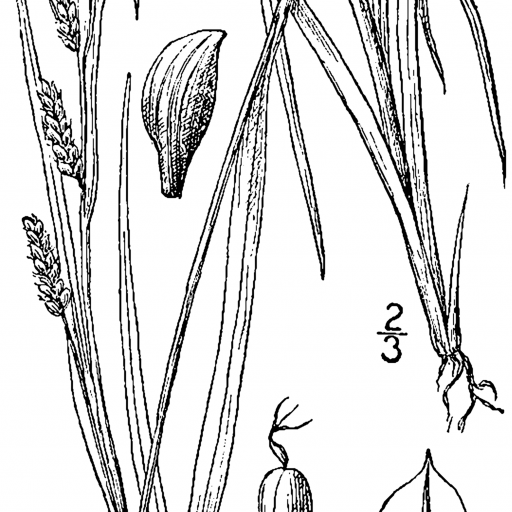
Known as the "Charming Sedge" or "Eastern Woodland Sedge," Carex blanda is the unassuming hero of the North American forest floor. While it might look like a common patch of grass at first glance, this perennial sedge offers a lush, fountain-like texture that brightens up the dimmest corners of a shade garden. It is a tough, versatile plant that bridges the gap between wild woodland beauty and practical backyard groundcover.
🔍 How to Identify
- 📐 Triangular Stems: Like most sedges, it follows the rule "Sedges have edges." If you roll the base of the stem between your fingers, you will feel a distinct three-sided shape.
- 🍃 Glossy Foliage: The leaves are relatively wide (up to half an inch), featuring a bright, shiny green color and a slightly puckered or "pleated" texture along their length.
- 🌾 Arching Habit: It grows in soft, mounded clumps that reach about a foot in height, with the leaves gracefully cascading downward like a green fountain.
🏡 In Your Garden
- 🌑 Shade Specialist: This plant is a problem-solver for those "dead zones" under large deciduous trees. While typical lawn grass withers without sun, this sedge thrives in dappled light and moist-to-dry soil.
- 🦋 Wildlife Support: It is far more than just a decoration; it serves as a critical larval host for several species of Satyrid butterflies. Adding this to your garden provides a nursery for local pollinators.
- 🌱 Self-Sufficient: It is famously easy to care for because it lacks a fussy taproot. It spreads slowly via short rhizomes and seeds, eventually forming a thick, weed-suppressing mat.
⚠️ Safety & Toxicity
- ✅ Safe Status: Carex blanda is considered non-toxic to humans, cats, and dogs. It is a safe, "pet-friendly" alternative to more exotic ornamental grasses.
- ✋ Soft Texture: Unlike some of its "saw-grass" cousins that have microscopic serrated edges capable of giving paper-like cuts, the Charming Sedge is generally soft to the touch.
✨ Fun Fact
Carex blanda seeds have a secret partnership with ants! Each seed has a tiny, nutrient-rich attachment called an elaiosome. Ants carry the seeds back to their underground nests to eat the fatty snack, effectively "planting" the seeds in protected, nutrient-rich soil away from predators.

Detailed Care Instructions
To grow Carex Blanda plants, follow these steps:
- Select a suitable growing location: Carex Blanda plants prefer partial to full shade, although they can tolerate some sun. Ensure the soil is well-draining, loamy, and moist.
- Prepare the soil: Clear the area of any weeds or debris. Amend the soil with organic matter, such as compost or well-rotted manure, to improve its fertility and drainage.
- Planting: Dig a hole slightly larger than the root ball of the Carex Blanda plant. Place the plant in the hole, ensuring that the top of the root ball is level with the soil surface. Backfill the hole with soil, gently firming it around the plant. Ensure you give enough space between plants to allow them to spread, as they tend to grow in clumps.
- Watering: Proper watering is crucial for the initial establishment of the plant. Water thoroughly after planting and continue to provide regular watering to keep the soil moist but not waterlogged. Aim to keep the soil consistently moist during the growing season to promote healthy growth.
- Mulching: Apply a layer of organic mulch around the plant to help conserve moisture, suppress weeds, and provide insulation for the roots. However, be sure to keep the mulch a few inches away from the base of the plant to prevent rotting.
- Maintenance: Carex Blanda plants are relatively low maintenance. Remove any weeds or unwanted growth near the plant regularly. Prune or cut back the foliage as needed to maintain its form and shape. Dividing the plants every few years can help rejuvenate their growth.
- Fertilization: Carex Blanda plants generally do not require much fertilization. However, you can feed them with a balanced, slow-release fertilizer in the spring to provide essential nutrients.
By following these steps, you should be able to grow Carex Blanda plants successfully. Remember to monitor their moisture levels and adjust your care accordingly.

Place in a window with dappled sun or a spot in the middle of a room. Or directly in a window facing west or east.

To properly water this particular plant, it is important to first understand its watering needs. This plant prefers soil that is consistently moist, but not waterlogged or completely dry. One way to achieve this balance is to water deeply and thoroughly, but allow the topsoil to dry out a bit before watering again.
When watering, be sure to avoid getting water on the foliage or leaves as this can lead to fungal diseases. Instead, direct the water towards the base of the plant, where the roots can easily absorb it. You can use a watering can or hose with a gentle spray attachment to accomplish this.
During the growing season, which is typically in spring and summer, this plant may require more frequent watering as it actively grows and requires more water to support its growth. In the winter, when growth slows down, you can reduce the frequency of watering and allow the soil to dry out a bit more between waterings.
Overall, it is important to regularly check the soil moisture level and adjust your watering schedule accordingly to best meet the needs of this plant.
- Choose a fertilizer that is balanced with equal amounts of nitrogen, phosphorus, and potassium.
- Apply fertilizer in early spring, before new growth appears.
- Sprinkle the fertilizer evenly around the base of the plant and work it gently into the soil.
- Water the plant thoroughly after fertilizing.
- Avoid over-fertilizing as this can cause the plant to grow too quickly and become weak.
Carex Blanda thrives in well-draining, moist soil that is slightly acidic. A soil mixture that consists of organic matter, such as peat moss or compost, and sand is recommended, as it allows for ample drainage while retaining moisture. An ideal pH range for this plant is between 5.5 and 6.5. It is also important to avoid compacted or heavy clay soils, as they can hinder root growth and lead to waterlogged conditions.
To propagate this plant, you will need to locate healthy and established mature plants. Once you have identified the ideal candidates, you should dig out the rhizomes during the growing months, which is typically in the summer. Be careful not to damage the roots, and try to get as much of the rhizome as possible.
Take the divided rhizomes and plant them in individual pots or directly into the ground. Make sure they are planted at the same depth as the original plant and water thoroughly. Keep the soil moist, but avoid overwatering as it can lead to rotting.
Place the newly propagated plants in a partially shaded area for a few weeks until they have acclimated, and then gradually move them to a sunnier location. It may take a few weeks for new growth to appear, but once it does, the plant should start to establish itself quickly.
With proper care, your newly propagated plants will establish themselves and spread, forming a beautiful, natural-looking ground cover.








