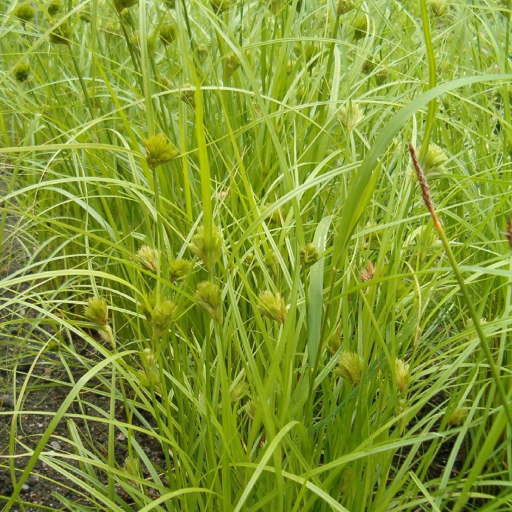
Plant Overview
Known as the Bohemian Sedge, this plant is a whimsical outlier in the sedge family. Unlike its more subtle relatives, Carex bohemica looks like a tiny green firework frozen in mid-explosion, often appearing on the muddy banks of drying ponds or rivers. It is a specialist of "ephemeral" habitats, waiting patiently for water levels to drop before making its dramatic debut.
🔍 How to Identify
- 🦔 The "Hedgehog" Head: The most striking feature is its dense, spherical flower cluster. These pale-green to straw-colored spikes are tightly packed, giving them a spiky, pom-pom appearance.
- 🌿 Long Leafy Bracts: Directly beneath the flower head, three to five long, leaf-like bracts extend outward. These are significantly longer than the flower itself, framing the "hedgehog" like a green collar.
- 🌱 Tufted Growth: It grows in small, dense clumps rather than spreading via long runners. Its leaves are soft, narrow, and a vibrant light green.
🏡 In Your Garden
- 💧 Water Enthusiast: This plant is perfect for the "marginal" zone of a backyard pond or a rain garden. It thrives in soil that stays consistently wet or even muddy. It is not a plant for a dry rockery!
- ⏳ A Short-Lived Guest: Unlike many perennials, Bohemian Sedge is often an annual or a short-lived perennial. It relies on its prolific seed production to return year after year. If you want it to stay, avoid over-cleaning the muddy edges where its seeds like to settle.
- ☀️ Sun Seeker: To get those iconic spiky flower heads, it needs plenty of light. In deep shade, it will become leggy and may fail to bloom.
⚠️ Safety & Toxicity
- ✅ Non-Toxic: Carex bohemica is generally considered safe and non-toxic for humans, cats, and dogs.
- 🌾 Mechanical Irritation: Like many sedges, the edges of the leaves can be slightly sharp. While not "saw-toothed" like some swamp grasses, it’s best handled with gardening gloves if you have sensitive skin.
✨ Fun Fact
The Bohemian Sedge is a "pioneer species" that has a historical connection to medieval fishponds in Central Europe. When the ponds were drained for harvest, this plant would suddenly carpet the exposed mud in thousands, completing its entire life cycle before the ponds were refilled with water.

Detailed Care Instructions
To grow Carex Bohemica, an ornamental grass, you can follow these steps:
- Choose a suitable location: Carex Bohemica prefers partial shade to full shade conditions. It can tolerate some morning sun, but avoid planting it in full sun, as it may scorch the leaves.
- Prepare the soil: Carex Bohemica grows best in moist, well-draining soil. Amend the soil with organic matter, such as compost or peat moss, to improve its moisture retention capabilities.
- Planting: Dig a hole that is slightly larger than the root ball of the plant. Make sure to space multiple plants around 12-18 inches apart. Place the plant in the hole and backfill with soil while gently firming it around the roots.
- Watering: Water the plant thoroughly after planting and then water regularly to keep the soil consistently moist. Avoid overwatering, as standing water can lead to root rot.
- Mulching: To conserve moisture and suppress weed growth, apply a layer of organic mulch around the base of the plant. Leave some space around the stem to prevent it from rotting. This will also help insulate the roots during extreme temperatures.
- Fertilizing: Carex Bohemica generally doesn't require heavy feeding. However, you can apply a slow-release fertilizer in the spring to provide essential nutrients.
- Pruning: Prune the plant in late winter or early spring to remove any damaged or dead foliage. You can also trim it back to the ground to rejuvenate the plant if it becomes straggly or overgrown.
- Division: Carex Bohemica can be divided every few years to promote healthy growth. Dig up the plant and separate the clumps into smaller sections, making sure each division has roots and foliage. Replant the divisions in suitable locations or share with other gardeners.
By following these steps, you can successfully grow Carex Bohemica and enjoy its graceful texture and form in your garden.

Place in a bright room that is sun drenched almost all day. Or directly in a south-facing window.

Carex Bohemica is a type of plant that requires careful watering to ensure its proper growth and development. When watering this plant, it is important to avoid over-watering, as this can cause root rot and other issues.
To water Carex Bohemica, start by checking the soil to see if it is dry. If the soil is dry, you can water the plant slowly and evenly, being careful to avoid getting water on the leaves or causing the water to pool around the base of the plant.
It is important to avoid watering Carex Bohemica too frequently, as this can also lead to issues with root rot. Instead, wait until the soil is dry to the touch before watering again.
When watering Carex Bohemica, it is also important to use the right type of water. This plant prefers water that is clean and free from chlorine and other chemicals, so consider using filtered or distilled water if possible.
Overall, keeping Carex Bohemica adequately watered is an important part of its care and maintenance, and with the right approach, you can help this plant thrive and grow for years to come.
To fertilize this plant, use a balanced fertilizer with equal amounts of nitrogen, phosphorus, and potassium. Apply the fertilizer at half strength every two to three weeks during the growing season. Be sure to water the plant well before and after fertilizing to avoid burning the roots. Additionally, top dress the soil with organic matter, such as compost or aged manure, to improve the plant's overall health and growth.
The Carex Bohemica plant prefers soil that is well-draining and has a slightly acidic to neutral pH. The soil should be rich in organic matter and have good moisture retention. It is best to use a high-quality potting mix that is specifically designed for plants that require good drainage. A mix that includes peat moss, perlite, vermiculite, and sand would be suitable for this plant. Avoid using heavy clay soils or those that are waterlogged as they can cause root rot. Additionally, adding a layer of mulch to the top of the soil can help retain moisture and prevent weeds from growing.
To propagate this plant, you can collect mature seeds from the plant and plant them in a well-draining soil mixture. Alternatively, you can divide the plant's rhizomes with a sharp knife or gardening tool. Make sure each division has some roots attached and plant them in a suitable location with proper moisture levels and lighting. It's important to keep the soil moist until the new plants become established.








