Plant Overview
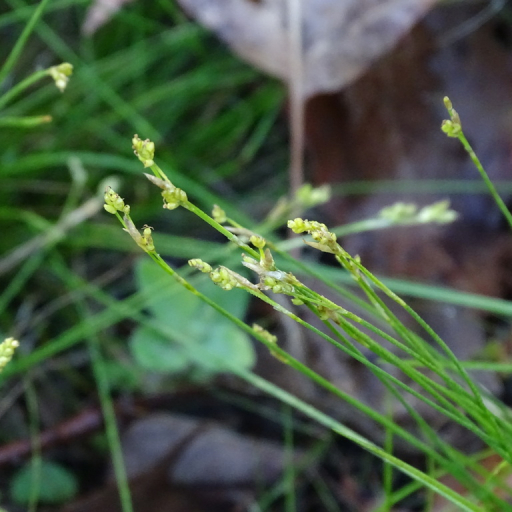
Bristle-leaf Sedge, affectionately known as "Ivory Sedge," is a delicate, fine-textured groundcover that looks like a collection of tiny, flowing green fountains. Often found clinging to limestone cliffs or carpeting the forest floor under ancient cedars, it is a favorite for gardeners looking to create a soft, mossy aesthetic in difficult-to-plant areas. Its Latin name, eburnea, refers to the ivory-colored sheaths that hide at the base of its stems.
🔍 How to Identify
- 🌿 The Foliage: Wispy, thread-like leaves that are exceptionally narrow, growing in dense, arching tufts that rarely exceed 6 to 10 inches in height.
- ⚪ The Base: Distinctive pale, ivory-to-tan scales wrapping the bottom of the stems, which help distinguish it from other look-alike sedges.
- 🌾 The Spikes: Tiny, inconspicuous flower spikes that emerge in late spring; the male spike is narrow and sits atop a few small female spikes.
🏡 In Your Garden
- 🪨 The Limestone Lover: This sedge is a "calciphile," meaning it craves alkaline conditions. It is the perfect choice for rock gardens or areas with thin, rocky soil where other plants might wither.
- 🌲 Dry Shade Solution: While many sedges require boggy soil, the Bristle-leaf Sedge is surprisingly drought-tolerant once established. It thrives in the "dry shade" found under evergreen trees, where it provides a soft green carpet that requires zero mowing.
⚠️ Safety & Toxicity
- ✅ Non-Toxic: Carex eburnea is generally considered safe and non-toxic for both humans and household pets like cats and dogs.
- 🖐️ Soft Texture: Unlike many of its larger relatives that have sharp, serrated edges (leading to the mnemonic "Sedges have edges"), this species is soft to the touch and safe for children's sensory gardens.
✨ Fun Fact
Because it grows in such dense, hair-like mats, early North American settlers and indigenous groups would sometimes use dried clumps of similar fine-leaved sedges as a natural cushioning or insulation inside their footwear!

Detailed Care Instructions
To grow Carex eburnea (Ivory Sedge) successfully, follow these steps:
- Obtain seeds or young plants: Carex eburnea can be grown from seeds or by purchasing young plants from a nursery or garden center.
- Find the right location: Carex eburnea prefers moist and shaded conditions, such as near streams or in partially shaded areas. It does best in temperate to cool climates.
- Prepare the soil: The soil should be rich in organic matter and well-draining. Add compost or well-rotted manure to improve soil fertility.
- Planting from seeds: If starting from seeds, sow them in flats or pots filled with a moist seed-starting mix. Press the seeds gently into the soil without covering them, as they require light to germinate. Keep the soil consistently moist and provide indirect light. Germination can take several weeks.
- Transplanting young plants: If starting with young plants, dig a hole slightly larger than the root ball, ensuring it is planted at the same depth it was originally growing. Space multiple plants at least 6-12 inches apart to allow for growth.
- Watering and maintenance: Carex eburnea requires consistently moist soil but should not be sitting in standing water. Water regularly to keep the soil consistently moist, especially during dry spells. Mulching around the plant can help retain moisture.
- Fertilization: Carex eburnea generally doesn't require much fertilization. If the soil is poor, you can apply a slow-release, balanced fertilizer in early spring.
- Pruning: Prune any dead or damaged foliage to maintain the health and appearance of the plant. Trim back the plant in early spring if necessary to control its size.
- Protect from extreme temperatures: This plant is not tolerant of extreme heat or cold. Protect it from scorching sun and provide extra mulch or protection during cold winters.
- Division: Carex eburnea can be divided every few years to propagate the plant and prevent overcrowding. Dig up the plant in early spring or fall and carefully separate the clumps, replanting them in suitable areas.
With proper care and attention to its specific needs, Carex eburnea can thrive and grow into a beautiful addition to your garden.

Place in a window with dappled sun or a spot in the middle of a room. Or directly in a window facing west or east.

Carex Eburnea is a type of plant that belongs to the sedge family. To water this plant, you need to take care of a few things, such as:
1. Location: Carex Eburnea prefers to grow in moist soils. It requires a location that receives partial sunlight or shade. The plant does not like exposure to direct sunlight.
2. Watering frequency: The frequency of watering depends on different factors like the growth stage of the plant, location, and climate. Generally, Carex Eburnea requires moderate watering. You can check the soil moisture by touching it. If it feels dry to the touch, then it's time to water it.
3. Water quantity: Carex Eburnea does not require heavy watering. You can use a watering can or a hose to provide an adequate amount of water. Make sure you do not overwater the plant, or it can lead to root rot.
4. Water quality: The quality of the water also matters. The water should not be too hard or salty, as it can damage the plant's roots. You can use filtered water or tap water that has been left to sit for a few hours.
5. Drainage: Proper drainage is essential for the plant's growth. Make sure the pot or container has drainage holes so that excess water can drain out easily. You can also add pebbles at the bottom of the pot to improve drainage.
6. Humidity: Carex Eburnea thrives in a humid environment. You can mist the plant occasionally to improve the humidity level. Alternatively, you can place a tray filled with water near the plant to increase the moisture level.
By following these tips, you can ensure that your Carex Eburnea plant receives adequate water and grows healthy.
For best results, use a balanced, water-soluble fertilizer with equal amounts of nitrogen, phosphorus, and potassium. Apply the fertilizer in early spring when new growth appears and again in late summer. Use only half the recommended strength and water thoroughly after application to avoid burning the roots. Avoid fertilizing during the winter dormant season.
The ideal soil type for this plant is well-draining, moist, and organic-rich. It should be slightly acidic with a pH ranging from 5.5 to 6.5. It is recommended to use a mix of peat moss, compost, and perlite or vermiculite to create the perfect soil mixture for this plant. This soil will provide adequate drainage while retaining moisture and nutrients necessary for this particular plant's growth. Additionally, it is important to avoid using heavy clay soils as they may restrict root development and impede drainage.
To propagate this plant, you may need to divide the clumps of the plant by gently pulling it apart into smaller sections, making sure to separate the roots without damaging them. These new sections can then be replanted into suitable potting soil and watered regularly until they establish themselves in their new environment. Alternatively, you can collect the seeds of the plant and sow them directly into the soil or into seed trays filled with potting soil. The seeds can be placed in a warm, sunny location and kept moist until they germinate. Once the plants have grown and established roots, they can be transplanted into their final growing location.








