Plant Overview
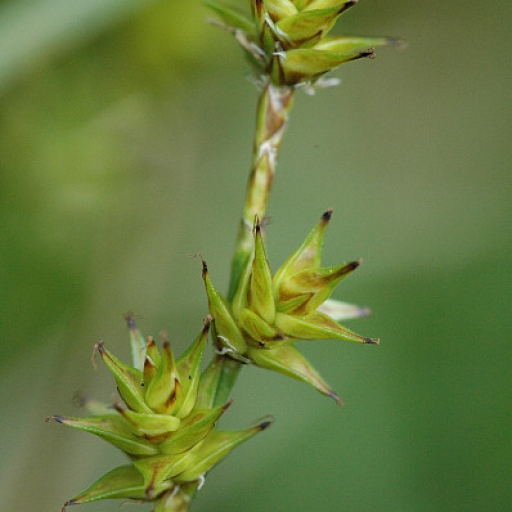
Often called the Star Sedge or Little Prickly Sedge, Carex echinata is a charming perennial that looks like a collection of tiny, emerald explosions scattered across wet landscapes. Found throughout the Northern Hemisphere, it is a staple of misty bogs and mountain meadows, where it adds a delicate, textural beauty to the damp earth. Its "prickly" appearance isn't meant to deter you, but rather to help its seeds catch a ride on passing animals or the wind.
🔍 How to Identify
- 📐 Triangular Stems: True to the classic botanical rhyme "sedges have edges," this plant features stems that are distinctly three-sided and feel sharp or angled when rolled between your fingers.
- 🌟 Star-Shaped Spikes: Its most iconic feature is the seed clusters (perigynia), which radiate outward in every direction to form a prickly, star-like sphere at the top of the stem.
- 🍃 Slender Foliage: The leaves are narrow, grass-like, and typically a vibrant, deep green, forming dense tufts or "tussocks" that stay relatively low to the ground.
🏡 In Your Garden
- 💧 The Bog Specialist: This is the perfect candidate for a "rain garden" or the soggy edge of a pond. It thrives in areas where the soil remains consistently moist or even saturated, making it a problem-solver for low-lying wet spots.
- 🏔️ Acidic Preferences: Unlike many garden plants that crave lime, the Star Sedge loves acidic, peaty, or sandy soils. It is incredibly cold-hardy and is often used in restoration projects to stabilize soil in wetlands.
⚠️ Safety & Toxicity
- ✅ Non-Toxic: Carex echinata is generally considered safe and non-toxic for humans, cats, dogs, and horses.
- 🧤 Mild Irritation: While not poisonous, the leaf edges and the "star" seed heads can be somewhat rough or abrasive. If you have sensitive skin, wearing gloves while dividing the clumps is a good idea to avoid tiny scratches.
✨ Fun Fact
The species name echinata is derived from the Greek word echinos, which means "hedgehog" or "sea urchin." One look at the spiky, rounded seed heads makes it very clear why 18th-century botanists felt this plant resembled a tiny green hedgehog!

Detailed Care Instructions

Place in a bright room that is sun drenched almost all day. Or directly in a south-facing window.

To properly water this type of plant, it is important to first examine the soil to determine if it is dry. If the soil is dry to the touch, it needs to be watered. It is recommended to water the plant deeply, ensuring that the water reaches the roots. This can be done by using a watering can or hose, and watering the soil directly around the plant. The water should be applied slowly to allow it to fully soak in. It is also important to avoid getting the leaves or stems of the plant wet, as this can lead to disease or fungal growth. Additionally, it is best to water this plant in the early morning or late evening to avoid evaporation and allow the plant to fully absorb the water.
The Carex Echinata plant would thrive best in soil that is well-draining, fertile, and moist. The soil should have a pH level between neutral to slightly acidic. It should also have a good amount of humus content, which provides organic matter and improves soil structure. The plant prefers slightly sandy loam or clay loam soil as it allows proper moisture retention while still promoting excellent drainage. The soil should also have adequate aeration to prevent waterlogging. It is important to avoid using heavy alkaline soil, as it may hinder the plant's growth or cause yellowing of the foliage. Adding organic matter such as compost or leaf mold before planting ensures that the soil remains fertile and increases the plant's root growth.








