Plant Overview
Often called the Yellow Sedge or Star Sedge, Carex flava is a cheerful, sun-loving inhabitant of wetlands and wet meadows. Known for its distinct yellowish-green foliage, it acts like a natural highlighter for damp corners of the landscape. While many sedges prefer the deep shade of forests, this species thrives where it can soak up the sun and keep its "toes" perpetually wet.
🔍 How to Identify
- ☀️ The Golden Glow: Unlike the deep forest greens of other sedges, the leaves of Carex flava are a bright, chartreuse to yellowish-green, appearing naturally sun-kissed even on cloudy days.
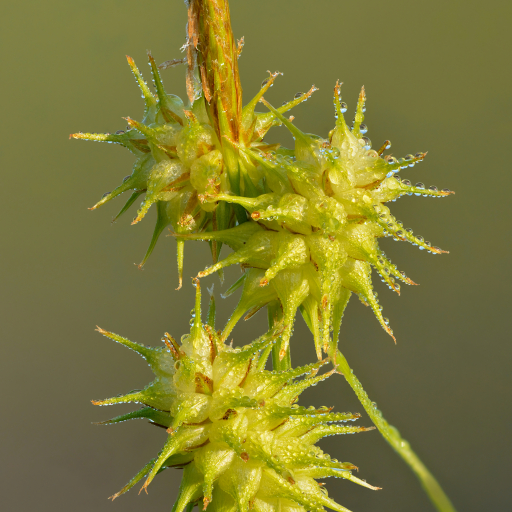
- 🦔 Spiky Seed Heads: The female flower spikes are dense and globose, covered in tiny "beaks" (perigynia) that point downward, giving the seed heads a prickly, star-like appearance.
- 📐 Triangular Stems: True to the "Sedges have edges" rule, if you roll the stem between your fingers, you will feel a distinct three-sided triangular shape.
- 🌱 Tufted Growth: It grows in tidy, dense clumps (cespitose) rather than spreading via aggressive underground runners, making it a well-behaved guest in smaller gardens.
🏡 In Your Garden
- 💧 The Water Lover: This plant is an ideal candidate for rain gardens, pond edges, or "boggy" spots where traditional grasses might rot. It requires consistent moisture and will struggle if the soil dries out completely.
- 🌾 Soil Preferences: It prefers lime-rich (calcareous) soils but is surprisingly adaptable to heavy clay. Because it has a fibrous root system rather than a deep taproot, it is relatively easy to divide and transplant in early spring.
- 🦋 Wildlife Value: While not a showy floral display for humans, it provides essential cover for small amphibians and serves as a host plant for various species of localized marsh butterflies and moths.
⚠️ Safety & Toxicity
- ✅ Safe for All: Carex flava is generally considered non-toxic to humans, dogs, and cats. It is a safe choice for households with curious pets or children.
- 🧤 Mechanical Irritation: While not chemically toxic, the edges of the leaves can be slightly sharp or abrasive. Wearing gloves while thinning out old growth will prevent minor "paper-cut" style scratches.
✨ Fun Fact
Botanists use a famous rhyme to tell wetland plants apart: "Sedges have edges, rushes are round, and grasses are hollow right up from the ground." The "edges" of Carex flava are so distinct they are often used as a textbook example for students learning plant identification!

Detailed Care Instructions
Here are some steps to help you grow Carex flava (yellow sedge) plant:
- Choose the right location: Carex flava prefers a sunny to partially shaded spot with well-draining soil. It can tolerate both dry and moist conditions.
- Prepare the soil: Amend the soil with organic matter like compost or well-rotted manure to improve drainage and nutrient content. Work the soil to a depth of around 8-10 inches.
- Planting the seeds or transplants: You can sow Carex flava seeds directly in the garden bed in early spring or early fall. Alternatively, you can purchase transplants from a nursery and plant them in the prepared bed.
- Watering: Keep the soil consistently moist but not waterlogged, especially during the establishment phase. Adequate watering is crucial for the seeds or transplants to develop strong roots.
- Mulching: Apply a layer of mulch around the plants to conserve moisture, control weeds, and maintain a cool soil temperature. Use organic mulch like wood chips or straw, and make sure to keep the mulch away from the plant stems to prevent rot.
- Fertilizing: Carex flava generally does not require much additional fertilization. However, you can apply a slow-release, balanced fertilizer in early spring to provide a nutrient boost.
- Maintenance: Regularly remove weeds around the plant to prevent competition for resources. After the first year of planting, Carex flava is quite tolerant and requires minimal care.
- Dividing: If the plant becomes overcrowded or starts to decline after a few years, you can divide it in early spring or early fall. Gently dig up the clump, separate it into smaller sections, and replant them.
- Pests and diseases: Carex flava usually does not face significant pest or disease issues. However, keep an eye out for common garden pests like slugs or snails and take appropriate measures if noticed.
Remember that growing conditions may vary depending on your specific location, so it's always a good idea to research and adapt the cultivation practices accordingly.

Place in a bright room that is sun drenched almost all day. Or directly in a south-facing window.

Watering the plant requires filling a watering can with tepid water and pouring it slowly and carefully onto the soil, making sure not to soak the foliage or the base of the plant. The best practice is to water the plant when the soil feels dry to the touch, but not completely dried out. Overwatering can lead to root rot and may cause the plant to decline. It is also recommended to avoid using hard tap water, as it may contain chemicals and minerals that can harm the plant. Instead, consider using rainwater or distilled water.
To fertilize this plant, use a balanced, slow-release fertilizer in the early spring before new growth emerges. Apply the fertilizer according to the package instructions, being careful not to over-fertilize. Water the plant lightly after fertilizing to help distribute the nutrients. Avoid fertilizing in late summer or fall, as this can encourage new growth that may not have time to harden off before winter.
Carex Flava plant prefers well-draining soil that is rich in nutrients. The soil should not be too heavy or too light and inadequate drainage may cause the roots to rot. Ideally, the soil should have a pH level around 5.5-7.5. Additionally, it's important to avoid using soils that contain high levels of salt, as Carex Flava does not tolerate salt well. A mixture of organic matter like peat moss, compost or aged manure and sand/vermiculite can improve the soil's nutrient content, aeration, and water-holding capacity. In general, it's best to check the soil requirements for the specific plant and adjust the soil accordingly.
To propagate this plant, you can divide the clumps in early spring or late summer. Carefully dig up the plant and use a sharp, sterilized knife or garden shears to separate the clumps into smaller sections. Each section should have a healthy amount of roots and at least one or two stems. Replant these sections in well-draining soil and keep them well-watered until they establish themselves. Alternatively, you can propagate the plant by collecting and planting the seeds in the fall or early winter. Store the seeds in a cool, dry place until you are ready to plant them, and then sow them thinly in prepared soil. Cover the seeds with a light layer of soil and keep them consistently moist until they germinate.








