Plant Overview
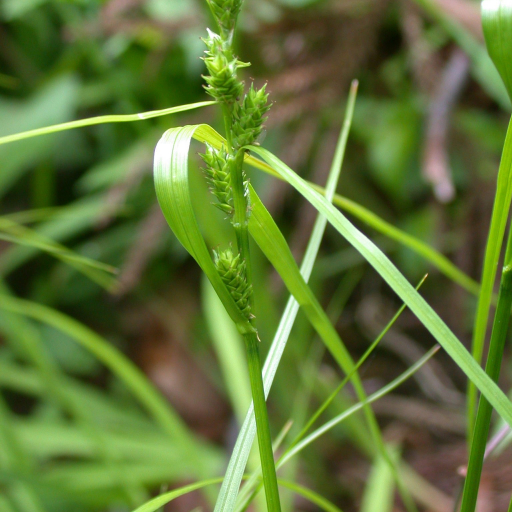
Known as the Gibbous Sedge, this elegant grass-like perennial hails from the lush landscapes of East Asia, including China, Japan, and Korea. It grows in soft, fountain-like mounds that add a delicate, wild texture to garden borders or woodland paths. While it looks like a common grass at first glance, its unique seed structures and structural stems set it apart as a true "connoisseur's" groundcover.
🔍 How to Identify
- 📐 The "Edgy" Stem: Like most members of the Cyperaceae family, it features a distinctly triangular stem. If you roll the base of the plant between your fingers, you will feel three clear edges.
- 🍃 Fountain Foliage: The leaves are slender, bright green, and arch gracefully outward from the center, creating a dense, "mop-top" silhouette that stays low to the ground.
- 🌾 Swollen Seeds: The name Gibba (meaning "humped") refers to its seed cases. The tiny green fruits are noticeably swollen or "gibbous" on one side, appearing as tight, spiky clusters along the flowering stalks.
🏡 In Your Garden
- 💧 The Moisture Solution: This sedge is a natural "hydro-phile," meaning it thrives in damp, boggy soil where traditional turf grasses might rot. It’s an ideal candidate for rain gardens or the soggy edges of a backyard pond.
- 🌑 Shade Tolerance: Unlike many ornamental grasses that demand full sun to thrive, Carex gibba is perfectly happy in dappled light or partial shade, making it a fantastic "filler" for the dark spaces beneath tall trees.
⚠️ Safety & Toxicity
- ✅ Non-Toxic: This plant is generally considered safe and non-poisonous.
- 🐾 Pet Friendly: It does not contain the harmful alkaloids found in some ornamental plants, meaning it is safe for households with curious dogs or cats who enjoy "grazing" on long leaves.
✨ Fun Fact
Botanists use a famous rhyme to help people identify plants like this one: "Sedges have edges, rushes are round, and grasses are hollow right up from the ground." The "edges" of Carex gibba are its most defining botanical fingerprint!

Detailed Care Instructions

Place in a window with dappled sun or a spot in the middle of a room. Or directly in a window facing west or east.

Some plants require more regular watering than others, which should be done every few days. It's critical to maintain the soil moist all of the time. The water requirements of the same plant placed in pots with varying sizes will differ. Because the water in the smaller pot evaporates faster than the water in the larger pot, it will require more watering. Regardless of pot size, the surface should constantly be maintained moist.








