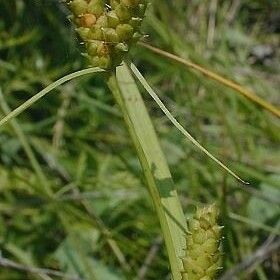
Plant Overview
Often called the Limestone Meadow Sedge or Pale Sedge, Carex granularis is a subtle but dependable North American native that thrives where many other plants struggle. Known for its soft, bluish-green foliage, it acts as a graceful "ground-hugging" carpet in moist meadows and prairies. It is a favorite among restoration ecologists for its ability to stabilize soil and add fine-textured beauty to damp lowlands.
🔍 How to Identify
- 🍃 The Foliage: The leaves are relatively wide for a sedge, featuring a distinct "glaucous" (waxy, bluish-gray) tint that sets it apart from the bright greens of typical lawn grasses.
- 🟢 The "Granules": Its most defining feature is the female flower spikes, which are packed with plump, rounded seed cases (perigynia) that look like tiny green beads or granules.
- 🌱 Growth Habit: This is a "clumping" sedge, meaning it grows in tidy, dense tufts rather than spreading aggressively through underground runners.
🏡 In Your Garden
- 💧 The "Sweet" Spot: Unlike many woodland plants that prefer acidic soil, this sedge is a "calciphile," meaning it craves lime-rich, alkaline soil. It is the perfect solution for heavy clay spots where water tends to sit.
- 🦋 Wildlife Value: While it may look like a simple grass to us, it serves as a critical host plant for several species of butterflies and skippers, providing a safe nursery for their larvae.
⚠️ Safety & Toxicity
- ✅ Safe & Friendly: Carex granularis is considered non-toxic to humans, dogs, cats, and horses.
- 🧤 Gentle Texture: Unlike some sedges that have "sawtooth" edges capable of giving papercuts, the Meadow Sedge is generally soft to the touch, making it safe to plant near walkways or play areas.
✨ Fun Fact
The species name granularis is Latin for "consisting of grains," referring to the distinct, pebbly texture of the seed heads which look almost like miniature ears of corn under a magnifying glass!

Detailed Care Instructions
To grow Carex granularis, also known as the northern wood sedge, you can follow these steps:
- Location: Choose a suitable location for your plant. Carex granularis prefers partial shade to full shade. It can tolerate some sunlight but tends to thrive in shaded areas.
- Soil: Prepare well-draining soil for planting. This plant prefers moist, rich, and slightly acidic soil. Ensure good drainage to prevent waterlogging, as excessive moisture can lead to root rot.
- Watering: Carex granularis requires regular watering to maintain moist but not waterlogged soil. Water the plant deeply when the top inch of soil feels dry.
- Mulching: Apply a layer of organic mulch around the base of the plant to help retain moisture and suppress weed growth. This will also provide some insulation for the roots during extreme temperatures.
- Fertilization: Fertilize the plant with a slow-release, balanced fertilizer in spring and mid-summer. This will provide the necessary nutrients for healthy growth.
- Propagation: Carex granularis can be propagated by division. In late winter or early spring, dig up the existing plant and separate the clumps into smaller sections, ensuring each division has a sufficient number of roots. Replant the divided sections in separate locations or pot them up individually.
- Maintenance: To maintain a healthy Carex granularis plant, regularly remove any dead or yellowing foliage. This will improve airflow and prevent the spread of diseases.
- Winter care: If you live in an area with harsh winters, protect the plant by mulching heavily in late fall. This will insulate the roots and prevent winter damage.
By following these steps and providing appropriate care, you can successfully grow and maintain Carex granularis.

Place in a bright room that is sun drenched almost all day. Or directly in a south-facing window.

Carex Granularis plant is a type of plant that requires regular watering for healthy growth and development. You should ensure to water this plant regularly and not let the soil dry out completely.
The best way to water this plant is to check the soil moisture level by inserting your finger into the soil around the plant. If the soil feels dry, you should water the plant. Additionally, it is recommended to water the plant early in the morning or late in the evening, as this will allow the moisture to be absorbed by the soil before the heat of the day evaporates it.
When watering, aim to water the soil around the base of the plant rather than the leaves, as wet leaves can create a breeding ground for fungal diseases. Use a watering can or a garden hose with a nozzle to water the soil around the plant gently.
It is important to not overwater the plant as excessive moisture can cause the roots to rot. Therefore, wait until the top inch of soil has dried out before watering again. It is also important to avoid letting the plant sit in standing water as this can cause the roots to suffocate.
Overall, with proper watering and care, your Carex Granularis plant will thrive and bring joy to your garden or home.
To fertilize Carex granularis, apply a balanced, slow-release fertilizer in the spring and mid-summer. Use a granular or pelletized fertilizer and apply it evenly around the base of the plant. Water the plant immediately after fertilizing to help the nutrients soak into the soil. Avoid over-fertilizing, as this can lead to excessive growth and reduced plant health.
The ideal soil for Carex Granularis should be a well-draining, fertile, and moist soil that is rich in organic matter. It should be slightly acidic to neutral in pH, with a range between 5.5 and 7.5. The soil should also have adequate drainage to prevent waterlogging, which can lead to root rot. Carex granularis prefers soils that are high in humus, clay loam with sandy loam texture with good water-holding capacity. The plant should be planted in soil that is not overly compacted, as this could lead to issues with root growth. Additionally, it is recommended to add a slow-release fertilizer to the soil in the planting hole to supply the plant with the necessary nutrients. Overall, Carex Granularis thrives in soils that are well-drained, moist, nutrient-rich, and with good water-holding capacity.
To propagate this plant, the first step is to identify a healthy parent plant with mature roots. Next, carefully dig around the base of the plant to expose the roots without causing damage. Choose several healthy root pieces and cut them from the parent plant using a sharp, sterilized knife or scissors. Each individual root piece should be at least two inches long and have a bud or shoot attached to it.
Prepare a well-draining propagation pot or container with a mixture of soil and sand, and dampen the soil slightly. Place the root cuttings vertically into the soil, ensuring that the bud or shoot is facing upwards and is just below the surface of the soil. Cover the cuttings with a clear plastic bag or a propagator lid to create a humid environment and encourage root growth. Place the container in a bright, indirect light and maintain a consistent temperature of around 18-24°C.
Check the cuttings weekly and mist them if the soil appears dry. After about four to six weeks, you should see new growth emerging from the cuttings, indicating that they have successfully taken root. Remove the plastic covering and begin to gradually acclimate the newly propagated plants to normal indoor or outdoor conditions over the course of a few weeks.
Once the new plants have established and have grown several inches, they can be transplanted into their own pots or directly into the ground. Be sure to keep the soil moist and avoid over-watering, as the plants prefer slightly drier conditions. With proper care and maintenance, your new Carex granularis plants should thrive and provide a beautiful addition to your garden or home.








