Plant Overview
Often called the Gray Sedge or Wood Gray Sedge, this North American native is a subtle masterpiece of the woodland floor. Unlike flashy flowering perennials, its charm lies in its cool, bluish-gray foliage and its remarkable ability to thrive where most grasses give up. It acts as a lush, textured carpet that stays green and vibrant long after many other forest plants have gone dormant.
🔍 How to Identify
- 📐 Triangular Stems: True to the botanical rhyme "Sedges have edges," if you roll the stem between your fingers, you will feel three distinct flat sides forming a sharp triangle.
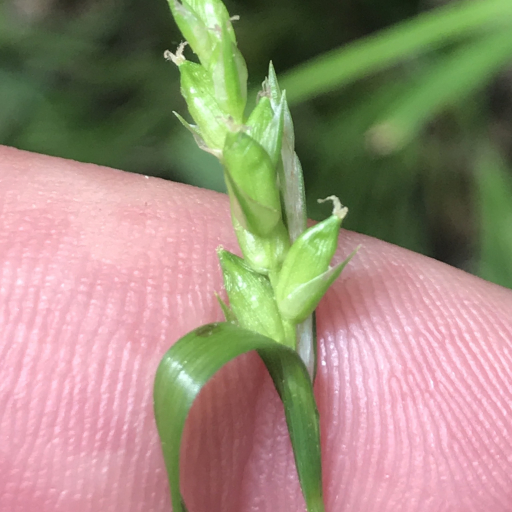
- 🌬️ Inflated Seed Pods: The most striking feature is the "perigynia" (seed coverings), which look like tiny, plump, green footballs or inflated balloons clustered tightly along the upper stems.
- 🎨 Dusty Hue: The leaves possess a sophisticated grayish-green or "glaucous" tint rather than a bright lime green, helping them stand out beautifully in low-light environments.
🏡 In Your Garden
- ☁️ The Shade Specialist: This plant is a hero for those "problem spots" under large deciduous trees where the sun rarely reaches. It fills in gaps gracefully and provides a soft, fountain-like texture to dark corners.
- 💧 Moisture Tolerance: While it can adapt to average garden soil, it truly shines in damp areas. It is an excellent candidate for rain gardens or the edges of a backyard pond where the soil stays consistently moist.
- 🌱 Well-Behaved Growth: Unlike many invasive grasses, the Gray Sedge is a "clump-former." It stays in its designated spot rather than sending out aggressive underground runners, making it a polite neighbor for other shade perennials like Hostas or Ferns.
⚠️ Safety & Toxicity
- 🐾 Pet & Child Friendly: Carex grisea is considered non-toxic. It is a safe, worry-free choice for gardens frequented by curious cats, dogs, or toddlers.
- ✂️ Mild Abrasiveness: While not dangerous, the leaf edges contain silica and can be slightly coarse. If you are doing a large amount of pruning or transplanting, wearing light garden gloves will prevent minor skin irritation.
✨ Fun Fact
- 🦉 A Hidden Pantry: The uniquely inflated seed pods aren't just for show; they are specifically designed to be buoyant. In the wild, this helps the seeds disperse via rainwater, but they also serve as a vital high-energy snack for woodland birds like the Northern Cardinal.

Detailed Care Instructions
To grow Carex grisea, also known as grey sedge, follow these steps:
- Select a suitable location: Carex grisea prefers partial shade to full sun. Choose a location with well-drained soil that retains some moisture.
- Prepare the soil: Loosen the soil and remove any weeds or debris. Add organic matter, such as compost or well-rotted manure, to improve soil fertility.
- Planting: Dig a hole slightly larger than the root ball of the plant. Place the plant in the center of the hole and backfill with soil, gently firming it around the roots. Water thoroughly after planting.
- Watering: Keep the soil consistently moist but not waterlogged. Watering deeply once or twice a week should be sufficient, depending on your climate and rainfall.
- Mulching: Apply a layer of organic mulch, such as wood chips or straw, around the base of the plant. This helps to retain moisture, suppress weeds, and regulate soil temperature.
- Fertilizing: Carex grisea generally doesn't require much fertilization. However, you can apply a slow-release, balanced fertilizer in early spring if desired, following the instructions on the packaging.
- Pruning: Prune away any dead or damaged leaves to maintain the plant's appearance. Carex grisea typically does not require heavy pruning.
- Dividing: Every few years, consider dividing the plant to rejuvenate it. Dig up the clump, separate it into smaller sections, and replant them in suitable locations.
- Pests and diseases: Carex grisea is generally resistant to pests and diseases. However, keep an eye out for slugs or snails, and take appropriate measures if they become a problem.
- Winter care: Carex grisea is cold hardy and can tolerate freezing temperatures. However, in severe winters, it may benefit from some extra protection, such as a layer of mulch around the base of the plant.
By following these steps, you should be able to successfully grow Carex grisea in your garden or landscape.

Place in a window with dappled sun or a spot in the middle of a room. Or directly in a window facing west or east.

To water this particular plant, it is important to ensure that the soil stays moderately moist. However, overwatering should be avoided as it can lead to root rot. It is recommended to water the plant deeply once a week, allowing the soil to dry out slightly before the next watering. It is important to water the plant at the base, avoiding getting water on the leaves and stem. The amount of watering required may vary depending on the climate, humidity levels, and the amount of sunlight the plant receives. It is also important to ensure proper drainage in the pot or container to prevent water from pooling and causing damage to the roots.
To fertilize this plant, wait until the beginning of the growing season and select a balanced fertilizer. Mix the fertilizer with water according to the package instructions, and then apply it to the soil around the plant. Avoid getting the fertilizer on the plant's foliage or stems as this may cause damage. Water the plant thoroughly after fertilizing to help the nutrients soak into the soil. Repeat the process once every month during the growing season.
Carex Grisea plant requires a well-draining soil that is slightly acidic. The soil should be fertile and rich in organic matter, with good water retention capacity. A mix of loam, sand, and peat moss is ideal for this plant. Avoid using heavy clay soils as they tend to retain water and may cause root rot. If the soil in your area is heavy, you can add perlite or sand to improve drainage. The pH level of the soil should be between 5.5 to 6.5. It is important to maintain the moisture level of the soil consistently, not letting it dry out or become waterlogged.
Propagation of this plant can be done through division of mature plants during spring or autumn. The first step is to gently dig out the plant from the soil and remove any excess soil from the roots. Then, using a sharp tool, divide the plant into smaller sections, making sure that each section has a good amount of roots and shoots.
Once divided, plant each section into its own container or directly into the ground, making sure that the soil is well-draining and moist. Water the plants thoroughly and place them in a location with filtered sunlight to avoid sunburn.
Over the next few weeks, monitor the new plants closely and keep the soil moist to encourage root growth. After a few months, the new plants should be well-established and ready to be transplanted into their permanent location.








