Plant Overview
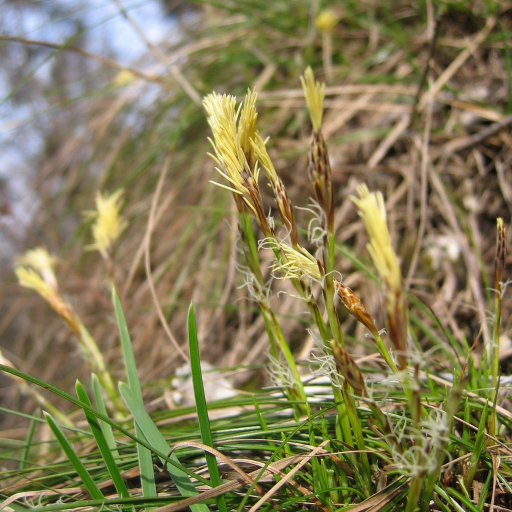
Often called the Dwarf Sedge, Carex humilis is the "quiet achiever" of the garden world. Native to the dry, chalky grasslands of Europe and Asia, this plant forms dense, low-growing cushions that look like tufts of green velvet scattered across the soil. It is a favorite for those who love "invisible" design—adding texture and structural stability to rock gardens without demanding the spotlight.
🔍 How to Identify
- 🌿 The Foliage: Look for exceptionally narrow, thread-like leaves. They are dark green, stiff, and grow in dense, fountain-like mounds that rarely exceed 4–6 inches in height.
- 🌾 The Flowers: Unlike showy garden blooms, its flowers are small, brownish spikelets that appear in early spring. They often hide shyly tucked away among the leaf bases rather than standing tall.
- 🐢 Growth Habit: This is a slow-growing, "humble" plant (hence the name humilis). It spreads via short rhizomes but stays in neat, compact clumps rather than becoming invasive.
🏡 In Your Garden
- 🪨 The Limestone Lover: This sedge is a "calcicole," meaning it thrives in lime-rich, alkaline soils. It is the perfect candidate for those tricky, rocky spots where other plants struggle with thin soil.
- ☀️ Drought Specialist: Once established, it is remarkably resilient. It handles dry shade and sun-baked slopes equally well, making it an excellent "set-it-and-forget-it" groundcover for erosion control.
- ✂️ Minimalist Grooming: Because it is semi-evergreen, it maintains its structure through winter. You don’t need to cut it back; simply "comb" through the foliage with your fingers in spring to remove any dead blades.
⚠️ Safety & Toxicity
- ✅ Safe Status: Carex humilis is generally considered non-toxic to humans, cats, and dogs.
- 🧤 Serrated Edges: While not chemically toxic, the leaves of many sedges have microscopic silica teeth along the edges. If you have sensitive skin, wear gloves when handling large amounts to avoid minor "grass cuts."
✨ Fun Fact
The genus name Carex is derived from the Greek word keirein, which means "to cut." This refers to the sharp, saw-like leaf edges found on many of its larger cousins, though this "humble" dwarf version is much softer to the touch!

Detailed Care Instructions
Carex humilis, also known as low-growing sedge, is a versatile and hardy plant that can thrive in a variety of growing conditions. Here are some tips on how to grow and care for Carex humilis:
- Choose the right location: Carex humilis prefers partial shade to full sun and moist, well-drained soil. It can tolerate a range of soil types, from sandy to clay, but does best in soil that is rich in organic matter.
- Planting: Plant Carex humilis in early spring or early fall. Dig a hole that is slightly larger than the root ball of the plant and place the plant in the hole, making sure that the crown is level with the soil surface. Water the plant thoroughly after planting.
- Watering: Carex humilis likes moist soil, so water regularly, especially during hot, dry weather. Avoid overwatering, as this can lead to root rot.
- Fertilizing: Carex humilis generally does not require fertilization, but you can add a slow-release, balanced fertilizer in the spring if desired.
- Mulching: Mulch around the base of the plant with organic matter to help retain moisture and suppress weeds.
- Pruning: Carex humilis does not require regular pruning, but you can trim back any dead or damaged foliage in the spring to encourage new growth.
- Dividing: You can divide Carex humilis every few years to rejuvenate the plant and prevent overcrowding. Simply dig up the plant in the spring, divide the clumps into smaller sections, and replant them in a new location.
By following these tips, you can successfully grow and care for Carex humilis in your garden or landscape.

Place in a window with dappled sun or a spot in the middle of a room. Or directly in a window facing west or east.

To water this plant, it is important to ensure that the soil around the base of the plant remains consistently moist, but not waterlogged. You can achieve this by frequently checking the soil moisture levels with your fingers, and watering as needed. It is best to water slowly and deeply, allowing the water to soak into the soil and reach the plant's roots. Avoid getting water on the plant's foliage, as this can promote disease and damage the leaves. Additionally, be careful not to overwater, as this can lead to root rot and other issues. A good rule of thumb is to water when the top inch of soil feels dry to the touch. When watering, aim for the soil around the plant's base rather than the entire pot or container.
To fertilize Carex humilis, apply a balanced, slow-release fertilizer in early spring before new growth appears. Use a fertilizer with an NPK ratio of 10-10-10 or similar, applying according to package instructions. Avoid over-fertilizing, as this can lead to excessive leaf growth and a decline in plant health. Water the plant thoroughly after fertilizing to help nutrients reach the roots. Repeat fertilization in late spring or early summer if desired, following the same guidelines.
The ideal soil for this particular plant is a well-draining, loamy soil that is rich in nutrients but does not retain too much water. It can tolerate slightly acidic to slightly alkaline soil pH levels. It also prefers soil that is slightly moist but not waterlogged. It is recommended to avoid clay soils or soils with high levels of salt content. Adding organic matter to the soil, such as compost or peat moss, can help improve the soil structure and nutrient content for the plant.
Carex humilis can be propagated by dividing the plant or by collecting and planting the seeds. To divide the plant, carefully dig up the mature plant and separate the clumps into smaller sections, making sure each section has roots attached. Replant the divided sections in a suitable location in well-draining soil.
To propagate from seeds, collect the seeds from the plant when they are ripe. Sow the seeds in a seed-raising mix and cover lightly with soil. Keep the soil consistently moist until the seeds germinate. Transplant the seedlings into individual pots once they have a few leaves and continue to care for them until they are established enough to be planted outside.








