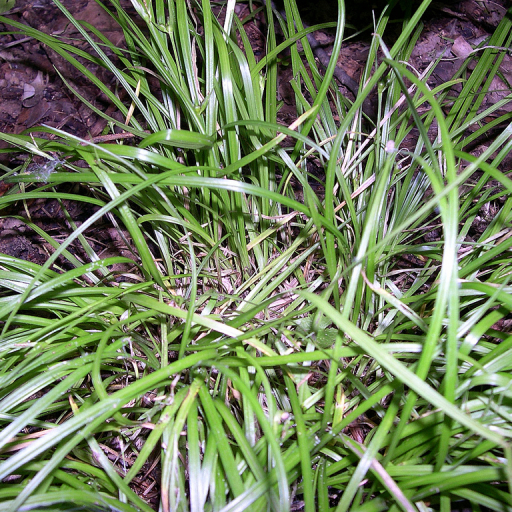
Plant Overview
Meet Carex jamesii, affectionately known as James's Sedge. This modest "woodland weaver" is a quiet hero of the forest floor, forming lush, fountain-like hummocks that look like soft green carpet. It is the perfect choice for gardeners looking to add texture to those tricky, shaded corners where traditional lawn grass simply refuses to grow.
🔍 How to Identify
- 🌿 Tufted Habit: Unlike aggressive spreading grasses, this sedge grows in tidy, dense clumps that stay exactly where you plant them.
- 📏 Fine Foliage: The leaves are exceptionally narrow and grass-like, gracefully arching downward to create a soft, weeping silhouette.
- ⭐ Star-Shaped Seeds: In late spring, look for the unique fruiting heads hidden near the base; the seeds (perigynia) are clustered in a way that looks like tiny green stars or bird's feet.
🏡 In Your Garden
- 🌳 The Shade Solution: This plant is a specialist in "dry shade," one of the most difficult garden conditions. It thrives under the canopy of large deciduous trees where other plants struggle for light and moisture.
- 🪵 Soil Preference: It has a particular fondness for lime-rich or alkaline soils. If your garden is near limestone or has slightly higher pH levels, James's Sedge will flourish.
- 🛡️ Living Mulch: Because of its dense growth, it acts as a "green mulch," suppressing weeds and cooling the soil while providing a beautiful, low-maintenance groundcover.
⚠️ Safety & Toxicity
- ✅ Non-Toxic: James's Sedge is generally considered safe and non-toxic for both humans and pets. It is a "worry-free" addition to households with curious dogs or cats.
- ✂️ Soft Edges: While the old rhyme says "Sedges have edges," this particular species is relatively soft. However, like all sedges, the leaves have microscopic serrations that can occasionally cause very mild skin irritation if handled roughly by someone with sensitive skin.
✨ Fun Fact
James's Sedge employs a tiny army for its survival. Its seeds have a small, oily attachment called an elaiosome that ants find delicious. The ants carry the seeds back to their nests to eat the oily part, effectively "planting" the seeds in nutrient-rich underground tunnels!

Detailed Care Instructions
To grow a Carex Jamesii plant, you can follow these steps:
- Choose a suitable location: Carex Jamesii plants thrive in full sun to partial shade. Select an area in your garden that receives at least 4-6 hours of direct sunlight per day.
- Prepare the soil: Carex Jamesii prefers well-draining soil. Amend the soil with organic matter such as compost to improve drainage and fertility. Avoid heavy clay soils that can retain excessive moisture.
- Planting: Dig a hole slightly larger than the root ball of the plant. Place the Carex Jamesii in the hole and backfill it with soil, gently firming it around the roots. Make sure the crown of the plant (where the roots meet the foliage) is level with the soil surface.
- Watering: Water the plant thoroughly after planting, ensuring the soil is evenly moist. Once established, Carex Jamesii is drought-tolerant and requires occasional watering. However, during hot and dry periods, provide sufficient water to keep the soil lightly moist.
- Mulching: Apply a layer of organic mulch, such as wood chips or straw, around the base of the plant. This helps to conserve moisture, suppress weeds, and insulate the roots.
- Pruning: Carex Jamesii requires minimal pruning. Remove any dead or damaged foliage as needed, typically in early spring. Regularly grooming the plant helps maintain its neat appearance.
- Fertilization: Carex Jamesii is a low-maintenance plant and usually does not require regular fertilization. However, if you notice poor growth or pale leaves, you can apply a slow-release fertilizer according to the manufacturer's instructions.
- Division: Carex Jamesii can be divided every few years to maintain its vigor. Dig up the plant and carefully separate the clumps into smaller sections, ensuring each divided section has a good amount of roots. Replant the divided sections, following the same planting process as mentioned earlier.
By following these guidelines, you can successfully grow a Carex Jamesii plant in your garden.

Place in a bright room that is sun drenched almost all day. Or directly in a south-facing window.

To water this plant, it is important to first check the moisture level of the soil using a moisture meter or by inserting a finger into the soil up to the second knuckle. If the soil feels dry, then it is time to water. When watering, be sure to pour the water slowly and evenly over the soil, allowing it to absorb before adding more. It is important not to overwater, as this can lead to root rot and other issues. It is best to water this plant deeply once a week, rather than giving it small amounts of water frequently. Additionally, it is important to make sure the plant has adequate drainage to prevent water from sitting in the pot or soil.
To fertilize this plant, you will need to apply a slow-release fertilizer in the early spring as its growth begins. Use a balanced fertilizer with equal parts of nitrogen, phosphorus, and potassium. Spread it evenly around the plant base, being careful not to get any on the leaves or stems. Water the fertilizer in deeply, making sure the soil is moist but not soggy. Repeat this process once or twice more during the growing season, spacing out your fertilization every 6 to 8 weeks. Avoid fertilizing in the fall as new growth slows down.
The recommended soil for this particular plant is a well-draining soil that is rich in organic matter. The soil should have a pH level between 6.0 and 7.5. It is recommended to mix the soil with sand or perlite to increase drainage and aeration. Additionally, the plant prefers moist soil, so regular watering is necessary. It is essential to avoid waterlogged soil as it can lead to root rot. Fertilizing the plant with a balanced fertilizer during the growing season can also help maintain the plant's health and promote growth.
Propagation of this plant species can be achieved through division of the parent plant, which involves separating the root ball into smaller pieces. This is typically done in the spring or fall, when the plant is dormant. To do this, carefully remove the plant from the soil and use a sharp, clean knife to cut the root ball into smaller pieces, making sure that each piece has some roots and foliage. Replant the divided sections in well-draining soil and water thoroughly. The new plants should be kept moist but not waterlogged and protected from direct sunlight until they become established. With proper care, the new plants should begin to grow and thrive.








