Plant Overview
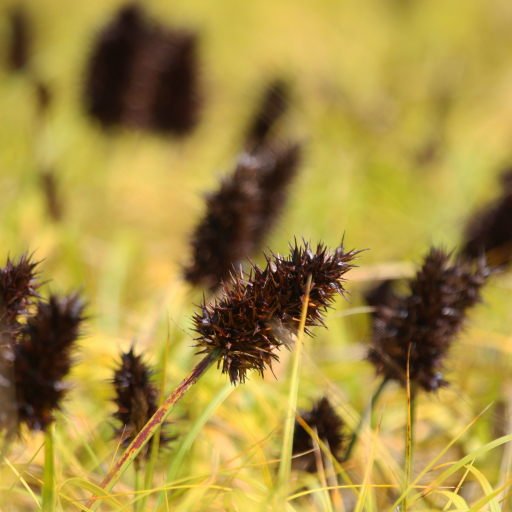
Known as the Large-head Sedge or Big-head Sedge, this rugged coastal traveler is the ultimate beach bum of the plant world. Found clinging to the sandy shores of the North Pacific—from Japan and Russia across to the rugged coastlines of Alaska and Oregon—it is a master of survival in harsh, salty environments. With its golden, "pineapple-like" seed heads, it looks more like a piece of sun-bleached driftwood than a typical garden grass.
🔍 How to Identify
- 🌾 The "Big Head": The most striking feature is the massive, prickly, cone-shaped flower head (on female plants) that can grow up to 3 inches long. It turns a beautiful toasted gold or deep brown as it matures.
- 📐 Triangular Stems: Like all members of the sedge family, it follows the rule "Sedges have edges"—its stems are distinctly three-sided and sharp to the touch.
- 🍃 Leathery Foliage: The leaves are thick, stiff, and yellow-green, often curving outward to catch the moisture from the sea mist.
🏡 In Your Garden & Landscape
- 🏖️ Dune Stabilizer: This isn't a plant for a manicured lawn; it is a "pioneer species." Its incredibly long, underground rhizomes act like a net, stitching shifting sand dunes together and preventing coastal erosion.
- 🌊 Salt Specialist: It is virtually immune to salt spray and high winds. If you have a coastal property where nothing else survives the "ocean's breath," this sedge will likely thrive.
- 🚶 Space Invader: Because it spreads via deep, creeping roots, it can be aggressive. In a garden setting, it is best used in "wild" areas or contained sections where you want a rugged, architectural look.
⚠️ Safety & Toxicity
- 🟢 Status: Generally non-toxic to humans and pets.
- ⚔️ Physical Hazard: While it won't poison you, it can certainly "bite." The edges of the leaves and the bracts on the seed heads are serrated and quite sharp. It is best planted away from footpaths where bare ankles or curious pets might get scratched.
✨ Fun Fact
Large-head Sedge is "dioecious," meaning individual plants are either male or female. If you see the dramatic, spiky "pineapple" heads, you’re looking at a female plant; the males are much more subtle, with smaller, slimmer flowering spikes!

Detailed Care Instructions
To successfully grow Carex macrocephala, also known as Bighead Sedge, follow these steps:
- Choose the right location: Bighead Sedge requires partial shade to full sun and prefers moist soil. Select a spot in your garden with well-draining soil that receives at least 4-6 hours of sunlight per day.
- Prepare the soil: Before planting, loosen the soil and amend it with organic matter. This helps improve drainage and provides essential nutrients.
- Planting: Dig a hole slightly larger than the plant's root ball. Place the Carex macrocephala in the hole, ensuring that the top of the root ball is level with the surrounding soil. Backfill the hole with soil and gently firm it around the plant.
- Watering: Bighead Sedge thrives in moist soil. Water the plant regularly, but avoid overwatering, as it can lead to root rot. If the soil feels dry, provide a deep watering to ensure proper hydration.
- Mulching: Applying a layer of organic mulch around the base of the plant can help retain moisture in the soil and prevent weed growth. However, ensure that the mulch does not touch the plant's stem, as it can promote rotting.
- Fertilizing: Carex macrocephala typically doesn't require heavy feeding. However, you can apply a slow-release balanced fertilizer in early spring to provide essential nutrients throughout the growing season.
- Pruning: Bighead Sedge generally doesn't require pruning. However, if you notice any dead or damaged foliage, you can trim it back to promote new growth.
- Division: Over time, Carex macrocephala may form clumps that become crowded. To rejuvenate the plant, divide it every 2-3 years in early spring. Dig up the clumps and separate them into smaller sections, ensuring each division has healthy roots. Replant the divisions in prepared soil.
- Pest and disease control: Bighead Sedge is generally resistant to pests and disease. However, keep an eye out for any signs of infestation or disease, such as discoloration or wilting foliage. If necessary, treat the issue accordingly using appropriate organic or chemical control methods.
By following these steps and providing a suitable growing environment, you can successfully grow Carex macrocephala in your garden.

Place in a bright room that is sun drenched almost all day. Or directly in a south-facing window.

The best way to water this plant is to allow the top 1 inch of soil to dry out before watering again. It prefers to be evenly moist but not waterlogged, so be sure to avoid overwatering. Water deeply and thoroughly, making sure the water reaches all the way down to the roots. You may need to adjust your watering schedule based on the environmental conditions, such as humidity and temperature. It is also important to use well-draining soil and ensure proper drainage to prevent water buildup.
To fertilize this plant, begin by selecting a balanced fertilizer that contains equal or roughly equal amounts of nitrogen, phosphorus and potassium. You will want to apply the fertilizer in the early spring, either just before or just as the new growth begins to emerge. The best ways to apply the fertilizer is usually by using a slow-release granular fertilizer, but if you prefer you can use a liquid fertilizer instead. Simply spread the granules or mix the liquid solution according to the manufacturer's instructions, being careful not to get any of the fertilizer on the new growth or in the center of the plant. After applying the fertilizer, water the plant thoroughly and continue to water it well throughout the growing season, being sure to watch for any signs of overwatering or underwatering.
The ideal soil for the plant known as Carex Macrocephala would be a well-draining soil that retains moisture but does not become waterlogged. The soil should have a neutral to slightly acidic pH between 6.0 and 7.5. It is recommended to use a soil mix that contains organic matter such as compost or peat moss to provide essential nutrients and improve soil structure. The soil should also be rich in nitrogen and have good fertility. Additionally, a layer of mulch can be added on top of the soil to help retain moisture and keep the soil cool.
To propagate this plant, you will need to take stem cuttings from fully grown and healthy specimens. Choose a healthy stem with at least two or three leaves near the tip. Make sure to use a sharp and sterile pair of scissors or pruning shears to avoid damaging the cutting or introducing any infections to the plant.
Next, remove the lower leaves from the stem, leaving only a few at the top. Dip the cut end of the stem in rooting hormone powder to enhance the chances of root development. Then, plant the cutting in a pot with well-draining soil or in a prepared garden bed. Make sure to keep the soil moist but not waterlogged and place the pot or garden bed in a shaded area with indirect sunlight.
It may take a few weeks for the cutting to establish roots and begin to grow new leaves. Once you see new growth, you can gradually expose the plant to more sunlight. After a few months, the Carex Macrocephala plant should be ready to transplant into its permanent location. Make sure to water it regularly and provide it with well-draining soil and regular fertilization to ensure its continued growth and health.








