Plant Overview
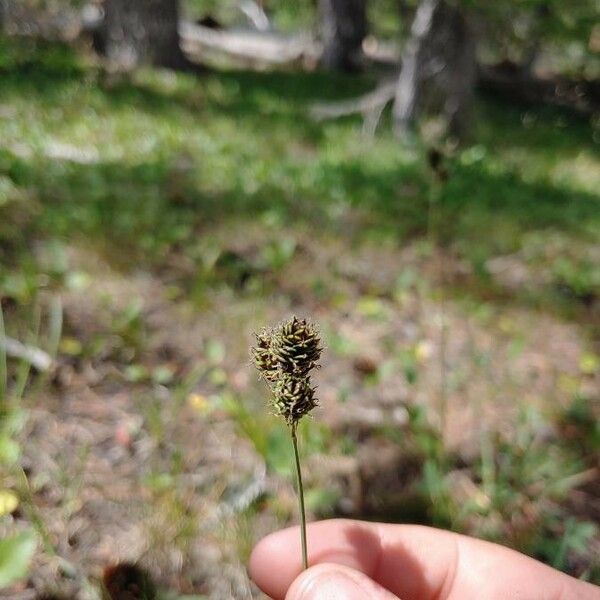
Often called the Alpine Sedge or the Scandinavian Sedge, Carex norvegica is a resilient little mountaineer that thrives where most plants would shiver. This hardy perennial is a specialist of the far north and high altitudes, acting as a silent guardian of rocky arctic tundras and alpine meadows. Its compact, dark seed heads look like tiny charred embers held aloft on slender green wires.
🔍 How to Identify
- 🌾 The Seed Heads: Look for a cluster of 2 to 4 small, densely packed spikes at the tip of the stem. These are typically dark brown to almost black, giving the plant a "burnt" appearance from a distance.
- 📐 Triangular Stems: Like almost all sedges, the stem has three distinct sides. If you roll the stem between your fingers, you will feel the sharp edges—remember the old saying: "Sedges have edges!"
- 🍃 The Foliage: The leaves are narrow, flat, and light green, usually shorter than the flowering stems. They grow in tidy, tufted clumps (tussocks) that help the plant resist harsh mountain winds.
🏡 In Your Garden
- 🏔️ The Alpine Specialist: This isn't your typical backyard grass. It craves "cold feet" and high humidity. In a garden setting, it is best suited for rock gardens or "scree" beds that mimic its native high-altitude home.
- 💧 Moisture & Lime: In the wild, it is often found near melting snowbeds or rocky stream banks. It prefers soil that stays consistently moist but drains rapidly, and it particularly loves areas with a bit of limestone or calcium in the substrate.
- ☀️ Heat Sensitivity: Because it is an arctic-alpine species, it will struggle in hot, humid climates. It uses its short stature to stay beneath the wind, making it a great ground-cover option for high-latitude or high-altitude gardeners.
⚠️ Safety & Toxicity
- ✅ Non-Toxic: Carex norvegica is generally considered safe and non-toxic to humans, dogs, cats, and livestock.
- 🧤 Sharp Edges: While not chemically toxic, the edges of the leaves can be slightly abrasive. While not as sharp as "Sawgrass," it’s still best handled with light gardening gloves if you are dividing large clumps.
✨ Fun Fact
Despite its name norvegica (meaning "from Norway"), this plant is a true globetrotter of the North. It can be found across the entire Northern Hemisphere, from the mountains of Scotland to the wilderness of Alaska and the jagged peaks of the Himalayas!

Detailed Care Instructions

Place in a window with dappled sun or a spot in the middle of a room. Or directly in a window facing west or east.

Some plants require more regular watering than others, which should be done every few days. It's critical to maintain the soil moist all of the time. The water requirements of the same plant placed in pots with varying sizes will differ. Because the water in the smaller pot evaporates faster than the water in the larger pot, it will require more watering. Regardless of pot size, the surface should constantly be maintained moist.








