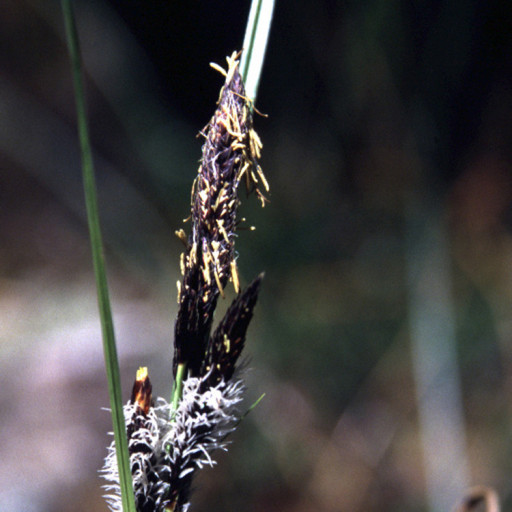
Plant Overview
Known as the Slough Sedge, this rugged evergreen is the undisputed king of the wetlands. Found draping over the edges of Pacific Northwest marshes and riverbanks, it’s often nicknamed "saw grass" due to its remarkably tough, sharp-edged leaves. Historically, this plant was a vital resource for Indigenous coastal communities, who harvested its sturdy fibers to weave intricate, waterproof baskets and hats.
🔍 How to Identify
- 🌿 The Foliage: Look for long, leathery, dark-green leaves that often have a distinct "M" or "V" shape when viewed in a cross-section.
- 🖤 The Spikes: In spring, it produces dramatic, drooping flower spikes that range from chocolate brown to deep purplish-black, hanging like heavy tassels.
- 🌾 Growth Habit: It forms dense, arching clumps (hummocks) that can grow up to four feet tall, often creating a sea of green in soggy areas.
🏡 In Your Garden
- 💧 The "Wet Feet" Specialist: Unlike most garden plants that rot in standing water, the Slough Sedge thrives in it. It is the perfect choice for rain gardens, bioswales, or the edges of a backyard pond where the soil never dries out.
- 🏗️ Erosion Control: Because it spreads via vigorous underground runners (rhizomes), it acts like a natural rebar for the earth. It is frequently used to stabilize muddy slopes and prevent soil from washing away during heavy winter rains.
⚠️ Safety & Toxicity
- ✅ Pet & Human Safe: This plant is generally considered non-toxic to dogs, cats, and humans if accidentally nibbled.
- ⚔️ Physical Hazard: While not poisonous, the leaf edges are extremely sharp. Handle with gardening gloves to avoid "grass cuts" that feel similar to painful paper cuts.
✨ Fun Fact
The species name obnupta translates from Latin to "veiled" or "shrouded." This refers to the dark, papery scales that almost entirely hide the developing seeds within the flower spikes.

Detailed Care Instructions

Place in a window with dappled sun or a spot in the middle of a room. Or directly in a window facing west or east.

To water this plant, ensure that it is growing in a pot with adequate drainage. Before watering, check the top inch of soil to ensure that it has dried out completely. Water the plant deeply, ensuring that the water reaches all areas of the soil and that excess water drains out of the pot. Avoid letting the plant sit in standing water as this can lead to root rot. It is important to note that this plant prefers consistently moist soil, but not soggy soil. Watering requirements may vary based on environmental factors such as humidity and temperature, so monitor the soil regularly to ensure it is not drying out or becoming waterlogged.
The ideal type of soil to use with this plant is a moist, well-draining soil with a slightly acidic pH level. It should also be rich in organic matter and nutrients to support the plant's growth. Normally, a mixture of peat moss or compost, sand, and loam soil is recommended for this plant. Furthermore, it should be planted in a spot where it will receive full or partial sun exposure.







